AIMA Launches Online Renewal Portal as Immigration System Inches Toward Modernisation
Portugal's Agency for Integration, Migration and Asylum (AIMA) has launched a new online portal that allows immigrants to renew residence permits set to expire in May and June 2026, the agency announced on Wednesday. The tool, accessible at...

Portugal's Agency for Integration, Migration and Asylum (AIMA) has launched a new online portal that allows immigrants to renew residence permits set to expire in May and June 2026, the agency announced on Wednesday. The tool, accessible at portal-renovacoes.aima.gov.pt, marks another incremental step in the long and often painful digitisation of Portugal's immigration bureaucracy.
For now, the portal is limited to permits expiring in those two months, though AIMA has indicated it will expand to cover additional months in the coming weeks. The agency stated that its aim is "to anticipate the opening of the portal for the coming months, to meet the needs of citizens."
The launch comes against the backdrop of Portugal's persistent immigration backlog, a problem that has defined the experience of hundreds of thousands of foreign residents in the country. AIMA, which replaced the former SEF (Foreigners and Borders Service) in 2023, has struggled with processing times that stretch into months or even years for some applicants. The agency has faced criticism from immigrant communities, legal professionals, and municipal authorities alike, with municipalities sounding alarms earlier this month over "situations of rupture" in local integration services.
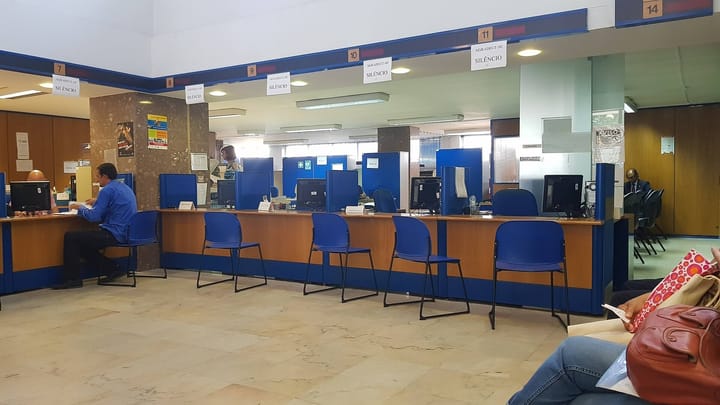
The online renewal portal is, in principle, the kind of digital-first approach that could ease the bottleneck. Rather than requiring in-person visits to chronically overcrowded AIMA offices, permit holders can submit their renewal documentation remotely. For working professionals, families with children, and anyone who has endured the experience of queuing at AIMA since before dawn, the convenience is significant.
But the portal's limited initial scope, covering only two months of expiring permits, underscores how far Portugal still has to go. The agency has previously launched other digital tools, including a Brexit-specific form for permanent residency applications in January and a new in-person document verification process in February, suggesting a piecemeal approach to modernisation rather than a comprehensive overhaul.
Meanwhile, the government is simultaneously tightening its immigration enforcement posture. Earlier this week, it emerged that the executive wants the Attorney General to create special investigative teams focused on illegal immigration and human trafficking, working in conjunction with AIMA, the Labour Conditions Authority (ACT), and the food safety agency ASAE. Parliament also approved amendments to the immigration law in January, signalling a shift toward stricter, more regulated migration controls.
This dual approach, streamlining legal processes while cracking down on irregular immigration, reflects the political balancing act that has characterised Portuguese immigration policy under the current government. For the estimated one million foreign residents legally in Portugal, the renewal portal is a welcome if modest improvement. The real test will be whether AIMA can scale it quickly enough to make a meaningful dent in the backlog before the next wave of permits comes due. For readers working towards the language requirement, our guide to the free Português Língua de Acolhimento courses and the certificate they produce for nationality, permanent residence and long-term resident status sets out the route.