Açores: CIVISA Walks the Faial-Pico Channel Volcanic Alert From V1 Back Down to V0 After a Month of Submarine Tremors at the Cachorro System — Quake Swarm From 1 April Triggered the Alert; Decline Brings Reference Levels Back
CIVISA has lowered the Faial-Pico Channel volcanic alert from V1 back to V0 after a month-long quake swarm at the Cachorro Submarine Volcanic System eased. The alert had been raised in early April; events ran from 20km depth to near-surface.
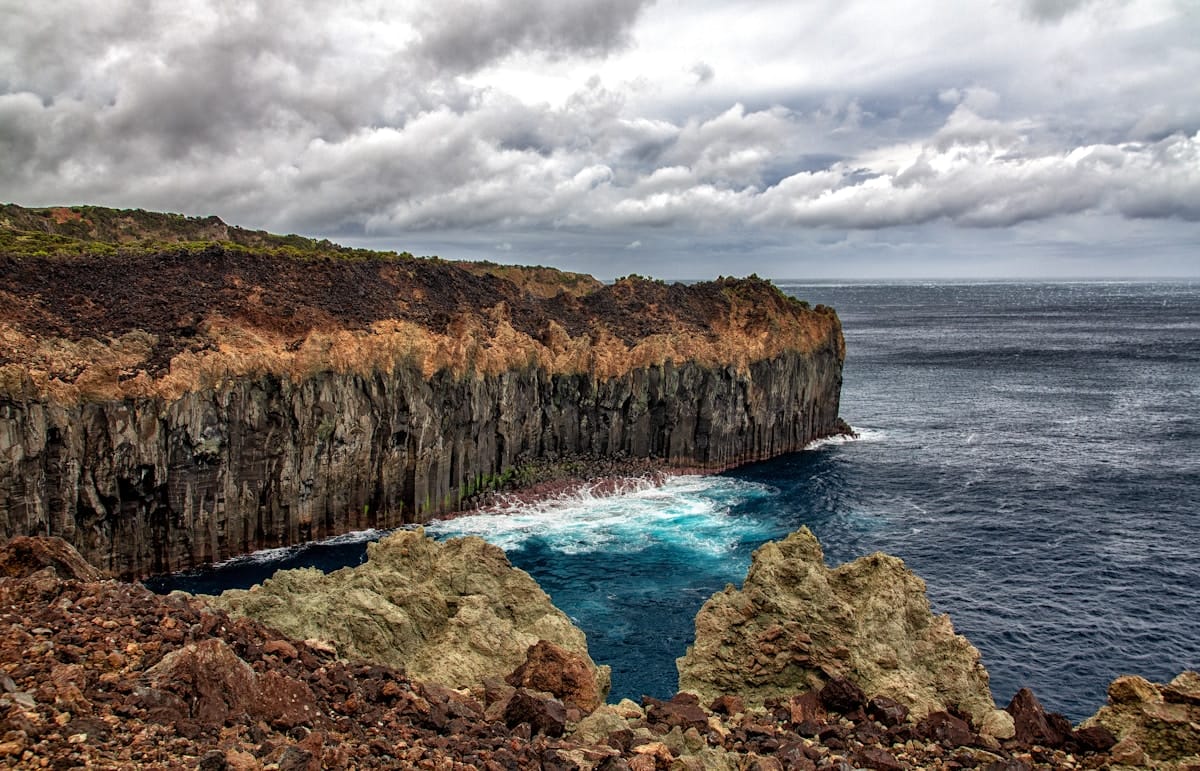
The Centro de Informação e Vigilância Sismovulcânica dos Açores has returned the volcanic alert level for the Faial-Pico Channel to V0 — the routine baseline — after a month-long swarm of low-magnitude submarine earthquakes triggered an upgrade to V1 in early April. The decision, taken by the Comissão Técnica do Sistema de Vigilância Sismovulcânica dos Açores in late April 2026, marks the formal end of an episode that put the islands of Faial and Pico under enhanced monitoring through the bank-holiday weekend leading into May.
What V0 and V1 Actually Mean
CIVISA's alert scale runs from V0 (ausência de actividade significativa — baseline) through V1 (actividade acima do normal — above-normal activity, no expectation of an eruption) to V2, V3 and V4, the last representing an imminent or in-progress eruption. The V1 level imposes no civil-protection actions on residents but raises the cadence of CIVISA's own monitoring — more frequent station polling, increased data-review meetings, and pre-positioned communications with Faial and Pico municipal protection services.
The Sequence of Events
The quake swarm began on 1 April 2026 along a structural lineament running northeast-to-southwest along the Faial-Pico channel, from west of Madalena (Pico) to north of Lajido (Pico), encompassing the Cachorro Submarine Volcanic System — one of the active submarine volcanic features that sit between the two islands. Events were dominated by low-magnitude tremors but the depth distribution caught CIVISA's attention: events ranged from 20 kilometres deep all the way to near the surface, the kind of vertical column the network associates with magma migration rather than purely tectonic faulting.
On 8 April CIVISA elevated the alert to V1 after a felt magnitude-3.0 quake on Pico and Faial, recorded at 02:13 local time with an epicentre about seven kilometres northwest of Bandeiras (Madalena, Pico island). A separate magnitude-2.7 event on Faial registered earlier in the same week. Through the second half of April the swarm's energy release decayed to baseline values; the Comissão's late-April review concluded that the seismic line had returned to reference activity and lowered the alert.
Why the Cachorro System Is Watched So Closely
The Faial-Pico channel sits on the western flank of the Mid-Atlantic Ridge and on the triple-junction zone where the African, Eurasian and North American tectonic plates converge — geologically one of the most active points in the Atlantic. The 1957–58 Capelinhos eruption on western Faial built an entirely new volcanic peninsula and is still fresh enough in the islands' planning memory that any submarine seismicity along the channel triggers methodical monitoring.
What This Means for Residents and Travellers
- The downgrade to V0 means no civil-protection measures are in effect. Residents and visitors can move freely on Faial, Pico and the channel ferry route between Horta and Madalena.
- Travel insurance triggers tied to volcanic-alert levels (some carriers structure cancellation cover at V2+) do not activate at V0 or V1. Bookings for the Pico Wine Trail and Faial whale-watching season remain unaffected.
- The structural lineament will continue to be monitored. CIVISA has stressed that returning to V0 does not mean the system is dormant — rather that the current swarm has subsided. Future swarms can occur without warning along the same line.
- The civil-protection page on prociv.azores.gov.pt publishes the up-to-date status; SMS-alert subscriptions through the Açores regional system are open to residents.
- Foreign residents on Faial and Pico who have not yet enrolled in the islands' civil-protection notification system can do so at the Câmara Municipal counters on either island.