A New Cross-River Ferry Links Almada to Oeiras From Today, on a Six-Month Trial
From Thursday, Transtejo · Soflusa begins a new river service between Trafaria and Porto Brandão in Almada and the Algés waterfront in Oeiras, extending to Belém. Running seven days a week on a six-month trial, it adds a rare east–west link to a ferry network built around north–south crossings.
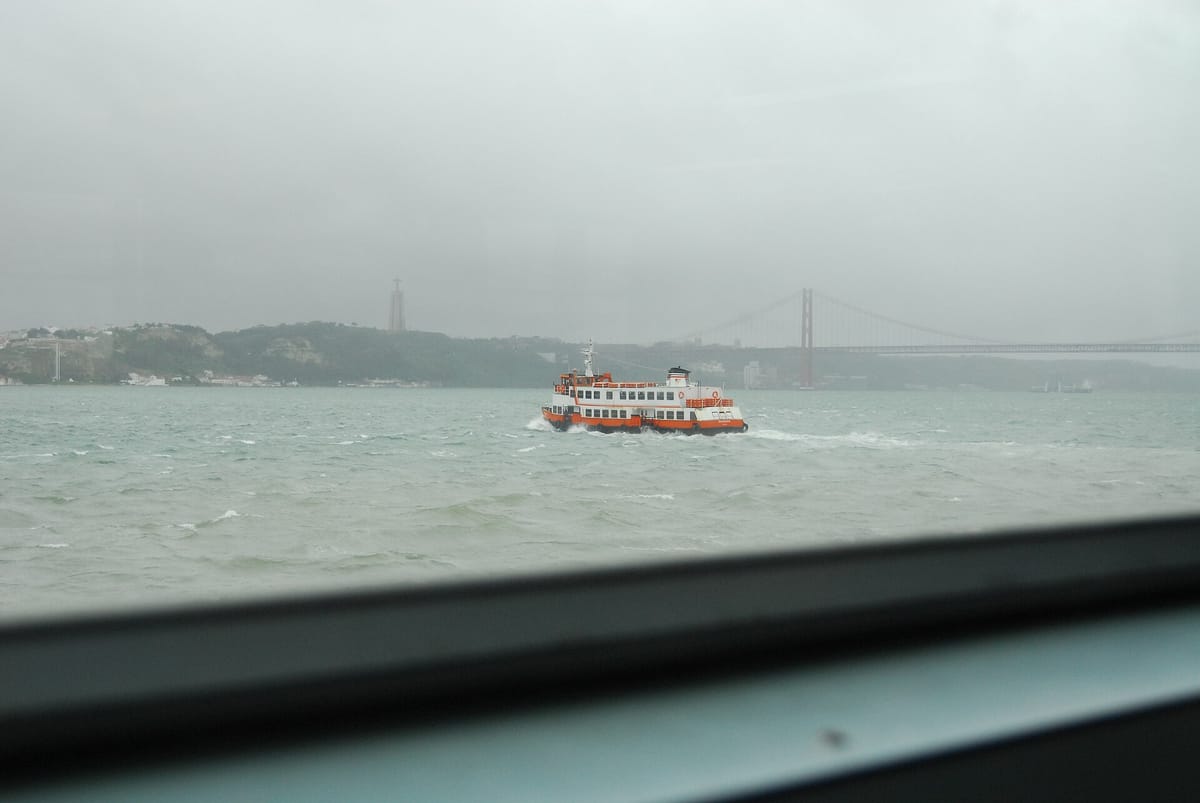
A new way to cross the Tagus opens today. From Thursday, the public ferry operator Transtejo · Soflusa (TTSL) begins running a river service linking Almada, on the south bank, to Oeiras on the north — a route that has never had a scheduled boat connection before.
The new line sails from Trafaria and Porto Brandão, on the Almada side, across to the Pedrouços and Algés waterfront in Oeiras, with an onward extension to Belém in Lisbon. It will operate seven days a week and begins as a six-month experimental phase, after which TTSL and the participating councils will decide whether to make it permanent.
Filling a gap in the river network
Lisbon's ferries have long shuttled commuters north to south — the much-loved “cacilheiros” between Cacilhas and central Lisbon are a fixture of daily life — but east–west links along the estuary have been thin. The Almada–Oeiras route stitches together two banks that are close as the gull flies yet awkward to travel between by road or rail, where journeys typically funnel through central Lisbon and its bridges.
The operator frames the service as an “alternative that is comfortable, efficient and sustainable” for crossing the Tagus, aimed both at reinforcing public-transport capacity at peak times and at drawing new users onto the water. Its launch was timed to coincide with the Alive festival at the Algés waterfront, which is expected to draw thousands of visitors over the coming days and offers an immediate test of demand.
A quick collaboration
Officials credited the speed of the rollout to close cooperation between TTSL, the municipalities of Lisbon and Oeiras, and the Lisbon Port Authority (Administração do Porto de Lisboa, or APL), which manages the river's docks and moorings. Pulling those bodies together allowed the connection to be stood up quickly rather than waiting on the multi-year timelines that usually govern new transport routes.
The launch also lands as Transtejo · Soflusa pushes through a wider modernisation, gradually renewing an ageing fleet and leaning on lower-emission vessels to carry the tens of thousands of passengers who cross the estuary each day. Adding an east–west spur to a network built mostly around north–south crossings tests whether the river can take on more of the strain currently borne by Greater Lisbon's bridges, trains and roads — infrastructure that groans under the weight of a fast-growing metropolitan population.
For residents on the south bank, the appeal is obvious: a direct water route to the office parks and riverside districts of Oeiras and Algés without the detour through the capital. For visitors and the growing community of foreign residents settling along the estuary, it adds a scenic, low-stress option to a transport map dominated by congested bridges and busy commuter trains. Whether the boats keep running past the winter will depend on how many people step aboard over the next six months.