A Fresh Heatwave Pushes About Seventy Interior Councils to Maximum Fire Danger
A returning heatwave has pushed around seventy interior councils across northern and central Portugal into the highest wildfire-danger band, with temperatures forecast up to 42C in Evora. Some eclipse-viewing events were cancelled over the fire risk.
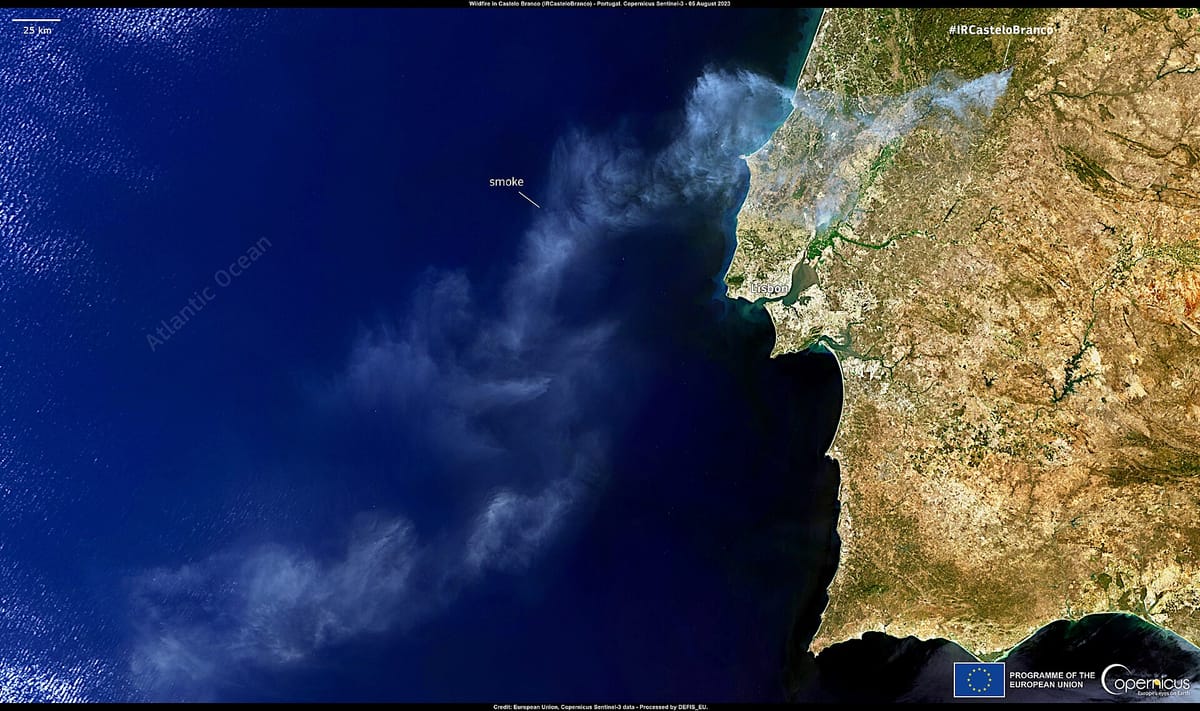
A fresh wave of heat is pushing much of Portugal's interior back into the highest category of wildfire danger, with around seventy municipalities across the north and centre placed at maximum risk and temperatures forecast to climb well into the forties in the south. After a brief respite, the mercury is rising again — and with it the strain on a country that has learned, at great cost, to treat mid-August as its most dangerous fire window.
The Instituto Português do Mar e da Atmosfera (the national weather and sea authority, or IPMA), which sets the daily fire-risk ratings, has classified councils in the districts of Braga, Vila Real, Bragança, Viseu, Guarda, Santarém, Castelo Branco, Coimbra, Leiria, Portalegre, Évora, Beja and Faro at maximum danger. Almost all of the rest of the mainland sits in the "very high" or "high" bands, with only a thin strip of around nineteen coastal councils — in the districts of Leiria, Lisbon, Coimbra, Aveiro and Porto — spared the worst of the rating.
The fire danger tracks a broader heatwave. IPMA placed the interior districts of Bragança, Guarda, Castelo Branco and Portalegre under a red warning — the most serious level — for heat, before downgrading them to orange. Forecast maximum temperatures ranged from a relatively mild 24°C on the coast at Aveiro to a punishing 42°C in Évora, deep in the Alentejo, while overnight minimums stayed high enough — from 17°C in Leiria to 26°C in Castelo Branco and Portalegre — to offer little relief after dark. Warm nights are their own hazard, denying the landscape and the people in it the chance to cool down.
The convergence of heat and fire risk is already reshaping plans on the ground. In parts of the interior, the danger has been serious enough to force the cancellation of outdoor activities — including some organised gatherings tied to Wednesday's total solar eclipse, whose narrow path of totality crosses exactly the kind of dry, wooded upland where fire spreads fastest. Where the two collide, safety takes precedence over spectacle.
For residents, second-home owners and visitors in rural Portugal, the official guidance in these conditions is unambiguous and worth repeating: no burning of any kind, no machinery or tools that throw sparks in dry vegetation, and no discarded cigarettes near scrubland. The overwhelming majority of Portugal's rural fires are started by human activity, which means the individual choices of people across the affected districts carry real weight during a red-flag stretch like this one.
Portugal's civil-protection system — its firefighters, its water-bombing aircraft and its municipal emergency structures — moves onto a heightened footing during these episodes, but its effectiveness depends heavily on ignitions being avoided in the first place. With the heat expected to hold and the interior tinder-dry, the coming days demand caution from anyone spending time outside the cities. The rating can change overnight; the risk, for now, is as high as it gets.