90% of Portuguese AI Users Say It Makes Them More Productive — But Only 18% Fear Losing Their Jobs
Portuguese workers who use artificial intelligence tools report overwhelming productivity gains, with nearly 90% saying AI helps them complete tasks faster and 84% reporting improved work quality. Yet despite these transformative effects, only 18%...

Portuguese workers who use artificial intelligence tools report overwhelming productivity gains, with nearly 90% saying AI helps them complete tasks faster and 84% reporting improved work quality. Yet despite these transformative effects, only 18% fear the technology will cost them their jobs.
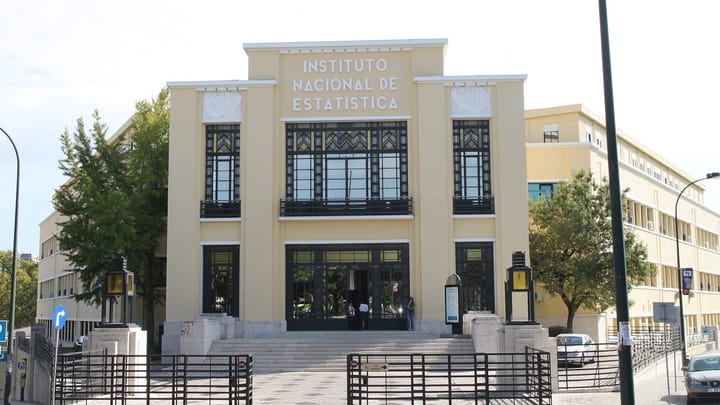
The findings come from a new study by Portugal's National Statistics Institute (INE), which surveyed 1,236 consumers between March 2 and 17 as part of its regular consumer confidence tracking. The results offer a snapshot of how Portugal is navigating the global AI adoption wave — and reveal a striking disconnect between personal benefit and labor market anxiety.
Who's Using AI in Portugal?
Nearly 47% of survey respondents said they use AI for work or personal purposes, a figure that rises to 57% among employed individuals. Among those who use AI professionally, the reported benefits are striking:
- 89.9% say AI allows them to complete tasks more quickly (35.6% report significant acceleration)
- 83.5% say it improves the quality of their work (25.6% significantly)
- 70.9% say their workload becomes easier to manage
These are not marginal improvements. They suggest AI is fundamentally reshaping how knowledge work gets done in Portugal — at least for those who have access to the tools.
The Age, Education, and Income Divide
AI adoption in Portugal follows predictable fault lines. Usage is highest among:
- Young workers: Only 8% of 18-29 year-olds say they don't use AI, compared to 89.2% of those over 65
- University graduates: 72.6% of those with post-secondary education use AI, versus just 4.6% with basic education or less
- Higher earners: The highest income quartile shows significantly higher AI adoption than the lowest
Among younger workers, personal use dominates: 51% of 18-29 year-olds use AI for personal purposes, far above the 21.7% rate for 30-49 year-olds. But this age group also leads in professional use, with 40.8% deploying AI tools at work.
The pattern reveals a technology that is — for now — concentrating gains among those already positioned for economic advantage: educated, young, digitally fluent, and financially secure.
Why Aren't Workers More Worried?
The puzzle in INE's data is the confidence gap. If AI is making 90% of users dramatically more productive, why do only 18% fear it will eliminate their roles?
Several explanations are possible:
1. AI as augmentation, not replacement. Many workers may view AI as a tool that enhances their capabilities rather than replaces their judgment. Lawyers use AI for research, but still draft arguments. Designers use generative tools, but still direct creative strategy. For now, AI feels like a productivity booster, not a competitor.
2. Optimism bias. Workers tend to believe disruption will hit other industries or other roles before their own. "My job requires human touch" is a comforting narrative, even when data suggests otherwise.
3. Short time horizons. The study captures perceptions in March 2026. AI's full labor market impact may take years to materialize. Workers experiencing immediate productivity gains may not yet be thinking about structural displacement five or ten years out.
4. Job security in Portugal's labor market. Portugal has relatively strong employment protections compared to Anglo-American economies. Workers may feel insulated by labor law, union presence, and cultural norms that make layoffs politically and legally difficult.
Implications for Expats and Foreign Workers
For expats in Portugal — particularly those in knowledge work, tech, marketing, or creative fields — these findings carry important signals:
AI fluency is becoming table stakes. The 57% adoption rate among Portuguese workers suggests that not using AI professionally may soon mark you as behind the curve, especially in competitive sectors. If your Portuguese colleagues are getting 90% productivity boosts and you're not, that's a career risk.
The skills premium is rising. Education and income correlate strongly with AI use. If you're positioning yourself in Portugal's labor market, technical literacy and continuous learning are increasingly non-negotiable.
Complacency is dangerous. The fact that only 18% of workers fear job loss doesn't mean job loss isn't coming. It may mean workers are underestimating the pace of change. History suggests that when automation arrives, it moves faster than public perception catches up.
Portugal is not isolated. These patterns mirror global trends. A 2025 MIT study found similar productivity gains among knowledge workers using generative AI, but also warned that gains were uneven — concentrated among lower-skilled workers in high-skill environments, not among median workers in median jobs.
What Portugal's Data Doesn't Tell Us
INE's survey captures perceptions, not outcomes. It tells us workers feel more productive with AI, but not whether:
- Employers are translating those gains into headcount reductions
- Productivity gains are being captured by firms as profit rather than passed to workers as wage growth
- AI is creating new roles even as it eliminates old ones
- The 47% not using AI are at risk of being left behind
We also don't know how adoption patterns are shifting. March 2026 is early in the generative AI era. The question is whether the 18% fear rate stays stable or climbs as AI capabilities expand and employers begin restructuring around the technology.
The Bottom Line
Portugal's workers are experiencing AI as empowering. They're using it to do their jobs faster, better, and with less cognitive strain. But productivity boosts for individuals don't guarantee job security for the workforce as a whole.
If one worker can now do the job of two — or ten — the math for employers shifts quickly. The 18% who fear displacement may be the realists. The 82% who don't may be underestimating how fast "more productive" becomes "fewer people needed."
For expats navigating Portugal's labor market, the lesson is clear: AI literacy is no longer optional, and the skills that insulate you from automation aren't technical alone. They're the ones that resist commodification — judgment, creativity, relationship-building, cultural fluency, and the ability to operate in ambiguity.
The tools are getting smarter. The question is whether workers are learning fast enough to stay ahead. On the Decreto-Lei 113/2026, Sistemas Automáticos de Condução, ANSR and IMT side of the file, our 8 June read on Decreto-Lei 113/2026 codifying the legal regime for autonomous-driving tests on Portuguese public roads, with 30-day vacatio legis to 8 July, a six-year operator licence floor, a 0.2 g/l alcohol cap, 20 km/h speed cuts off the posted limit, quadrupled liability cover, 10 Hz event-data logging, 45-day foreign-licence recognition and €250-to-€40,000 contraordenação fines under ANSR-and-IMT supervision sets the latest reference. On the Startup World Cup, Unicorn Factory Lisboa, Caixa Capital, Pegasus Tech Ventures, Portuguese venture capital, Carlos Moedas innovation programme and startup-funding gap side of the file, our 17 June read on Caixa Capital anchoring a €1 million Portugal prize as the Startup World Cup 2026 lands at Unicorn Factory Lisboa across 17-18 June — 50 finalists, a 10-slot pitch cut and a $1 million October San Francisco run frame the Pegasus Tech Ventures track sets the latest reference. On the artificial-intelligence, digital-government and state-modernisation side of the file, our read on the government's in-house digital twins and the sovereign Amalia AI for the state sets the latest reference. For readers weighing the jobs market itself, our practical guide to finding a job in Portugal as a foreigner sets the latest reference. On the hiring, employer-setup and small-business side of the file, our guide to hiring your first employee in Portugal sets the latest reference. On the artificial-intelligence and start-up side of the story, Portugal's Center for Responsible AI and its export push sets the latest reference. On the artificial-intelligence, digital-regulation and ANACOM side of the file, the AI Act moving into its enforcement phase in Portugal sets the latest reference. On the online-safety side of the file, Portugal's plan to bar under-16s from social media traces the diploma's path to a final vote and the age-verification problem behind it. On the research-infrastructure side of the file, the cost overrun on Lisbon's new artificial-intelligence building sets out how a tender came in 16.3% above estimate and who ended up paying the difference.