870 Night-Flight Violations in Three Months at Humberto Delgado — ANA Appeals Symbolic Fine While Residents Endure the Noise
Portugal recorded 870 night-flight violations at Lisbon airport in a single summer. The government says it is complying with the law, while airport operator ANA appeals a fine its own CEO calls 'completely symbolic.'
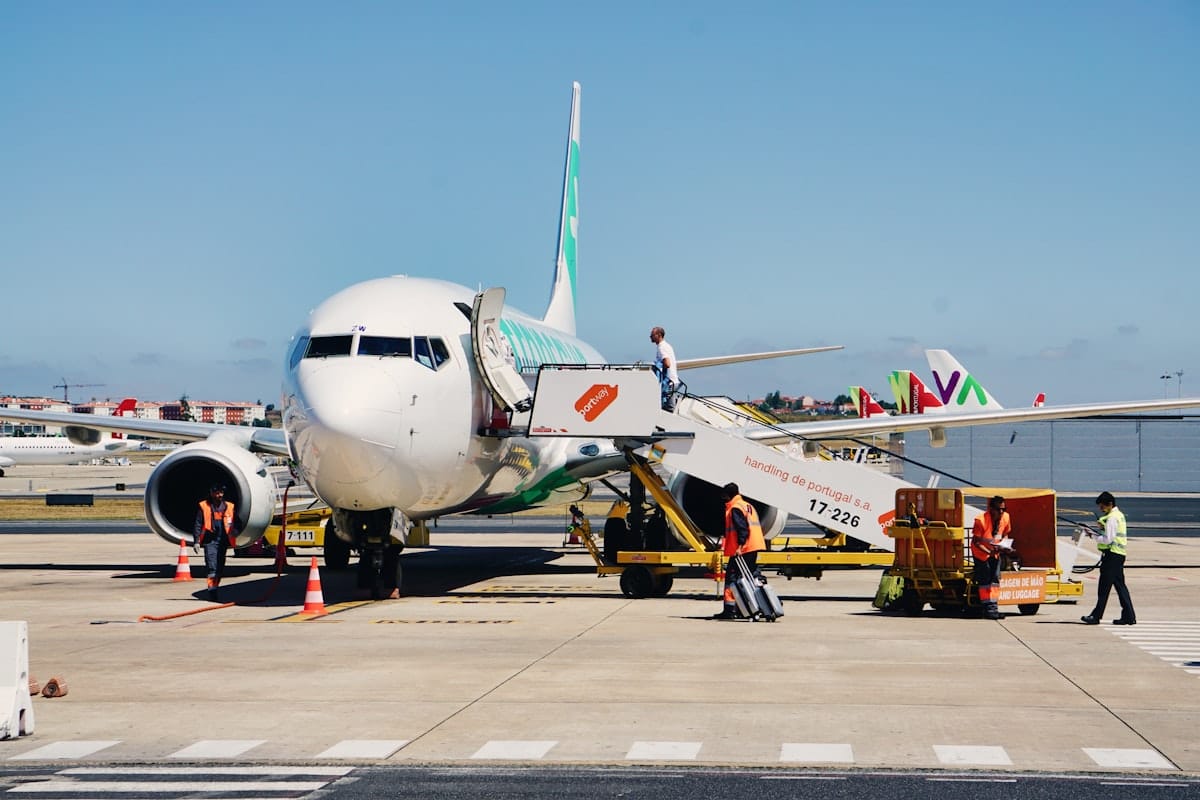
Portugal's Environment Minister Maria da Graca Carvalho told parliament on April 15 that the government is "strictly complying with the law" on night-flight restrictions at Lisbon's Humberto Delgado Airport, even as new data reveals hundreds of violations and the airport operator fights a regulatory fine it dismisses as meaningless.
The statement came amid growing frustration from residents in municipalities surrounding the airport, who have endured years of noise disruption with little concrete relief. Between June 1 and August 31, 2025 alone, authorities recorded 870 reported night-flight violations at Humberto Delgado. Of those, 153 were subsequently archived as force majeure events — weather diversions, medical emergencies, and similar circumstances beyond operator control — leaving more than 700 cases that lack any such justification.
A Fine That Barely Registers
The environmental inspectorate IGAMAOT fined airport operator ANA Aeroportos between 12,000 and 72,000 euros for failing to comply with three of 34 measures outlined in the Noise Action Plan covering the period from 2018 to 2023. By any measure, the penalty is modest for a company that manages Portugal's busiest airport and handled tens of millions of passengers in 2025.
ANA's chief executive, Thierry Ligonniere, made no attempt to disguise his view of the sanction, calling it "completely symbolic." He went further, arguing that "the infrastructure isn't the noise source — aircraft engines are," a statement that shifts responsibility away from the airport operator and toward airlines.
ANA is now appealing the fine in court. The legal challenge adds another layer of delay to a process that residents say has dragged on for years without meaningful improvement to their quality of life.
New Restrictions on Paper
The government has taken several steps on paper to address the problem. In November 2024, Infrastructure Minister Miguel Pinto Luz announced a total flight ban between 01:00 and 05:00. Then in March 2025, the Cabinet ordered Portugal's civil aviation authority ANAC to implement a new set of restrictions: a ban on noisier aircraft categories between 23:00 and 07:00, and no new slot allocations during the 01:00 to 05:00 window.
These measures represent a tightening of the rules, at least in principle. Whether they translate into quieter nights for the estimated hundreds of thousands of residents living under Lisbon's flight paths is another question entirely. Enforcement has historically been the weak link in Portugal's noise-abatement framework, and the 870 violations recorded in a single summer suggest the gap between regulation and reality remains wide.
The Soundproofing Question
Beyond operational restrictions, the government has committed 10 million euros to the "Less Noise Programme" running from 2026 to 2027. The funding is earmarked for acoustic insulation of buildings in the airport's noise footprint, covering properties in the municipalities of Almada, Lisboa, Loures, and Vila Franca de Xira. ANA will contribute an additional 2.5 million euros to the programme.
Authorities have identified 17 healthcare and education facilities that require soundproofing as a priority, along with a broader set of residential properties in the affected zones.
The residential component has been a point of contention. ANA initially refused to accept responsibility for insulating homes, arguing its obligations extended only to public buildings. The Portuguese Environment Agency, known as APA, rejected the operator's proposed action plan for 2024 to 2029 on those grounds.
In a notable shift, ANA has now indicated its willingness to finance improvements to residential buildings for the first time. If confirmed and acted upon, this would mark a significant change in the operator's position — though residents and advocacy groups will be watching closely to see whether the commitment materialises in actual construction work rather than further studies and consultations.
The Carbon Tax Factor
Separately, Portugal has introduced a two-euro-per-passenger carbon tax on flights. While the levy is not directly linked to the noise dispute, it forms part of the broader policy environment around aviation's impact on communities and the climate. Revenue from the tax could, in theory, supplement funding for mitigation measures, though the government has not explicitly earmarked it for that purpose.
What Comes Next
The situation at Humberto Delgado encapsulates a familiar tension in European aviation: airports drive economic activity and connectivity, but the communities living beneath their flight paths bear a disproportionate burden of noise pollution, particularly at night when the health effects are most acute.
Studies consistently link chronic aircraft noise exposure to elevated risks of cardiovascular disease, sleep disruption, and diminished cognitive performance in children. The World Health Organization recommends that night-time noise levels should not exceed 40 decibels outside residential buildings — a threshold regularly breached in areas surrounding Lisbon's airport.
For now, the government insists it is acting within the law. ANA insists the fine is symbolic and the real culprits are the aircraft themselves. Residents insist nothing has materially changed. And the courts will eventually have their say on the appealed sanction.
The 12.5-million-euro soundproofing programme represents the most tangible commitment to date, but its timeline — stretching to 2027 — means relief is still months or years away for many affected households. In the meantime, the planes continue to fly, and the complaints continue to mount.
Reporting draws on statements to parliament and coverage by Lusa, Observador, Renascenca, and Noticias ao Minuto. On the Lisbon quality-of-life side of the file, the new quality-of-life barometer for the Lisbon region sets the latest reference.