Three Months After Storm Kristin, 20,000 Households Still Without Fixed Communications — Anacom Logs 1,200 Complaints as Operators Miss Restoration Deadlines
Anacom's three-month report on Storm Kristin pegs the residual outage at 20,000 fixed-service customers and logs 1,200 complaints over billing, broken appointments and contracts. Mobile is back; the access network will take many more weeks.
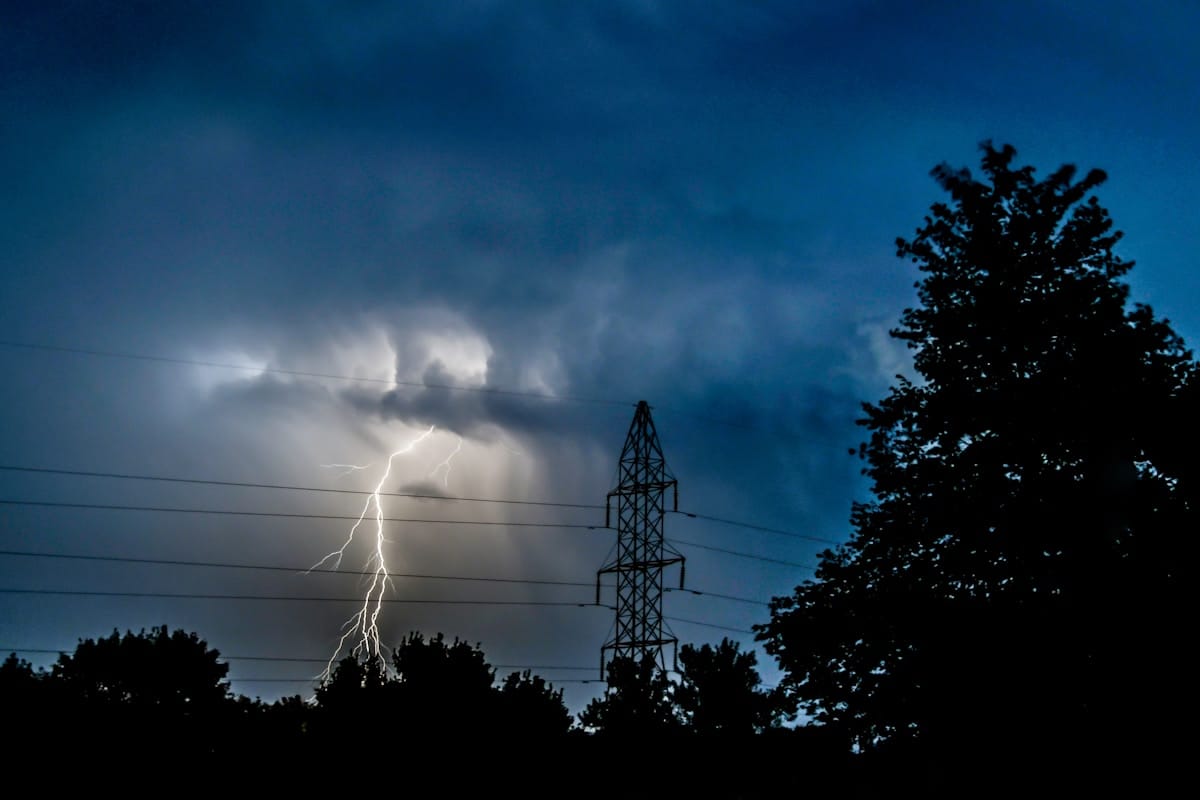
Three months on from the night of 28 January 2026, when Depression Kristin tore through northern and central Portugal and severed more than 200,000 fixed broadband and 300,000 mobile connections, the regulator Anacom has published its latest restoration assessment — and the picture is still uncomfortable. Approximately 20,000 fixed access points remain without service, and the watchdog has so far logged some 1,200 written complaints against operators, dominated by missed technician appointments, billing disputes and patchy mobile coverage offered as a stopgap.
Mobile networks have been operational since early April, Anacom confirms. The longer drag is on the fixed side — "a recuperação da rede fixa será mais demorada e pode demorar, em alguns casos, muitas semanas", the regulator notes — because the storm did not merely knock out backbone fibres but tore down the access network that connects each home and small business. Operators have to physically rebuild that capillary infrastructure village by village, a slow, labour-intensive job that no amount of emergency cell-on-wheels capacity can substitute for.
Where the residual outages are concentrated
The remaining 20,000 unconnected customers are not evenly spread. The interior of the Leiria district has been particularly hard hit, with emergency telecommunications antennas dispatched by Anacom and operators to Marinha Grande, Porto de Mós and Figueiró dos Vinhos. Local reporting puts the disconnection rate in parts of Figueiró dos Vinhos at around 20% of the resident population — pensioners and small businesses cut off from internet, television, fixed-line voice and, critically, the digital authentication tools that now mediate everything from medical appointments to municipal services.
What's in the 1,200 complaints
The complaint dossier filed at Anacom's Centro de Atendimento ao Consumidor reveals five recurring themes:
- Lack of clarity on restoration dates — operators repeatedly missing or refusing to commit to fix-by dates;
- Service that fails again after technician visits — work orders closed without the connection actually holding;
- Difficulty reaching operators through call centres and digital channels swamped with similar cases;
- Billing problems — full monthly invoices issued for partial or zero service, with operators slow to credit accounts or accept temporary contract suspension; and
- Inadequate mobile coverage in rural locations where carriers have offered free mobile data or roaming as a substitute for the missing fixed line.
The compensation question
Under Portugal's electronic communications law, operators are obliged to compensate customers for prolonged service interruptions, either by crediting bills proportionally or by allowing free contract termination without early-exit penalties. Anacom has reminded customers that the right exists — and is preparing supervisory action against operators that have failed to apply it. Meo, NOS, Vodafone and NOWO were all named in the January storm reports.
What Anacom expects next
The regulator's working assumption is that fixed services will be substantially restored by the start of the summer holiday season, but it is not committing to a hard deadline for the most damaged municipalities, where some access network sections must be entirely rebuilt. For affected residents, Anacom recommends keeping written records of every interaction with their operator, demanding pro-rata refunds for the period without service, and using the Livro de Reclamações Eletrónico if the operator's customer support fails to resolve the case.
Three months in, the lesson Storm Kristin keeps writing into the regulator's reports is that Portugal's telecoms infrastructure outside the metropolitan corridors is more fragile than the official broadband-coverage maps suggest — and that recovery, when the wind hits hard enough, is measured not in days but in seasons. For foreign residents on the practical telecoms side, our 2026 guide to Portugal's mobile network operators — MEO, NOS, Vodafone, the ANACOM substrate, 5G coverage and the number-portability process sets the latest reference. For the household-side mechanics of the fibre internet contract, our 2026 Setting-Up-Home-Internet practical guide — the ANACOM market read with MEO at 41%, NOS at 33.4%, Vodafone at 21.7% and Digi at 3.1% of fixed broadband, 71.4% FTTH fibre, the 24-month lock-in trap on incumbents versus Digi's three-month period, portabilidade mechanics and the €6.15 Tarifa Social sets the latest reference. On the cross-border Altice-side litigation, our 27 May read on the Geneva and Viège tribunal orders freezing Patrick Drahi's Cologny residence, Zermatt real estate and Swiss-company credits to cover Armando Pereira's CHF 1.2 billion civil claim — Operação Picoas crosses the Swiss-side border on the eve of the Altice founder's empire sale sets the latest reference. On the telecoms-market side, our 29 May read on ANACOM's Q1 2026 SCEE statistical bulletin — FTTH coverage at 97.4% of Portuguese homes, 5G population reach at 96.1%, DIGI Portugal at 4.1% of the mobile market in twelve months, MEO anchoring 36.8%, NOS at 30.7% and Vodafone at 20.4% on a 17.4-million-SIM base sets the latest reference. On the telecoms and mobile-setup side of the file, our guide to getting a Portuguese mobile plan sets the latest reference.