Three Allied Carrier Groups Just Sailed Together Under a NATO Command Headquartered Outside the Capital — Inside Neptune Strike 26-1, the Mediterranean Drill STRIKFORNATO Steered for the Alliance
STRIKFORNATO at Oeiras steered Spain's Juan Carlos I, Italy's Cavour and France's Charles de Gaulle through a Mediterranean and Black Sea exercise from 25 March to 1 April. SACEUR Alexus Grynkewich made his first Portuguese visit during the drill.
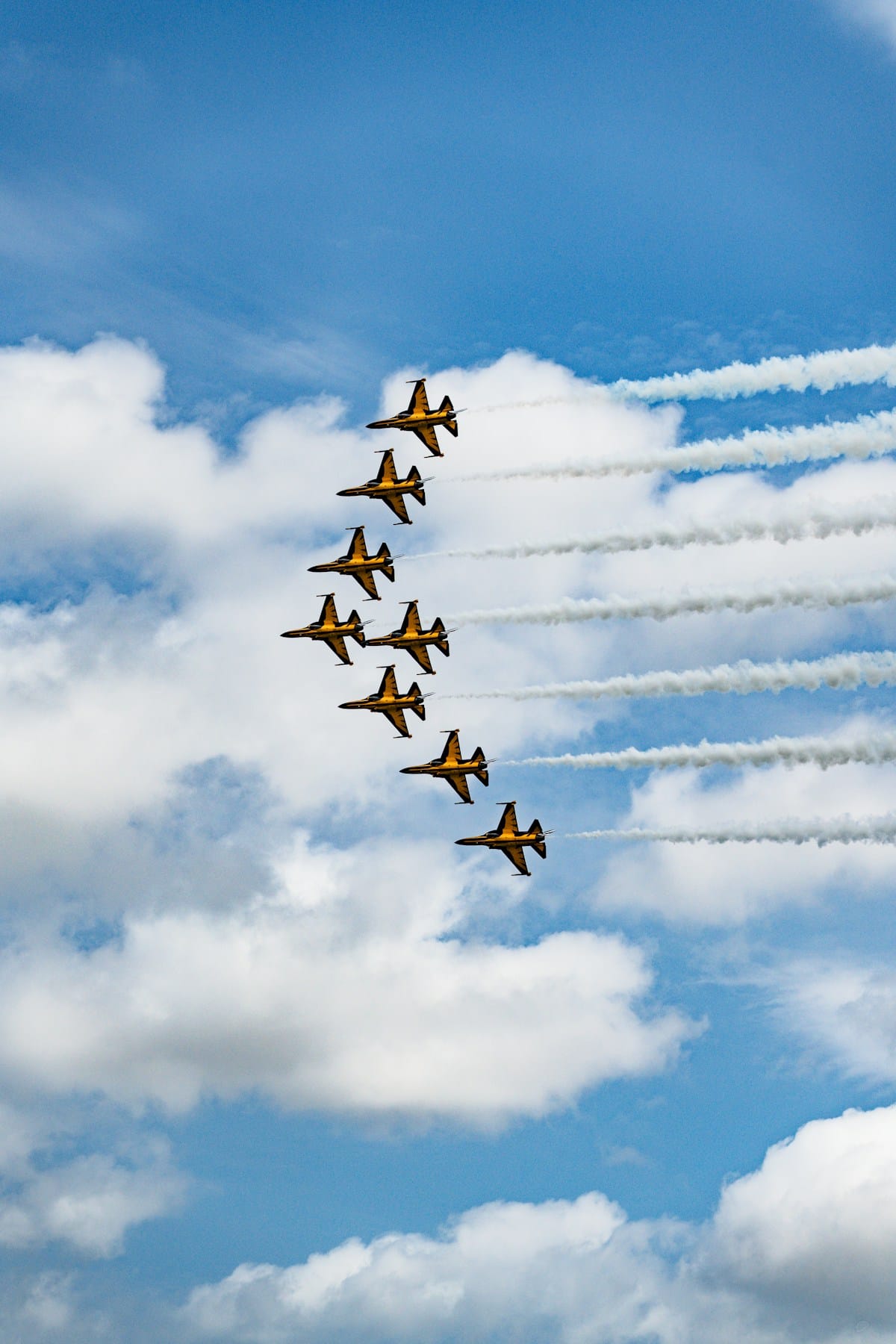
Between 25 March and 1 April, three of NATO's biggest naval assets — Spain's Juan Carlos I expeditionary strike group, Italy's Cavour carrier strike group and France's Charles de Gaulle carrier strike group — operated as a single multinational task force across the Western and Central Mediterranean and into the Black Sea approaches. The exercise, Neptune Strike 26-1, was the year's first iteration of NATO's Enhanced Vigilance Activity. It was planned, coordinated and command-led from Oeiras.
Naval Striking and Support Forces NATO — STRIKFORNATO — sits in a low-rise headquarters complex on the Tagus estuary outside Lisbon. It is the only NATO command structurally able to lead an expanded multinational maritime task force, and it is commanded by the same officer who runs the US Sixth Fleet. The current commander, Vice Adm. Jeffrey T. Anderson, hosted NATO's Supreme Allied Commander Europe, US Air Force Gen. Alexus G. Grynkewich, in Oeiras during the exercise — Grynkewich's first formal visit to the Portuguese command since taking the SACEUR job.
What the drill rehearsed
F-35B Lightnings off the Spanish flat-deck and AV-8 Harriers from the Italian air wing flew alongside French Rafales from the Charles de Gaulle. NATO RQ-4D Phoenix drones from Sigonella in Sicily provided the surveillance picture. Twelve nations contributed: Albania, Bulgaria, Croatia, Finland, France, Germany, Greece, Italy, the Netherlands, Romania, Spain and the United States. The exercise tested the alliance's ability to integrate disparate national platforms under a single command in real time — the kind of work that matters most when it stops being theoretical.
None of the three carrier groups normally sail together. The Italian and French navies in particular have a long history of operating in adjacent rather than shared task forces. Coordinating them under a third party command is exactly the work STRIKFORNATO exists to do, and it is why the headquarters has steadily grown in importance through the post-2022 phase of the Ukraine war.
Why Oeiras matters more than Portuguese commentary admits
The Portuguese government's defence narrative this month has focused on the 5% of GDP spending pledge by 2029, the new 3,700 personnel target, and the Russian embassy's naming of Tekever and Beyond Vision. The STRIKFORNATO command role has been almost invisible by comparison. Yet the strategic value of hosting it is significant. It guarantees the United States a senior operational footprint in Lisbon that is independent of any specific bilateral defence cooperation deal, it gives Portuguese officers career exposure they could not get elsewhere, and it places Portugal at the centre of NATO's response architecture for the southern flank — the flank that includes the Strait of Gibraltar, the Atlantic approaches and the Azores corridor.
SACEUR's visit to Oeiras during Neptune Strike 26-1 should have been a Portuguese news cycle on its own. Grynkewich met multinational staff and reviewed the exercise's command-and-control architecture. The optics of a four-star American commander walking the Tagus headquarters during a live multinational drill carry weight in Brussels and Washington that Lisbon rarely capitalises on publicly.
What comes next
Neptune Strike 26-2 is expected in the autumn under the same Oeiras leadership. The bigger test will come if Russia tests an Article 5 grey-zone scenario in the Black Sea or the Eastern Mediterranean — the moment a planning headquarters becomes a wartime operations cell. STRIKFORNATO has been quietly rehearsing that transition for two years. The next drill is the audit.
See also our coverage of CGTP’s 2 June general strike against the pacote laboral.