CGTP Sets Second General Strike for 2 June Against the Pacote Laboral — Tiago Oliveira to Unveil the Date at Saldanha's May Day Rally
CGTP's National Council voted Tuesday to call a second general strike for 2 June against the Trabalho XXI labour package. Tiago Oliveira will use Friday's Saldanha May Day rally to make the date official. UGT rejected the latest version on 23 April but is so far not joining.
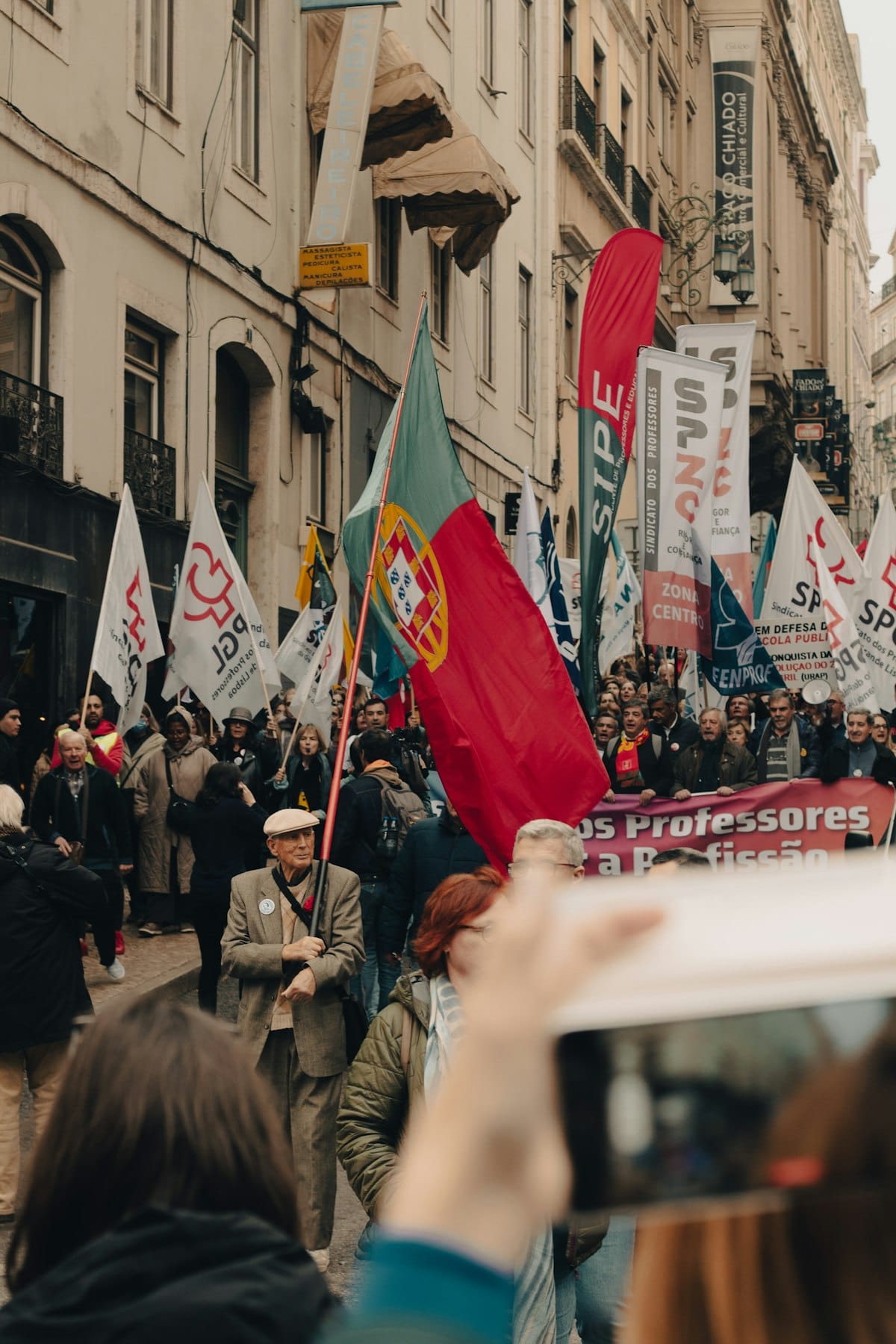
The Confederação Geral dos Trabalhadores Portugueses-Intersindical Nacional has lined up a second general strike for Tuesday, 2 June 2026, against the Government's Trabalho XXI labour package. The CGTP National Council met on Tuesday 28 April and decided, in the words of secretary-general Tiago Oliveira, to advance “com todas as formas de luta, incluindo a greve geral.” The date is expected to be unveiled publicly during Friday's 1 May Workers' Day commemorations at Saldanha in Lisbon, where the CGTP traditionally addresses the country's union movement.
It will be the second general strike in six months. The first — on 11 December 2025 — was the first joint CGTP-UGT general strike in 12 years, and the country has been waiting since 23 April to see whether the larger UGT confederation would join a second round. So far, it has not.
The dispute, in plain language
The package the unions are protesting — presented by Government on 24 July 2025 — rewrites more than 100 articles of the Portuguese Código do Trabalho. CGTP and UGT focus on a near-identical short list:
- Banco de horas individual. Employers can negotiate an “hours bank” directly with each worker, bypassing collective bargaining; unused hours generate no premium pay; there is no carve-out for parents of dependants.
- Outsourcing after collective dismissal. The 6-month ban on rehiring through outsourcing in the company's core activity, after a redundancy round, is to be relaxed.
- Despedimentos. The dismissal procedure becomes faster and unlawfully dismissed workers may not be reintegrated.
- Período experimental, contratos a termo, jornada contínua, renúncia de créditos laborais — all loosened.
- Direito à greve. New rules unions characterise as restricting strike action.
The Government's framing is mirror-image: more flexibility, faster reallocation of labour, fewer disincentives to hire. Six points of disagreement remain on the table, by the executive's own count.
What Tiago Oliveira has actually said
Speaking after the National Council, Oliveira repeated the line that has structured the CGTP's approach since the autumn: “Não excluímos nenhuma forma de luta. Todas elas estão em cima da mesa, incluindo novamente a greve geral.” A week earlier in Público he had been blunter: “Consoante a dimensão do ataque, maior será a dimensão da resposta.”
The CGTP's reading of the December strike is that “foram os trabalhadores que derrotaram este pacote laboral” — a claim the Government rejects, but which has informed the confederation's decision to keep escalating. Strike notices have already been filed for comércio e serviços, hotelaria e restauração, administração pública, ensino, têxteis e metalurgia, and construção ahead of the general strike date.
Where UGT stands
The União Geral de Trabalhadores' national secretariat unanimously rejected the latest version of the package on 23 April, but secretary-general Mário Mourão has said UGT is “totalmente disponível para continuar a negociar” and is not, today, planning a new general strike of its own. Earlier in the spring UGT had hinted at two strike days; for now there is one, and it is CGTP's. The Minister for Labour has called the Concertação Social back to the table for 7 May — five days after the May Day rally.
Prime Minister Luís Montenegro told reporters this week that UGT “tem todas as condições para subscrever um acordo”. The Confederação Empresarial de Portugal (CIP) is keeping its head down: it estimated December's strike at roughly 3% adhesion in the private sector, against the unions' joint claim of more than 3 million workers participating across the country.
Why a second strike, and why now
The arithmetic of the December strike is contested but the politics are not. CGTP framed the outcome as a successful pressure campaign that forced the Government back to the drawing board. The Government framed the same day, in the words of the Ministro da Presidência, as “inexpressiva” and adjusted nothing material in response. With UGT now stepping back from joint action, CGTP is moving alone — calculating that a single-confederation strike before the parliamentary vote will keep the labour-reform debate from being parked through the summer.
The pacote laboral is one of the central pieces of legislation the Montenegro government is trying to push through in 2026, alongside the PTRR recovery roadmap, the Tribunal de Contas reform, and the ITV vehicle-inspection overhaul. The 2 June date sits roughly four weeks before the parliamentary summer recess.
What this means for expats
- Travel disruption. The 2 June strike will affect Lisbon Metro, Carris, CP intercity and suburban trains, and Lisbon airport ground handling. If you are flying TAP, Ryanair or easyJet that day, expect delays and rebook earlier or later if you can. Sectoral strikes ahead of the 2 June date will likely follow the same blueprint — check CP and Metro Lisboa the day before.
- Hospital and clinic capacity. Public-sector health staff are on the strike notice list. Non-urgent SNS appointments may be rescheduled; urgent care continues under serviços mínimos. If you have a non-emergency consulta marked for 2 June, expect a phone call.
- Schools and creches. Public school staff are also covered. Parents on the AIMA / autorização de residência track who rely on confirmed school enrolment for visa renewals should keep an eye on serviços mínimos notices in the days leading up to 2 June.
- If you employ staff in Portugal. Whether the package passes in its current form changes how you can structure outsourcing after a collective dismissal, run an individual hours bank, or write a probation period into a new contract. The 7 May Concertação Social meeting is the next official negotiation point; the parliamentary version may diverge from what the executive originally tabled.
- Freelancers on recibos verdes. The pacote laboral does not directly change the recibo-verde regime, but the rules around presunção de laboralidade (when a freelancer is, by law, deemed an employee) sit alongside it and will be touched in the next round. If you invoice one client almost exclusively, watch for the redrafted version after the parliamentary committee phase.
What to watch next
The May Day rally at Saldanha is at 14:30 on Friday 1 May; that is when the 2 June date is expected to be made official. Concertação Social meets on 7 May. UGT's posture between now and then will determine whether the second general strike is single-confederation or, like December's, joint — and whether the Government's six-points-pending arithmetic survives contact with the union side. For now, the calendar to watch is: 1 May rally, 7 May Concertação, sectoral strikes through May, general strike 2 June, parliamentary vote sometime after. On the pension and retirement-age politics side, our 24 May read on Montenegro's 29th JSD Congress address in Viseu — the prime minister ruling out a pension floor pegged to the €920 minimum wage and walking back of the 66-and-9-months retirement age, while João Pedro Luís, 24, takes the JSD presidency with 58% on a Rui Rio-era pedigree sets the latest reference. On the AIMA-labour side of the file, our 27 May read on the Sindicato dos Técnicos de Migração's four-day AIMA strike pré-aviso for 1, 2, 3 and 5 June 2026 — STM cites outsourcing of technical functions to mediators and partner associations, a missing dedicated career path for migration technicians and persistent human-and-technical resource shortages against the regularisation backlog, with the action dovetailing the 3 June CGTP general-strike day sets the latest reference. On the Portuguese carga-horária read, our 27 May read on Pordata's Eurostat-based labour tape setting the Portuguese working week at 37.4 hours — 1.5 hours above the 35.9-hour EU-27 average and sixth among the 27 Member States, with the hospitality, manufacturing and transport stacks pulling the national mean up and the public-sector and education stacks pulling it down sets the latest reference. On the public-order and labour-rights side of the file, our 4 June read on PSP making six detentions and firing warning shots after confrontations at the Assembleia da República following the 3 June CGTP general-strike march — Article 347/348 Código Penal charging frame, Leitão Amaro flagging 'limits exceeded' from São Bento, Tiago Oliveira CGTP distancing from the post-march sub-group action, IGAI post-incident inspection sets the latest reference. On where the union side has now put its own number, the CGTP's 11 September resolution, which puts the demand at 1,100 euros from January 2027 against the 970 on the tripartite accord path, and calls a three-city national demonstration for 17 October sets the latest reference.