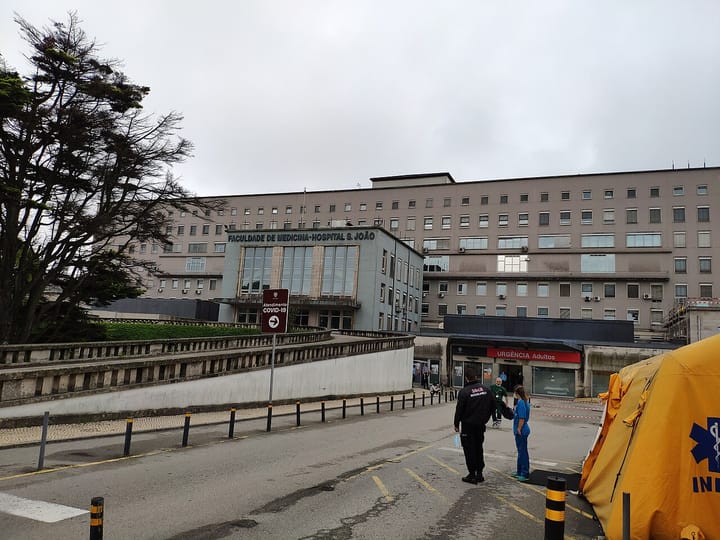
The SNS Explained: Registering With a Centro de Saúde, Finding a Family Doctor, Emergency Rooms, Prescriptions, and Private Alternatives
Portugal's public healthcare system — the Serviço Nacional de Saúde (SNS) — is universal, tax-funded, and ranks among the better systems in southern Europe. But for newcomers, the gap between what the SNS promises on paper and what it delivers...
Portugal's public healthcare system — the Serviço Nacional de Saúde (SNS) — is universal, tax-funded, and ranks among the better systems in southern Europe. But for newcomers, the gap between what the SNS promises on paper and what it delivers day-to-day can be confusing. This guide explains how to register, what you can realistically expect, and when private insurance or out-of-pocket care makes sense.
Who Is Entitled to Use the SNS
If you are a legal resident of Portugal — meaning you hold a residency permit, a registration certificate (EU citizens), or an active visa — you are entitled to use the SNS. This includes:
- Portuguese nationals
- EU/EEA/Swiss citizens registered with their local junta de freguesia
- Non-EU citizens with valid residency (D7, D8, Golden Visa, work permit, family reunification, etc.)
- Asylum seekers and refugees
Tourists and visitors are not automatically covered. EU citizens can use the European Health Insurance Card (EHIC) for emergency and urgent treatment, but this is not a substitute for resident-level access.
Step 1: Register at Your Local Centro de Saúde
The first thing to do after settling in Portugal is register at the centro de saúde (health centre) nearest to your home. This is how you enter the SNS system.
What you need:
- Your NIF (tax identification number)
- Your residency document (CRUE certificate for EU citizens, TRC for non-EU, or valid visa)
- Proof of address (utility bill, rental contract, or atestado de residência from the junta)
- Passport or ID card
At the centro de saúde, you will be assigned a número de utente do SNS — your health service user number. This number follows you everywhere in the public system: GP visits, hospital admissions, prescriptions, and lab tests.
Step 2: Getting a Médico de Família
In theory, every SNS user is assigned a médico de família (family doctor / GP) who acts as your primary care provider and gatekeeper to specialist referrals. In practice, Portugal has a chronic shortage of GPs.
As of early 2026, roughly 1.6 million people in Portugal are registered with the SNS but have no assigned family doctor. The shortage is worst in Lisbon, the Alentejo, and parts of the Algarve.
What this means for you:
- If your centro de saúde has available GPs, you will be assigned one. Appointments are booked through the centre's reception or, increasingly, via the SNS 24 app.
- If no GP is available, you are placed on a waiting list. In the meantime, you can still access the SNS through urgent-care consultations (consultas abertas) at the centro de saúde, walk-in clinics, or the SNS 24 telephone line (808 24 24 24).
What the SNS Covers
The SNS provides a broad range of services at little or no cost:
- GP consultations — EUR 4.50 co-payment (taxa moderadora), or free for exempt groups
- Specialist consultations (via GP referral) — EUR 7.75 co-payment
- Emergency room visits — EUR 14 for the emergency department at a hospital; EUR 14.70 at a basic emergency unit (SUB)
- Hospitalisation and surgery — free
- Maternity care — free, including prenatal appointments, delivery, and postnatal care
- Vaccinations — free under the national vaccination plan (PNV)
- Prescription medication — subsidised (the state covers 15%–90% of the cost depending on the drug category; generic drugs get higher subsidies)
- Mental health — available through the SNS but with long waiting times for psychology and psychiatry
Who Is Exempt From Co-Payments
The following groups pay no co-payment at all:
- Pregnant women and new mothers (up to 60 days after birth)
- Children under 18
- People with a household income below a certain threshold (updated annually)
- People with chronic diseases listed in the government's exempt-conditions table (diabetes, cancer, HIV, etc.)
- Blood donors
- Organ donors and recipients
- Unemployed people registered with IEFP
Exemptions are applied automatically in some cases; in others, you may need to request it at Finanças or your centro de saúde.
Emergency Care: Where to Go
If you have a medical emergency in Portugal:
- Call 112 — this is the universal emergency number. Ambulances are dispatched by INEM (the national emergency medical institute). Service is free.
- Hospital emergency department (Urgência) — walk in at any public hospital. Triage uses the Manchester system (colour-coded wristbands). If your case is not urgent (green or blue), expect long waits — sometimes four to eight hours.
- SNS 24 (808 24 24 24) — a telephone and app-based triage service staffed by nurses. They can direct you to the right level of care and, in some cases, book you a same-day appointment at a nearby health centre, saving you a trip to the ER.
A practical tip: avoid the hospital ER for non-emergencies. Portuguese hospitals are overwhelmed, especially after hours. For a fever, mild infection, or minor injury, the centro de saúde's open consultation or a walk-in clinic is faster and more appropriate.
Prescriptions and Pharmacies
Portugal's pharmacy network (farmácias) is excellent — there is one on nearly every block in urban areas, and rural areas are well served by a rotating duty-pharmacy system.
- Prescriptions from SNS doctors are electronic and linked to your utente number. Walk into any pharmacy, give your NIF, and the pharmacist retrieves your prescription.
- The state subsidises prescription medication. You pay only the patient co-payment, which depends on the drug's price tier and whether you choose the generic version.
- Over-the-counter medication (paracetamol, ibuprofen, cold remedies) is available without prescription and is generally affordable.
- Pharmacists in Portugal are highly trained and will advise on minor health issues — it is common to visit the pharmacy before seeing a doctor for simple complaints.
Private Healthcare: When and Why
Many residents — Portuguese and foreign — supplement the SNS with private healthcare. Reasons include:
- Faster access to specialists — SNS waiting lists for non-urgent specialist appointments can stretch to weeks or months. Private clinics offer appointments within days.
- English-speaking doctors — most private clinics in Lisbon, Porto, and the Algarve have English-speaking staff. Public facilities outside major cities may not.
- Dentistry — the SNS covers very limited dental care for adults. Most people pay out of pocket or use insurance for dental work.
- Mental health — access to psychologists and psychiatrists through the SNS is limited. Private therapists are widely available.
Private Health Insurance
Major insurers offering health plans in Portugal include Médis, Multicare, AdvanceCare, Allianz, and Fidelidade. Typical costs for a comprehensive plan:
- Individual, under 40: EUR 40–80/month
- Individual, 40–60: EUR 80–150/month
- Family (2 adults + 2 children): EUR 120–250/month
Most plans cover specialist consultations, diagnostic exams, hospitalisation at private hospitals (CUF, Lusíadas, Hospital da Luz), and dental care. Co-payments of EUR 5–15 per visit are standard.
Our guide to insurance in Portugal covers health insurance options in more detail alongside home, car, and life cover.
Private Clinics Without Insurance
You do not need insurance to see a private doctor. Most clinics accept walk-ins or same-day appointments. Typical out-of-pocket costs:
- GP consultation: EUR 40–70
- Specialist consultation: EUR 60–120
- Blood test panel: EUR 15–40
- Dental cleaning: EUR 50–80
The SNS 24 App
The MySNS app (available on iOS and Android) is the digital front door to the public health system. Through it, you can:
- View your SNS registration and utente number
- Book appointments at your centro de saúde (if you have an assigned GP)
- Access electronic prescriptions
- View vaccination records
- Use the SNS 24 triage service
The app is progressively improving but remains limited in some regions. Keep your physical utente card as a backup.
Maternity and Paediatric Care
Portugal provides comprehensive maternity care through the SNS at no cost. This includes:
- Regular prenatal consultations and ultrasounds
- Hospital delivery (natural birth or C-section)
- Postnatal check-ups for mother and baby
- Paediatric follow-ups in the first years of life
Many expat mothers choose to have prenatal care at a private clinic (for shorter waits and English-speaking obstetricians) and deliver at a public hospital (for the cost savings and the quality of maternity wards, which are generally very good).
Dental Care
This is the SNS's weakest spot. Public dental coverage for adults is minimal — limited mainly to emergency extractions and treatment for pregnant women, diabetics, and HIV-positive patients. Children under 18 are better covered through the cheque-dentista programme, which provides vouchers redeemable at private dentists.
For everyone else, dental care is a private-market expense. A routine check-up and cleaning costs EUR 50–80; a filling runs EUR 40–80; and a crown can cost EUR 300–600. Dental insurance riders on health plans typically cover basic and preventive work.
Mental Health
Portugal's SNS includes mental health services, but access is constrained. Public psychology consultations often have months-long waiting lists, and the ratio of mental health professionals to population is below the EU average.
Private therapists are available throughout the country, particularly in urban areas. Expect to pay EUR 50–80 per session. Some health insurance plans cover psychology visits (typically 10–20 sessions per year).
Bottom Line
The SNS works. It is not perfect — waits can be long, GP shortages are real, and dentistry is a weak point — but it provides solid, affordable coverage for the vast majority of medical needs. Register as soon as you arrive, get your utente number, and use the SNS 24 line to navigate the system when you are unsure where to go. For faster access, specialist care, and dental work, supplement with private insurance or pay out of pocket — the costs are reasonable by northern European or American standards.
Background: See the practical 2026 guide to using a Portuguese pharmacy.