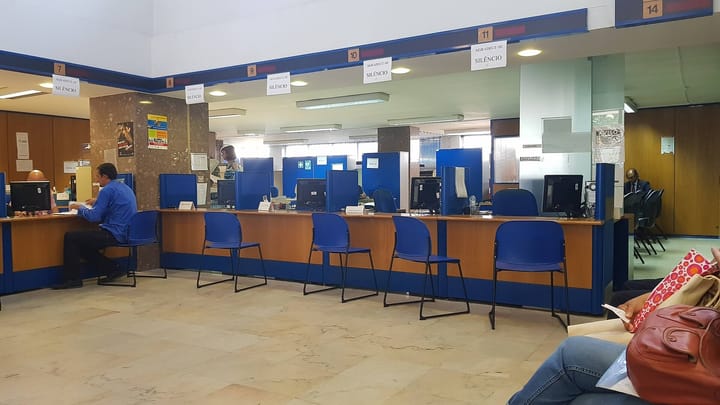
Exchanging a foreign driving licence in Portugal
Who must swap, who can keep driving on a foreign licence, and how the IMT (transport authority) process works.

Last verified: September 2026.
Who this is for
- You hold a driving licence from outside Portugal and have, or will soon have, a residence permit.
- Your licence is from an EU or EEA country and you want to know if you must swap it.
- Your licence is from the UK, US, Canada, Australia, Brazil, or another non-EU country, and you need the deadlines.
Not for you if: You are only visiting, or you want the road rules, tolls, speed limits, and fines: read "Driving in Portugal".
Updated September 2026. This version corrects the country tracks to match the rules in force since Decreto-Lei n.º 46/2022 (OECD and CPLP licence holders no longer face an exchange deadline while they meet the conditions), fixes the fine and the renewal cycles, and drops the state-by-state US table, which the IMT does not use.
Whether you can keep driving on your home licence after moving to Portugal depends on one thing: which country issued it. The transport authority, the IMT, sorts foreign licences into four tracks. EU and EEA licences never have to be swapped. Licences from the UK, US, Canada, Australia, Brazil, and other OECD or Portuguese-speaking countries can be kept under conditions. Most other licences carry a hard 90-day and two-year clock. A few are not valid at all. The exchange itself is done online, costs about 30 euros, and takes around 60 days, with a provisional permit to drive meanwhile.
This guide explains each track, what the deadlines really are, the documents the IMT asks for, the online portal, what it costs, and what to do if you are already late.
What the exchange is
The troca de carta de condução estrangeira (foreign licence exchange) replaces your home-country licence with a Portuguese carta de condução (driving licence). The IMT keeps the original licence; you do not get it back. In return you get a Portuguese card, which is valid across the EU, renews under Portuguese rules, and can have new categories added to it later.
The legal basis is Article 125 of the Código da Estrada (Highway Code, Decreto-Lei n.º 114/94, as amended), the Regulamento da Habilitação Legal para Conduzir (driving licence regulation, Decreto-Lei n.º 138/2012), and, for OECD and CPLP licences, Decreto-Lei n.º 46/2022, in force since 1 August 2022.
Which track are you on?
Find your issuing country in this table before you do anything else. The tracks are the IMT's own, and they matter more than anything else in this guide.
| Track | Countries | Can you drive on the foreign licence after becoming resident? | Exchange |
|---|---|---|---|
| 1. EU and EEA | The 27 EU states plus Iceland, Liechtenstein, and Norway | Yes, until the licence expires. You must register it with the IMT within 60 days. | Optional (mandatory within 2 years only if the licence has no expiry date) |
| 2. OECD and CPLP | Australia, Canada, Chile, Iceland, Israel, Japan, New Zealand, South Korea, Switzerland, Turkey, the United Kingdom, the United States; Angola, Brazil, Cabo Verde, Mozambique, São Tomé and Príncipe | Yes, indefinitely, as long as you are under 60, the licence was issued or last renewed less than 15 years ago, and it is valid | Optional while the conditions hold; no driving test if you do swap |
| 3. Convention or bilateral countries | Signatories of the Geneva 1949 or Vienna 1968 road traffic conventions, plus countries with a bilateral agreement (for example Andorra, Morocco, the United Arab Emirates). India, Russia, South Africa, Argentina, Egypt, the Philippines, and many others are on the convention list. | Only for the first 90 days after your residence permit is issued | Must apply within 2 years; after that a practical driving test is required |
| 4. Non-convention countries | Everyone else (China is the most common example) | No. The licence is not valid for driving in Portugal. | Possible, but only after passing the Portuguese theory and practical tests for each category |
The full convention list and the bilateral agreements are published as PDFs on the IMT site (links in Sources). If your country appears in both an OECD or CPLP list and the convention list, track 2 applies.
Two things to notice. First, the United States, Canada, and Australia are on track 2 with no state or province distinction; the IMT lists the country, not the state. Second, Brazil and the UK are also track 2, which means Brazilian and British residents are under no legal deadline to swap as long as they meet the age and 15-year conditions.
Before you become resident: the 185-day tourist rule
If you are not yet resident, a licence from any convention or bilateral country (tracks 2 and 3) lets you drive in Portugal for 185 days counted from the day after you enter the country. An International Driving Permit is only a translation of your licence; it does not extend this period, and the IMT will not exchange it.
Once you obtain a residence permit, the tourist rule stops and the track rules below take over.
Track 1: EU and EEA licences
You can keep driving on your EU or EEA licence until the expiry date printed on it. Exchanging is your choice.
You do have one obligation. Within 60 days of taking up residence you must register the licence with the IMT (registo de residência). The IMT says failing to register is an offence. Registration is free and is done in person at the IMT counter for your area, with:
- your identity document,
- the comunicação de residência (residence registration) from the Câmara Municipal if you do not hold a Cartão de Cidadão (this is the CRUE certificate EU citizens get from the Câmara), and
- your valid driving licence.
If your licence has no expiry date (some older EU licences are lifelong), you must exchange it for a Portuguese one within 2 years of becoming resident.
Most long-term residents swap eventually, because you cannot renew a foreign licence from Portugal, you cannot add categories or endorsements (for example TVDE) to a foreign licence, and Portuguese police checks run more smoothly with a Portuguese card. Swapping needs no test. Follow the steps under "How to apply" below.
Track 2: OECD and CPLP licences (UK, US, Canada, Australia, Brazil, and others)
Since 1 August 2022 the IMT accepts these licences for driving in Portugal even after you become resident, provided all of the following hold:
- the issuing country is a signatory to the Geneva or Vienna convention, or has a bilateral agreement with Portugal (every country on the list above qualifies),
- no more than 15 years have passed since the licence was issued or last renewed,
- you are under 60 years old,
- the licence is valid and not seized, suspended, expired, or cancelled anywhere, and
- you meet the Portuguese minimum age for each category on it.
While those conditions hold, there is no deadline and no obligation to exchange. Three limits apply, though:
- The permission only covers driving in Portugal. It is not an exchange, so it gives you nothing in other countries.
- You cannot add categories, TVDE or child-transport endorsements, or professional driver certificates (CAM and CQM) without exchanging first.
- When you turn 60, or your licence passes the 15-year mark or expires, the shortcut ends. At that point your licence is treated under the convention rules of track 3, with its 90-day and 2-year clock counted from your residence permit date, so it is safer to exchange well before you get there.
If you choose to exchange, you are exempt from every driving test for the categories you hold. You only need the medical certificate (and a psychological assessment for C, D, or E categories). Brazilian residents who hold the CPLP residence permit (Article 87-A of Lei n.º 23/2007) should note that the IMT does not accept that permit as proof of address on its own; add a certidão de domicílio fiscal (tax address certificate) from the Portal das Finanças.
Track 3: convention and bilateral countries
This is the track with real deadlines. Count from the date your residence permit (autorização de residência) was issued:
- Up to 90 days: you may keep driving on the foreign licence, but you must submit the exchange application to the IMT in this window.
- From day 91 to 2 years: you can still apply for the exchange, but you may no longer drive on the foreign licence until the Portuguese one is issued.
- After 2 years: you cannot drive on the foreign licence, and to exchange it you must pass a practical driving test.
Driving on a valid foreign licence outside these limits is a contraordenação under Article 125(8) of the Código da Estrada, with a fine of €300 to €1,500. Beyond the fine, an insurer can dispute a claim if the driver was not legally licensed at the time of an accident.
The practical advice is simple. If you are on track 3, book the medical appointment and file the application in your first month of residence. If you are past 90 days but under 2 years, file now and stop driving until the Portuguese licence arrives. If you are past 2 years, file anyway and expect a practical test.
Track 4: non-convention countries
A licence from a country outside both conventions and without a bilateral agreement is not valid for driving in Portugal at all. You can still apply to exchange it, but the IMT will require you to pass a multimedia theory test and a practical test for each category you hold. Each test costs an extra €30 (Portaria n.º 1165/2010). The theory test can be taken with an English translation for categories AM, A1, A2, A, B1, and B only.
You can prepare through an escola de condução (driving school) or, in the exchange case, put yourself forward for the tests directly. Driving school packages vary widely by region; budget several hundred euros at minimum and ask for a written quote.
Before you start: the documents
Everything is uploaded to the portal as scans, then shown in person later. Get these ready first.
| Document | Notes |
|---|---|
| Atestado médico (medical certificate) | Issued by a doctor and sent to the IMT through the electronic medical certificate platform. You upload nothing. Any GP can do it; many private clinics and online services offer it. There is no fixed price; expect roughly €20 to €50 privately. |
| Identity document | Cartão de Cidadão, or your título de residência (residence permit) from AIMA |
| Proof of residence | Not needed if you hold a Cartão de Cidadão. Otherwise the comunicação de residência from the Câmara Municipal (EU citizens: the CRUE certificate), and if your residence document shows no address, a certidão de domicílio fiscal from the Portal das Finanças |
| Passport | Only if your residence document has no photo and signature |
| Original foreign licence | Must be valid. It is handed over at the counter and not returned. |
| Certificado de autenticidade (certificate of authenticity) | Tracks 2, 3, and 4 only. Issued by the authority that issued your licence (or its consulate), stating which categories were obtained by test, what kind of test, and which by equivalence. Not required for EU or EEA licences. This is usually the slowest document to obtain, so request it first. |
| Certified translation | Only if the licence is not in Portuguese, French, English, or Spanish. It must be authenticated by the Portuguese consular service (or that of another EU state) in the issuing country. |
| Certificado de avaliação psicológica (psychological assessment) | Only if you want categories C, D, or E on the Portuguese licence |
The IMT warns that an incomplete application is not registered at all. You would have to start again through a new link, so check the list twice.
A name mismatch between your passport, licence, and residence permit (maiden versus married name, for example) is a common reason for delay. Fix it on the Portuguese side before you apply.
How to apply: step by step
The IMT runs the exchange through its A Minha Carta de Condução (My Driving Licence) portal at aminhacartadeconducao.imt-ip.pt. The in-person visit comes afterwards, when the IMT invites you.
- Get the medical certificate. Book a doctor, have the assessment (eyesight, hearing, general fitness, and a health declaration), and confirm the doctor has submitted it electronically to the IMT. Do this shortly before you apply, not months earlier.
- Request the certificate of authenticity from your home licensing authority (tracks 2 to 4). UK holders ask the DVLA; US holders ask the state DMV; Brazilian holders ask DETRAN. Start early.
- Log in to the portal with your Chave Móvel Digital (digital mobile key) or Cartão de Cidadão with a card reader. If you have neither yet, set up the Chave Móvel Digital first; it is worth having for Finanças and Segurança Social too.
- Choose the foreign licence exchange service, fill in the form (issuing country, categories, personal details), and upload the documents from the table above.
- Pay the fee. €30, with a 10% discount for online submission, so €27.
- Wait for the IMT to contact you with a date to attend an IMT counter. There you hand over the original foreign licence and any supplementary document, and the IMT takes your photo and signature.
- Receive the Portuguese licence. It is posted to your registered address (you can give an alternative address, or choose to collect it at an IMT counter).
If you prefer an in-person application, IMT counters and IMT desks in some Lojas de Cidadão accept them by appointment, but the online route is now the standard one and the in-person fee is the full €30.
Costs and timing
| Item | Cost |
|---|---|
| EU or EEA residence registration | Free |
| Exchange fee | €30 (€27 online) |
| Medical certificate | Roughly €20 to €50 privately; no fixed price |
| Certificate of authenticity | Set by your home authority; often a small fee |
| Certified translation (if needed) | Varies |
| Theory or practical test (track 4, or track 3 after 2 years) | €30 per test, plus driving school costs if you use one |
Timing: gov.pt gives an average of 60 days for delivery of the Portuguese licence, longer when a practical test is involved. During that period the IMT issues a guia provisória (provisional permit) that lets you drive until the card arrives. The IMT's own contact for the counter appointment is the step that most often takes longer than expected, so file early.
Common problems
"My licence is from a US state. Is my state on the list?" There is no state list. The IMT treats the United States as one OECD country on track 2. The same goes for Canadian provinces and Australian states.
"I am over 60 with a British or American licence." The track 2 shortcut does not cover you. Treat your licence as track 3: apply within 90 days of your residence permit, and within 2 years at the latest.
"My licence was issued more than 15 years ago and never renewed." Same answer. If you can renew it at home first, do so; otherwise apply under track 3 without delay.
"My foreign licence expired." The IMT only exchanges valid licences, on every track. Renew it in the issuing country first if that is possible.
"I missed the 2-year deadline." You can still exchange, but you will sit a practical test. That is the rule; the members of staff at the counter cannot waive it.
"The certificate of authenticity is taking months." File as soon as you have it. On track 3 the safe move is to request it before your residence permit is even issued, so the 90-day window is not lost waiting for post.
"I need to drive abroad while the exchange is pending." The provisional guia is a Portuguese document and is not reliably accepted by rental companies or police outside Portugal. Time the exchange around any trip where you need to drive.
"Can I use an International Driving Permit instead?" No. It is a translation, not a licence. It does not extend the 185-day tourist period or the 90-day resident window.
"I am Ukrainian under temporary protection." A separate regime applies: the same 185-day and 90-day windows, but the exchange is free of charge and the Portuguese licence is issued for one year, renewable while protection lasts.
After you are done
Your new carta de condução is valid across the EU and renews under Portuguese rules. For licences issued from 30 July 2016, group 1 categories (AM, A1, A2, A, B1, B, BE) are renewed every 15 years until age 60, then at 60, 65, and 70, then every 2 years. Group 2 categories (C1, C1E, C, CE, D1, D1E, D, DE) are renewed every 5 years until 70, then every 2 years. Every renewal needs a fresh medical certificate. Note that the Portuguese licence may carry a different expiry date from your original.
Keep a copy of your old licence details (number, issue date, categories) before you hand it over. The IMT does not return it, and your home authority may ask for those details if you ever move back and need to reapply there.
If you later add a category, a TVDE endorsement, or a professional driver qualification, all of it now runs through the same portal on the Portuguese licence.
Sources
- IMT, Troca de título de condução estrangeiro (overview and track pages): https://www.imt-ip.pt/condutores/reconhecimento/troca-de-titulo-de-conducao-estrangeiro/ (the four tracks, documents, fee, portal)
- IMT, Cartas de condução emitidas pelos países da OCDE e CPLP: https://www.imt-ip.pt/condutores/reconhecimento/troca-de-titulo-de-conducao-estrangeiro/cartas-de-conducao-emitidas-pelos-paises-da-ocde-e-cplp/ (country list, 15-year and under-60 conditions, test exemption)
- IMT, Países aderentes às convenções e outras situações: https://www.imt-ip.pt/condutores/reconhecimento/troca-de-titulo-de-conducao-estrangeiro/paises-aderentes-as-convencoes-e-outras-situacoes/ (185-day, 90-day, and 2-year rules)
- IMT, Países não aderentes às convenções: https://www.imt-ip.pt/condutores/reconhecimento/troca-de-titulo-de-conducao-estrangeiro/paises-nao-aderentes-as-convencoes/ (tests required, €30 per test, Portaria n.º 1165/2010)
- IMT, Países da União Europeia e do Espaço Económico Europeu: https://www.imt-ip.pt/condutores/reconhecimento/troca-de-titulo-de-conducao-estrangeiro/paises-da-uniao-europeia-e-do-espaco-economico-europeu/ (60-day free registration, documents)
- IMT FAQ, As cartas de condução emitidas por países da União Europeia são válidas em Portugal?: https://www.imt-ip.pt/faq/as-cartas-de-conducao-emitidas-por-paises-da-uniao-europeia-sao-validas-em-portugal/ (registration offence, 2-year rule for licences without expiry)
- IMT, Tenho carta de condução estrangeira: https://www.imt-ip.pt/condutores/informacoes-gerais/quero-ser-condutor/tenho-carta-de-conducao-estrangeira/ (translation rule, CPLP residence permit note, incomplete applications)
- IMT, Os países das convenções (PDF): https://www.imt-ip.pt/wp-content/uploads/2025/08/Os-paises-das-convencoes.pdf (convention country list)
- IMT, Instrumentos bilaterais no domínio dos títulos de condução (PDF): https://www.imt-ip.pt/wp-content/uploads/2025/08/INSTRUMENTOS-BILATERAIS-DOMINIO-TITULOS-CONDUCAO.pdf (bilateral agreements)
- IMT, Regime de proteção temporária Ucrânia: https://www.imt-ip.pt/condutores/reconhecimento/troca-de-titulo-de-conducao-estrangeiro/regime-de-protecao-temporaria-ucrania/ (Ukrainian regime)
- gov.pt, Trocar carta de condução estrangeira por portuguesa: https://www.gov.pt/servicos/trocar-carta-de-conducao-estrangeira-por-portuguesa (60-day average delivery, guia provisória, English theory test categories, dual nationality note)
- gov.pt, Renovar a carta de condução: https://www.gov.pt/servicos/revalidar-a-carta-de-conducao (renewal cycles)
- Diário da República, Decreto-Lei n.º 46/2022, de 12 de julho: https://diariodarepublica.pt/dr/detalhe/decreto-lei/46-2022-185971761 (OECD and CPLP regime, test exemption, entry into force)
- Código da Estrada, Artigo 125.º (consolidated text): https://www.segurancarodoviaria.pt/codigo-da-estrada/titulo-v-da-habilitacao-legal-para-conduzir/cap%C3%ADtulo-i-titulos-de-conducao/artigo-125o-outros-titulos/ (185 days, 90 days, €300 to €1,500 fine)
- A Minha Carta de Condução portal: https://aminhacartadeconducao.imt-ip.pt (application channel)
Last verified September 2026. Rules and fees change; check the official source before acting.