Ryanair Closes Check-In and Bag Drop 60 Minutes Before Departure From 10 November — Expats Flying Out of Lisbon, Porto and Faro Get an Extra 20 Minutes to Plan For
From 10 November 2026, Ryanair’s airport check-in and bag-drop desks will shut 60 minutes before every scheduled departure — up from the 40-minute deadline that has been the rule for years. The low-cost carrier, Portugal’s single...
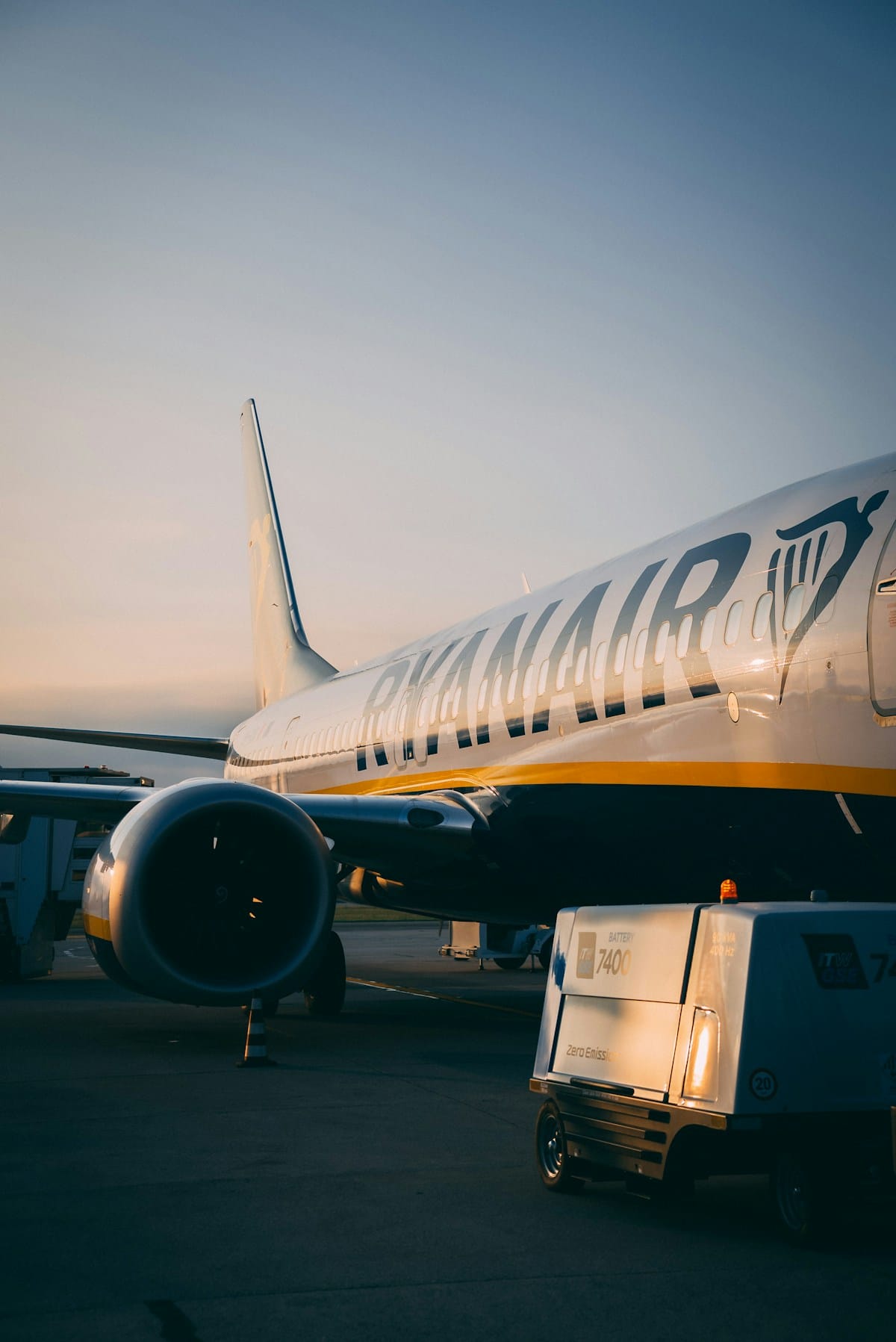
From 10 November 2026, Ryanair’s airport check-in and bag-drop desks will shut 60 minutes before every scheduled departure — up from the 40-minute deadline that has been the rule for years. The low-cost carrier, Portugal’s single largest airline by seats at Porto and by far the dominant budget operator at Lisbon and Faro, confirmed the change in a notice to passengers picked up by Público on 22 April. For expats who routinely route back to Dublin, London Stansted, Manchester, Berlin or Madrid on a Ryanair fare, the practical effect is simple: 20 extra minutes of airport padding every time you travel with a checked bag.
What changes on 10 November
Today, Ryanair closes its airport check-in counters and hold-baggage drop-off desks 40 minutes before departure. Arrive 39 minutes before your flight with a bag to drop, and you will typically still be accepted — arrive 38 minutes out, and the system has already locked you out. From 10 November, that cut-off moves to 60 minutes before departure. Ryanair says the new rule applies to every airport it serves, with no exceptions for smaller or quieter bases. In Portugal that means Lisbon (LIS), Porto (OPO), Faro (FAO), Ponta Delgada (PDL), Terceira (TER), Funchal (FNC) and Porto Santo (PXO), all of which carry meaningful Ryanair schedules during the summer season.
The 80/20 split Ryanair is betting on
In its own communication, Ryanair frames the move as something roughly 80% of its passengers should not notice. Those travellers fly with cabin bags only, check in online through the Ryanair app, and walk straight to security with a mobile boarding pass already on their phone. The new deadline does not affect them directly — online check-in still closes two hours before departure, unchanged. It is the 20% of travellers who fly with a hold bag who now need to arrive at the airport earlier. Ryanair has been steering passengers toward self-service kiosks for years, and the airline says it will have self-service bag-drop kiosks at more than 95% of its network airports by October, which it expects to absorb most of the extra foot traffic in the one-hour pre-flight window.
Why the airline is doing it
The formal rationale, in Ryanair’s wording, is that the earlier deadline will “accelerate baggage delivery and reduce wait times” at the other end of the flight. The airline says pushing bag-drop earlier clears the ramp-handling queue and, crucially, gives passengers “extra time to pass through security and passport control, ultimately reducing missed flights.” That last point matters. Ryanair has been one of the loudest voices in Europe complaining about bottlenecks at security and border control — including, specifically, at Portuguese airports, where non-EU passport queues at Lisbon and Porto have been flagged by the European Council itself in the last fortnight as “gravely deficient” and put under a 30 April deadline to improve. A 60-minute check-in deadline gives Ryanair a defensible position: if you miss the flight because you got stuck in the passport line, you arrived too late.
What expat travellers should actually do
The honest answer is: nothing dramatic, but adjust your defaults. If you are a British, Irish, Brazilian, Ukrainian, American or any other non-Schengen passport holder flying out of Lisbon or Porto, the combination of the new 60-minute Ryanair deadline and Brussels’ airport-border pressure means arriving two and a half hours before a Ryanair flight becomes the sensible new baseline, rather than two. If you travel cabin-only, the change genuinely does not affect you: you can keep arriving 90 minutes out and walking straight through. The one behavioural change worth making even for cabin-only flyers is to download the Ryanair app and check in before leaving home — the airline already charges a steep fee for airport check-in, and that is not going to get cheaper.
The fine print
The 10 November change does not alter Ryanair’s other airport deadlines that regularly trip up first-time flyers. Online check-in still closes two hours before departure. Boarding gates still close 20 minutes before the scheduled flight, with no late arrivals accepted. Priority boarding queues form roughly 40 minutes before departure. None of those move. The only change is the one at the front of the airport journey: if you have a bag to put in the hold, the desk is now shut by the 60-minute mark, and no amount of arguing with the ground-handling agent will reopen it.
Why this lands now
Europe’s low-cost carriers have spent 2025 and 2026 re-tightening boarding-and-bag rules that loosened during the post-pandemic recovery. Wizz Air pulled the same 60-minute lever last autumn at selected bases. EasyJet has quietly extended its recommended airport-arrival window to 120 minutes on most routes. Ryanair is the last of the big three budget carriers in Portugal to formalise the 60-minute rule, and it is doing so ahead of the summer 2027 schedule, not during it — a deliberate choice, Ryanair has told regulators before, designed to give passengers and ground handlers the whole winter to adapt. For the expat community that relies on these routes every school holiday and every visit home, the message is the one airlines have been delivering in slow motion for a decade: the budget fare still exists, but the margin of error around it has gotten a lot smaller. On the airport-border-control-and-EES rail, our 16 May 2026 read on the Humberto Delgado departures border-control IT failure that pushed waits past 60 minutes for non-Schengen passengers — six weeks into the EU EES 100% rollout and eight days after Ryanair's September-suspension demand sets the latest reference. On the cross-border public-health surveillance rail, our 18 May DGS hantavirus read — Canadian Andes-variant patient on a 10 May Tenerife-Canada repatriation flight with a 12-strong Portuguese cabin crew, FFP2 masks in cabin, post-landing decontamination, symptoms onset four days after the flight and a 45-day occupational-health surveillance window through 23 June sets the latest reference. On the Azores aviation operations side, our 24 May read on the SATA fog disruption — the recurrent Atlantic nevoeiro pinning Ponta Delgada and several inter-island runways from Friday 22 May, with SATA Air Açores and Azores Airlines running extraordinary Sunday-to-Monday rotations under slot constraints at Lisbon and Porto sets the latest reference. On the EES border-throughput file, our 27 May read on ACI Europe's 45-airport survey pegging Schengen Entry/Exit System border waits at up to 3.5 hours and a 70% processing-time lift, with Henna Virkkunen offering Brussels support to Portugal and DECO mounting a passenger-compensation push for delays at Humberto Delgado, Sá Carneiro and Gago Coutinho sets the latest reference. On the EU261, air passenger rights, Regulation 261/2004 revision, TAP / Ryanair / easyJet, ANAC, cabin-baggage rule and EU Parliament-Council trilogue side of the file, our 16 June read on Brussels inking the EU261 air passenger rights overhaul after 12 years of deadlock — the €250/€400/€600 compensation grid holds at the 3-hour threshold, cabin-baggage carve-out, 96-hour claim window and the mid-2027 applicability timeline reshape the TAP / Ryanair / easyJet operating read sets the latest reference. On the EasyJet Faro base, Algarve aviation capacity, ANA-Vinci Faro Airport throughput and Turismo do Algarve / regional-tourism side of the file, our 18 June read on EasyJet notching five years at the Faro base with a +3% summer capacity lift to 1.7 million seats across 18 routes — €8 billion Algarve economic print since the 2021 launch frames the five-aircraft step-up sets the latest reference. On the Azores air-connectivity and travel side of the file, Austrian Airlines' new Vienna–Ponta Delgada link sets the latest reference. On the flights, airports and passenger-rights side of the file, our guide to your air passenger rights flying to and from Portugal sets the latest reference. On the aviation-and-climate side of the ledger, Portugal's €2 carbon charge on air travel has quietly raised more than €266 million for the Environmental Fund since 2021.