Infraestruturas de Portugal Hands Mota-Engil the €113.5 Million Contumil-Ermesinde Quadruplication on the Linha do Minho — 24% Below the Base Price, Q1 2030 Completion, and the First Concrete Step Toward the Porto-Vigo High-Speed Link
IP awarded Mota-Engil the €113.5M Contumil-Ermesinde quadruplication on the Linha do Minho on 8 May 2026 — 24% below the €150M base price, Q1 2030 completion, ~€40M Portugal 2030 EU cofinancing inside a €226M envelope. First concrete piece of the Porto-Vigo high-speed link.
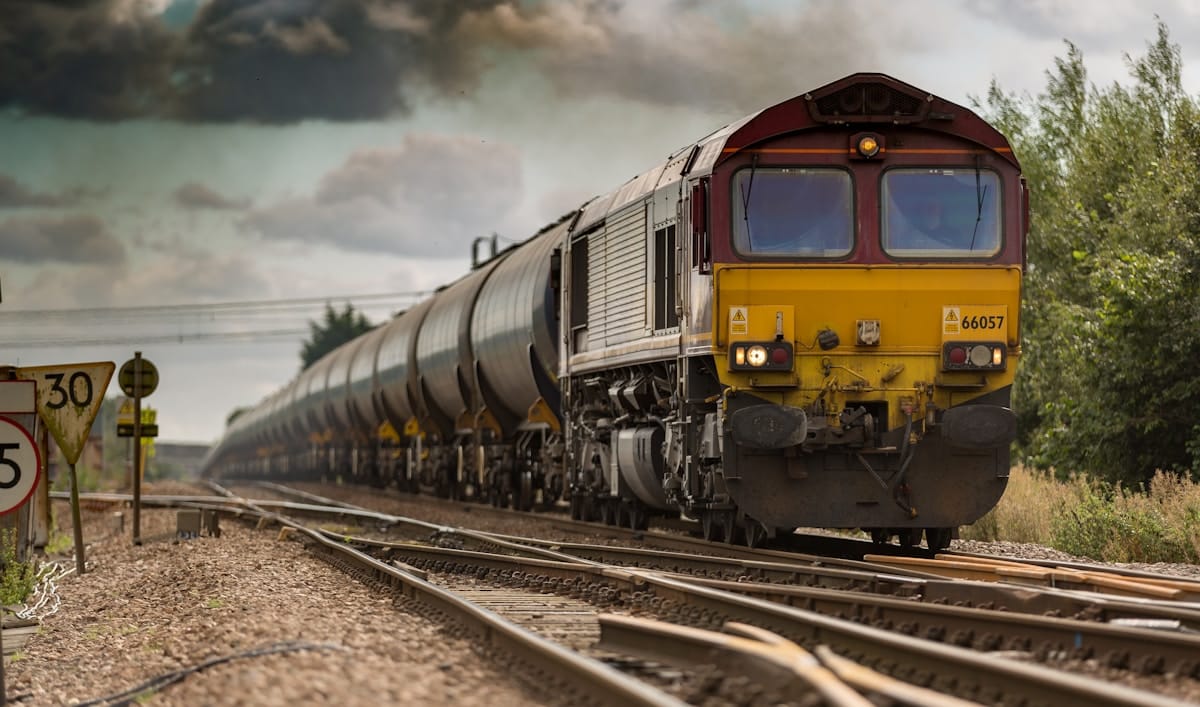
Infraestruturas de Portugal awarded Mota-Engil the construction contract for the quadruplication of the Linha do Minho between Contumil and Ermesinde on Friday, 8 May 2026, locking in a final price of €113.5 million on a public tender that opened with a base price of €150 million — a 24% discount on the public envelope. The 5.5-kilometre stretch between km 2+500 (north head of Contumil) and km 8+040 (entrance to Ermesinde) is the single hardest bottleneck on the northern half of the Portuguese rail network, and the works concession runs to the first quarter of 2030 over a 1,385-day execution window. The total project envelope, including the ~€40 million in studies, expropriations, signalling and telecoms work that IP keeps off the construction tender, lands at roughly €226 million, with a Portugal 2030 EU co-financing slice of about €40 million.
What the quadruplication actually is
The Contumil-Ermesinde stretch is the section where every train heading north out of Porto Campanhã from the Linha do Minho, the Linha do Douro and the ramal de Braga collapses onto a two-track common trunk before fanning out again. Adding two additional tracks across these 5.5 kilometres lets IP segregate suburban services (the Porto-Braga and Porto-Guimarães urbano frequencies) from long-distance Intercidades and freight, and removes the operational ceiling that has stopped CP from running a clean cadenced timetable on the Minho-Douro corridor. IP states the section already handles more than 200 trains a day and projects a roughly 30% capacity uplift after the works are commissioned.
The full work package, station by station
Mota-Engil's contract covers more than just laying two extra tracks. The construction scope includes:
- Reformulation of the Contumil station, including the platforms and signal-block layout north of the station throat;
- Reconfiguration of Rio Tinto station at km 4+500, where the line crosses the Vila Real road corridor;
- An adjusted Águas Santas platform, the suburban halt that takes Maia commuters in;
- Modifications at Porto Campanhã, the southern anchor of the corridor, to absorb the extra trackwork at the throat;
- Suppression of every level crossing along the alignment, both for vehicles and pedestrians, replaced by elevated or underpass crossings;
- New parking zones attached to the station catchment areas;
- Signalling and telecommunications systems compatible with the IP-wide programme to migrate to a unified ERTMS/ETCS standard.
The environmental impact assessment that ran through 2023 confirmed the works require the demolition of 88 buildings along the 5.5-kilometre stripe, of which 21 are inhabited homes today; the expropriation budget sits inside the €40 million off-tender envelope.
Why this is the first piece of the Porto-Vigo high-speed jigsaw
Miguel Cruz, the IP chairman, used the award announcement to frame the Contumil-Ermesinde quadruplication as a "structuring intervention for the northern railway network" — and as the first phase of the Porto-Vigo high-speed connection that the Plano Ferroviário Nacional 2030 puts on the same delivery clock as the Lisbon-Porto high-speed line. Without the four-track north exit out of Porto, the high-speed line cannot share the corridor with the suburban and freight services that already congest it; with the quadruplication on the books, IP can route the future high-speed alignment onto the new dedicated tracks for the first ~5 km out of Porto Campanhã and pick up the Galician network on dedicated alignment north of Ermesinde.
The €40 million PRR/Portugal 2030 cofinancing slice
The construction tender draws roughly €40 million in EU co-financing from the Portugal 2030 envelope, the structural-fund successor programme to Portugal 2020 that has been running well below its 2024-2026 disbursement target — Portugal slipped to last place on the EU's Portugal 2030 disbursements ranking earlier this week, with €4.06 billion of €22.6 billion booked. A large, well-defined infrastructure award like this one is exactly the kind of project the Compete 2030 reprogramming approved in March 2026 was designed to push toward shovels-in-ground status before the Brussels-mandated 2029 N+2 deadline.
Why expat residents — especially in greater Porto — should care
The Contumil-Ermesinde corridor carries the suburban trains foreign residents in Maia, Valongo, Trofa and Famalicão use to reach Porto for work, school and the airport-bound metro interchange. The quadruplication removes the single-track bottleneck that has capped suburban frequency at 30-minute headways for two decades, and it sets up the eventual Porto-Vigo high-speed line that will let residents in northern Portugal reach Galicia and the Spanish AVE network without changing trains. The 1,385-day clock means trackside disruption — partial line closures, replacement bus services on selected Saturday and Sunday windows, and likely a phased commissioning between 2028 and 2030 — will be a regular feature of CP's Linha do Minho operations between now and the Q1 2030 handover.
Mota-Engil now joins a list of large Portuguese contractors with multi-year IP backlogs running through the end of the decade: the same group is also delivering the Lisbon Violet metro line cleared by Brussels under the Foreign Subsidies Regulation, the Hospital Todos os Santos in Loures (currently under government renegotiation), and a sustainability-linked retail bond at 4.6% gross now in subscription with savers through 19 May. On the state-enterprise governance side, our 23 May read on the new Infraestruturas de Portugal board — Duarte Pitta Ferraz taking the chair of the Conselho Geral e de Supervisão and Paulo Carmona stepping out of DGEG to take the CEO seat after a 17-month caretaker run by Miguel Cruz, with Porto-Lisbon TGV, Porto-Vigo, Lisbon-Madrid and the Third Tagus Crossing pipeline anchoring the 2026-2030 mandate sets the latest reference. On the rail-safety and infrastructure side, our 25 May read on the Eurostat 2024 rail-safety release — Portugal at the top of the EU fatalities-per-thousand-kilometres-of-network ranking at 6.2 deaths per 1,000 km against Hungary 5.8, Slovakia 5.7, Lithuania 4.6 and Poland 4.3, EU bloc toll easing 10.8% to 750 with 65.6% from unauthorised track intrusion and 25.5% at level crossings sets the latest reference. On the Norte tourism and regional-economy side of the file, our 30 May read on IPDT's 29 May counterfactual study on the Porto-and-Norte tourism footprint — €2.4 billion in VAB and 117,321 direct jobs (5.25% of regional VAB, 7.24% of regional employment), €4.2 billion and 195,000 jobs on the expanded reading that folds in indirect, induced and reputational effects, with Alto Tâmega at +8.3%, Tâmega-e-Sousa at +6.5%, Alto Minho at +6.2% and Douro at +3.9% outpacing Grande Porto on the Q1 2026 dormidas tape sets the latest reference. On the Linha do Corgo, Trás-os-Montes rail spine and Plano Ferroviário Nacional side of the file, our 7 June read on the Assembleia da República's Comissão de Infraestruturas closing a cross-bench consensus on reopening the 96-kilometre Régua-Vila Real-Chaves Linha do Corgo — Daniel Conde's 1,068-signature petition, PS rapporteur José Carlos Barbosa, the 1990 and 2009 stage-wise closures under Cavaco Silva and Sócrates, the PFN 71.4-km metric-gauge alignment, UTAD's 8,500-student mobility argument, and the next-step plenary resolution-project vote sets the latest reference. On the high-speed rail, Porto-Gaia and Douro-crossing side of the file, our read on Porto and Gaia rejecting the road deck on the new Douro high-speed rail bridge sets the latest reference. On the rail and interior-mobility side of the file, Parliament's push to reopen the Corgo railway sets the latest reference. On the rail-network side of the file, Iberia's decision to keep the broad rail gauge explains why Portugal and Spain are refusing the switch to Europe's standard gauge. On the wider question of where the national network is heading, what Portugal has told Brussels about changing the gauge of its railways sets out the Infraestruturas de Portugal study delivered to the European Commission, which prices conversion to European gauge at 6 to 6.9 billion euros and 17 to 30 years of works and concludes that it will hardly be justifiable.