Rubi Line Delayed Again: Porto Metro's Douro Crossing Won't Open Until 22 July 2028
Porto Metro's 6.4-kilometre Rubi Line across the Douro to Santo Ovídio has slipped again — commercial service is now targeted for 22 July 2028. The EUR 487.9 million project adds a dedicated metro-and-pedestrian bridge over the river and 22 new trains, and is funded by the PRR and the state budget.
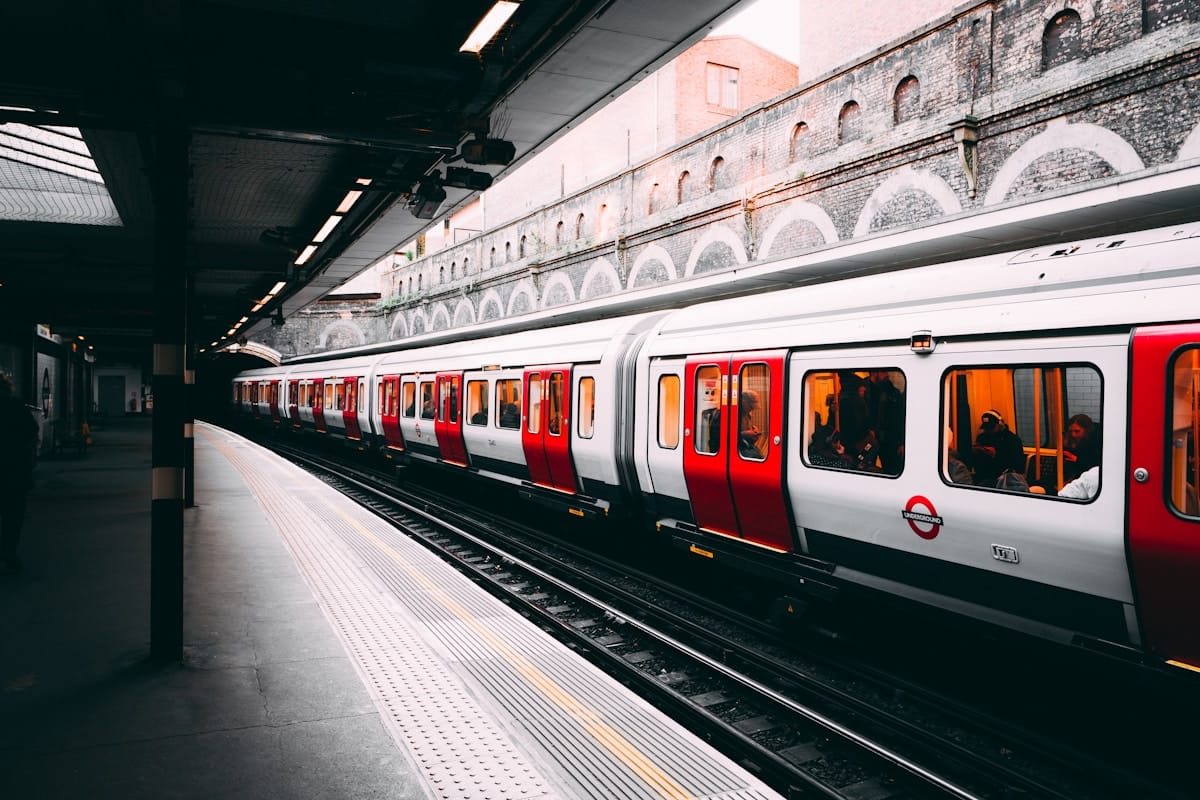
Porto Metro's most politically charged project of the decade — the Rubi Line connecting Casa da Música to Santo Ovídio, over a brand-new bridge across the Douro — will not enter commercial service until 22 July 2028, more than a year later than the last publicly announced deadline. The new timetable was reported by Dinheiro Vivo on 19 April, drawing on Metro do Porto's updated works schedule.
A Line Originally Promised for 2026
The 6.4-kilometre Rubi Line is the fourth branch added to the Porto Metro map in the current infrastructure cycle, alongside the Pink, Yellow-extension, and Violet/MetroBus projects. At the time of Metro do Porto's 2020 business case, the Rubi was expected to open in 2026. By 2024, the target had slipped to 2027 when the concessionaire formally committed in public filings. This week's revision pushes commercial service into the second half of 2028, with a specific target date of 22 July.
The line will have eight stations. On the Porto side, it will connect at Campo Alegre and Casa da Música, providing an interchange with the existing Yellow Line on the north bank of the Douro. On the Vila Nova de Gaia side, it will descend the slope through Arrábida, Candal, Rotunda, Devesas and Soares dos Reis before terminating at Santo Ovídio — a node already served by the Yellow Line and now becoming a multi-line hub.
The Ferreirinha Bridge at the Heart of the Project
The centrepiece of the Rubi is the Ponte D. Antónia Ferreira, a new Douro crossing named for the nineteenth-century port-wine matriarch and reserved exclusively for metro trains, pedestrians and cyclists. It is the first new pedestrian-scale crossing of the Douro in Porto since the Luís I in 1886 was repurposed for the Yellow Line, and the first dedicated metro bridge in the city's history.
The updated Metro do Porto schedule targets completion of the bridge deck in April 2028, with dynamic testing of trains across the new crossing beginning the following month. That compresses the window between structural completion and commercial operation to roughly three months — a tight but feasible run-in for a fully automated system. The tunnels either side of the bridge are on earlier milestones: the Porto-side tunnel at Campo Alegre is targeted for completion in March 2027, and the Gaia-side tunnel at Devesas in April 2027.
The Money
The Rubi Line carries a headline budget of EUR 487.9 million, drawn from Portugal's Recovery and Resilience Plan (PRR) and the state budget — the same funding architecture that backs the Pink Line in Lisbon and the Violet/MetroBus in Porto. A separate EUR 24 million signalling tender has been relaunched after the first round failed to attract a compliant bid, a setback that adds procurement risk to a project whose critical-path item now shifts month by month.
Metro do Porto has also confirmed that the first of 22 new Rubi trains — a next-generation CAF fleet — is scheduled to be delivered in January 2027, with the remaining vehicles arriving through 2027 and early 2028. The pre-operational phase will begin in June 2028, followed six weeks later by the formal opening for fare-paying passengers.
Why the Slip Matters
Three things make the Rubi's delay more consequential than the headline number suggests. First, the Rubi is the only planned metro line that adds an entirely new cross-Douro connection, alleviating pressure on the Luís I bridge whose combined metro-tram-pedestrian configuration is already at capacity in rush hour. Every year the Rubi slips is another year that growth in Gaia-Porto commuting has to absorb on the existing crossing.
Second, Vila Nova de Gaia has been zoning residential and mixed-use development on the assumption that Rubi stations at Candal, Devesas and Soares dos Reis would be operational by 2027. A 2028 opening shifts the economic case for those developments — and the tax revenues Gaia has factored into its medium-term plans — later into the decade.
Third, the Rubi is funded by the PRR, whose disbursement window closes in 2026. Projects that slip past the PRR deadline have to be refinanced from the state budget or from EU-cohesion replacement funds, a procedural headache that has already forced Metro do Porto to rework its funding matrix. Metro leadership has not publicly detailed how much of the EUR 487.9 million is locked in versus exposed to refinancing risk, but the question will come up again when the 2027 state budget is debated in Parliament later this year.
What This Means for Porto Commuters
For daily commuters between Porto and Gaia, the practical message is that no relief is coming before summer 2028. The existing Yellow Line, the 900 series bus routes, and the Luís I bridge-deck share the congestion that the Rubi is designed to relieve. On the upside, the Violet Line — Porto's new hydrogen-powered MetroBus, which entered paid service this week — absorbs a different corridor along Avenida da Boavista and takes some of the pressure off the Casa da Música interchange that the Rubi will eventually feed into.
For residents and expats considering property on the Gaia side of the Douro, the Rubi timeline is a medium-term planning variable rather than a short-term one. A 2028 opening is close enough to shape rental demand and resale value, but distant enough that any purchase made in 2026 will live with the existing transport mix for at least two more years.
The Bottom Line
The Rubi Line remains, on paper, one of the best-specified urban-transport projects in Portugal: a fully new Douro crossing, a modern fleet, an integrated interchange at both ends, and a funding envelope large enough to deliver the whole system. Execution is the constraint. The 22 July 2028 date is the third major target for the project and the one with the most concrete sub-milestones attached, but Metro do Porto's silence on the reasons for this week's slippage — and the signalling tender's second run — means the risk of further delay is neither zero nor quantified. (Background: see our piece on the Lisbon Navegante and Porto Andante pass guide.)
Sources: Dinheiro Vivo, "Prazo das obras da Linha Rubi do Metro do Porto derrapa mais de um ano para 2028", 19 April 2026; Metro do Porto project schedule cited therein; public-tender documentation on the EUR 24 million signalling contract. On the Norte tourism and regional-economy side of the file, our 30 May read on IPDT's 29 May counterfactual study on the Porto-and-Norte tourism footprint — €2.4 billion in VAB and 117,321 direct jobs (5.25% of regional VAB, 7.24% of regional employment), €4.2 billion and 195,000 jobs on the expanded reading that folds in indirect, induced and reputational effects, with Alto Tâmega at +8.3%, Tâmega-e-Sousa at +6.5%, Alto Minho at +6.2% and Douro at +3.9% outpacing Grande Porto on the Q1 2026 dormidas tape sets the latest reference. On the high-speed rail, Porto-Gaia and Douro-crossing side of the file, our read on Porto and Gaia rejecting the road deck on the new Douro high-speed rail bridge sets the latest reference. On Porto's roads and traffic, our report on Porto's weekday lorry ban across the VCI ring road sets the latest reference. On the trade-fair, Porto business and commercial-property side of the file, the €40 million sale of the Exponor fair complex sets the latest reference. On the Porto Metro, urban-transit and infrastructure side of the file, Porto's planned Metro extension to Gondomar sets the latest reference. On the Porto transport and heat-resilience side of the file, Porto's ageing Eurotram and their summer air-conditioning problem sets out why the metro's oldest cars struggle above 35°C. On the local-government side of the file, the new Porto to Gondomar municipal boundary sets out which parcels moved, and what a change of município does to a household's bills.