Reading Portugal's Q1 2026 Industrial Picture as One File — INE's €8.7 Billion Trade Gap, Bosch's 2.6% Revenue Slip, Navigator's 64% Profit Collapse and the 7.8% Insolvency Uptick All Point at the Same Storm-Plus-Energy Squeeze
INE's €8.7B Q1 trade deficit, Bosch Portugal -2.6%, Navigator's 64% profit drop and a 7.8% insolvency uptick are not four separate stories — they are one industrial file with a shared storm-and-energy bill at the bottom of it.

The Q1 2026 numbers landed across the week in four different press releases — INE on the trade balance, Bosch on the Portuguese subsidiary's full year, Navigator on quarterly results, and Informa D&B on the insolvency tape. Read separately, each is a single line in a sectoral file. Read together, they describe one industrial squeeze with a remarkably tight common cause: the late-February and March storms that ran the Atlantic seaboard, an energy bill that got worse before it got better, and a CO₂ allowance market that did not relent.
The four numbers, in one column
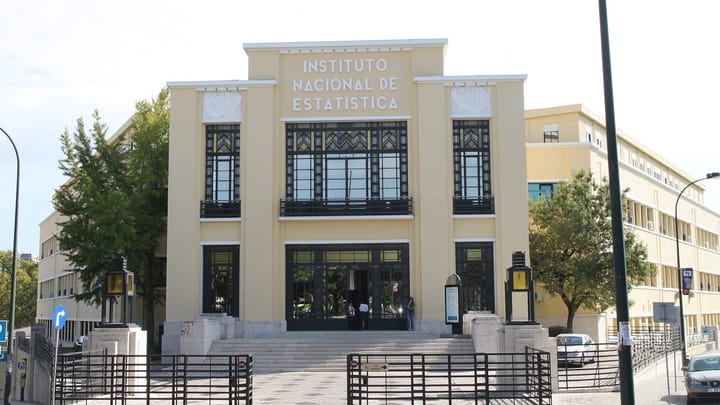
INE: cumulative Q1 2026 goods deficit at €8.7 billion, a 34% year-on-year widening. Exports fell 6.5%; the energy import bill alone added roughly €1.3 billion to the gap. Bosch Portugal: 2025 closed at €2.2 billion in revenue, down 2.6% from the €2.4 billion 2024 record. The contraction is largely the Building Technologies divestiture, but the underlying organic line is also flat-to-soft. Navigator: Q1 2026 net profit of €17.2 million, down 64% from a year earlier; sales -19% to €427 million; EBITDA halved to €65 million; storm damage at Figueira da Foz and Vila Velha de Ródão named directly. Informa D&B: 701 corporate insolvencies through April, up 7.8% on the same period in 2025. Construction leads at +28%; textile-and-apparel +21% — the same sub-sector flagged by the Associação Têxtil e Vestuário de Portugal as facing one-sided exposure to the EU's polyamide antidumping tariff.
The common bottom of the file
The single line that runs through three of the four data points is energy and weather. The €1.3 billion add to the Q1 import bill is not a coincidence — it is the same window that saw fuel and gas prices peak before the Hormuz de-escalation cracked Brent under $100 on 7 May. Navigator's profit collapse is a textbook tradable-industry response: high gas-and-CO₂ exposure on the input side, lower realisable export prices on the output side, and physical damage at two large-scale paper mills sitting in the same storm corridor. Bosch's softness sits closer to the Aveiro and Braga industrial belts but reads from the same playbook on input costs. Insolvencies in construction trace back to floods that wrote off projects mid-build and rates that have not yet absorbed the ECB's slow turn.
The textile sub-line
The +21% insolvency print in textile and apparel is the file's most under-noticed line. The polyamide antidumping tariff that took effect in March hit Portuguese spinners but left the Asian-made finished garment outside the duty perimeter — meaning the Portuguese textile chain pays the tariff on yarn while competitors importing finished garments do not. ATP has been escalating the political file against Brussels since the measure landed; the insolvency print is the operational consequence working its way through the Q1 books.
What does and does not flip
Three of the four pressures unwind to varying degrees in Q2: Brent below $100 takes the energy bill off the top of the import line; storm-damage charges are one-off and do not repeat; and the rate path is moving toward a June ECB cut. CO₂ allowance prices are stickier, the polyamide tariff is a multi-year EU process, and the export weakness in non-energy goods reflects German industrial demand more than anything Lisbon controls. Net of those, the Q1 numbers are likely the worst single quarter of 2026 for the industrial side — not the start of a structural slide.
What this means for expats
- If you work in industry or the export chain: the Q1 data will show up in employer guidance and bonus accruals; it does not yet show up in a labour-shedding wave. Watch the Q2 print due late August for the trend signal.
- If you are buying property in storm-impacted regions: insurance pricing at renewal will tighten in Centro and Alentejo coastal corridors; budget for a step in premium even on properties that escaped damage.
- If you hold equity in PSI industrials: Navigator's 19% sales drop frames a Q2 reset; the buyback channels at Corticeira Amorim and the dividend at CGD remain the larger flows for retail PSI exposure.
- If you import or export through Portuguese ports: the freight-side noise from the storms has not fully cleared; Q2 throughput at Sines and Leixões will normalise faster than the road and rail chains feeding them.
One quarter does not make a recession, and Portugal's services economy carried tourism and real estate cleanly through the same period. But the industrial column reads like one file, not four — and Q2 will tell whether the storms-plus-energy story stays a Q1 anomaly or settles into the new operating cost base.