Going Into Summer 2026 With No Labour Deal — Trabalho XXI Walks Into Parliament Unsigned, the CGTP Locks 3 June for the General Strike, and Private-Sector Wages Print +6% as the Insolvency Tape Climbs 7.8%
Trabalho XXI walks into Parliament without a Concertação Social signature, the CGTP has locked 3 June for the general strike, private-sector wages are running +6% YoY and the insolvency tape is up 7.8%. The labour-policy summer in Portugal will be busier than the political calendar suggests.
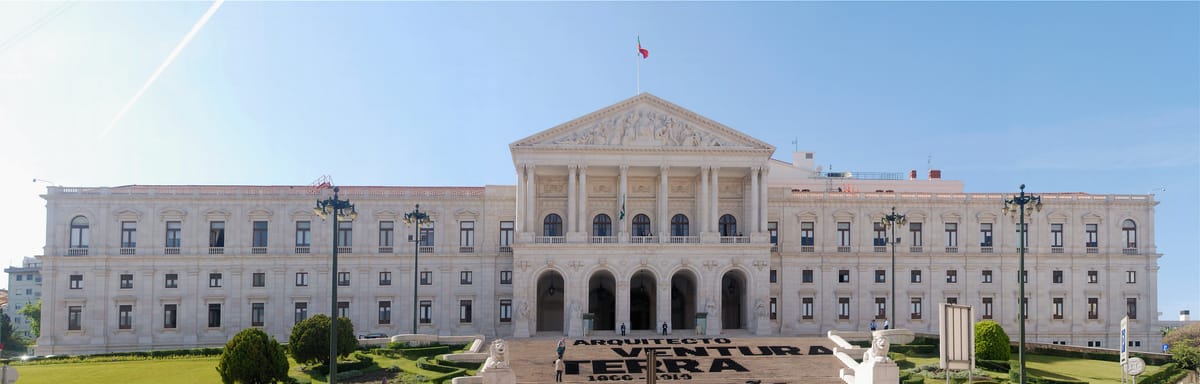
The Wednesday-evening Concertação Social that closed nine months of negotiations on Portugal's Trabalho XXI labour package ended without a tripartite signature. Minister Rosário Palma Ramalho will hand the anteprojeto to Parliament; the CGTP has confirmed 3 June for the general strike; the UGT pulled its conditional support late in the talks; and the CIP filed its own list of conditional cedências. Stack that against an insolvency tape running +7.8% year-to-date and a private-sector wage growth print at +6% year-on-year, and the summer ahead is the busiest stretch of Portuguese labour policy in a decade.
Where the Concertação Social actually broke
Six points carried the negotiation into the final week, and three of them broke it. The first was the conversion regime for fixed-term to open-ended contracts after three renewals — the package proposes a tightened conversion clock; the CIP wants a longer tolerance window; the UGT wants the conversion automatic. The second was the easier-firing line — a streamlined dispensa por inadaptação process; the unions read this as a reopening of the dispensa-without-cause door that the post-troika settlement had closed. The third was the cedências menu the CIP filed in mid-April: tax cuts on overtime hours, a lower social-security TSU rate on long-term contracts, and a streamlined work-permit channel for foreign hires. The Trabalho XXI text picks one of three; CIP wants two.
The 3 June general strike — what is and isn't on the line
The CGTP's 3 June convocation is a 24-hour general strike with the public-administration and transport sectors as the operational core. Function públicas, IP's railway operations and the Lisbon and Porto metro networks are the tape that determines visibility. The political register is the larger calendar event: the strike lands four days before the next ordinary Council of Ministers and one week before the budgetary policy that finalises the 2026 Programa de Estabilidade. The CGTP's calculation is to compress the parliamentary debate into a window where social mobilisation is the dominant headline.
The wage-and-insolvency contradiction that nobody is reconciling
Two prints from the past fortnight do not sit together comfortably. INE and the Bank of Portugal have private-sector nominal wage growth running at +6% year-on-year through the first quarter — the strongest single quarter since the post-pandemic catch-up window. Informa D&B has corporate insolvencies up 7.8% in the first four months, with construction (+28%) and textile-and-apparel (+21%) leading. The implied gap is straightforward: large and medium-sized employers are pricing the labour squeeze into nominal pay; the small and very-small end is pricing the same squeeze into the insolvency print. Trabalho XXI does not really speak to either: the package addresses contract-form regulation rather than wage formation. The CGTP's 3 June platform is asking for both — wage indexation and a contract-form rollback — and is unlikely to receive the second.
The Bosch tell
Bosch Portugal closing 2025 at €2.2 billion — down 2.6% — and signalling €85 million in new investment for 2026 is the single most legible read on what large-scale German-owned industry expects. The expansion at Aveiro on heat pumps is the line item that says yes; the Ovar divestiture and the flat organic line is the line item that says cautious. Multiply Bosch by Faurecia, Continental, and the upstream auto-component chain in Centro, and you get a labour-demand profile that wants more workers but is not racing to lock in fixed open-ended contracts at a moment when the regulatory perimeter is in flux. Trabalho XXI will define how that demand gets formalised; the unsigned status of the package is the reason hiring decisions in the industrial belt are running on rolling fixed-terms rather than commitments.
What this means for expats
- If you work on a fixed-term contract: the conversion regime is the live line in the parliamentary text. Until the package is voted, employers will push the renewal cycle to the maximum allowed under current law; ask explicitly about the post-vote conversion clock at any renewal conversation in May or June.
- If you are hiring in industry or services: the cedências menu the CIP filed will not survive intact, but the parliamentary geometry — PSD, IL and Chega together control a majority — means the easier-firing line is more likely to pass than the unions are pricing. Plan recruitment off the assumption that the regulatory window for open-ended contracts widens, not narrows.
- If you are mid-career and on the wage-growth side: the +6% print is concentrated in industry, banking and tech — not in retail, hospitality or care services. Pay rounds in May and June are the practical translation; renewal conversations should reference the Q1 print directly.
- If you depend on public services on 3 June: plan around it. Lisbon and Porto metros, IP railway operations, function pública contact points and school transport are the likely operational lines. Pre-paid travel and one-day timing flexibility are the cheap insurance.
The summer ahead is not a recess for Portuguese labour policy. The package walks into Parliament unsigned; the strike runs on 3 June; the wage-and-insolvency contradiction stays unresolved. The next legible signal is whether Trabalho XXI clears the parliamentary speciality stage before the recess — and whether the CGTP escalates beyond a one-day strike if the easier-firing line clears the floor.