Portuguese Almond Exports Cross €115.45 Million in 2025 as Shelled Volumes Overtake In-Shell for the First Time at 65% of Value — Sector Targets the Fourth Global Producer Slot Behind the US, Spain and Australia
Portuguese almond exports cross €115.45 million in 2025 on a 12% volume lift to 41,800 tonnes. Shelled almonds overtake in-shell value for the first time at 65% of the export tape; sector targets the fourth global producer slot behind the US, Spain and Australia within five years.
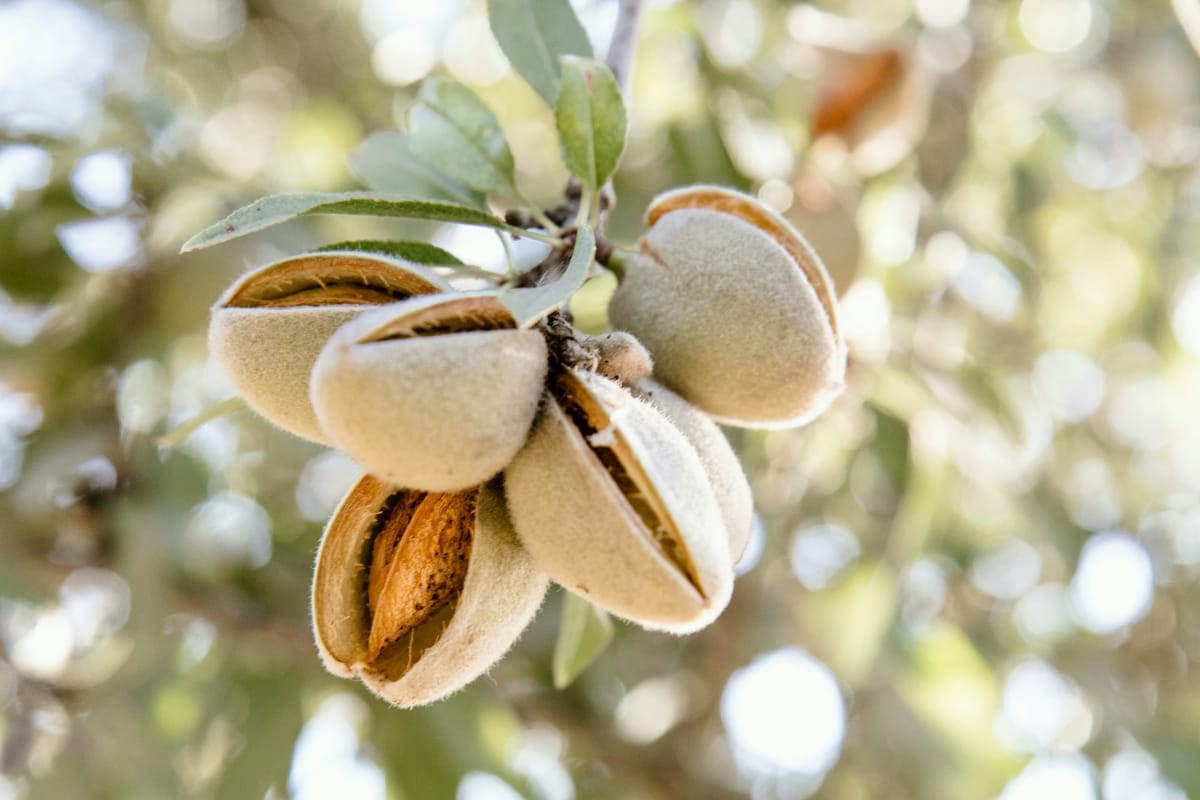
The Associação Portuguesa dos Produtores de Frutos Secos has published the 2025 sectoral file with almonds taking nearly three-quarters of total Portuguese dried-fruit export value — €115.45 million inside a €156 million sector tape, up from €110 million in 2024 on a €130 million sector total. The 2024-to-2025 step is a roughly 5% lift on the kernel-value line and a 20% lift on the broader dried-fruit perimeter, with almonds carrying the entirety of the export pull.
The Numbers Behind the Headline
Volumes climbed from 37,250 tonnes in 2024 to 41,800 tonnes in 2025, a 12% lift on the tonnage line. Average kernel prices recovered to €5.00–5.50 per kilogram, well above the €3.00–3.50 trough of the 2023–2024 cycle, on global supply constraints from drought-hit Australian and US orchards. The structural shift inside the 2025 export mix is that shelled-almond value crossed in-shell value for the first time and now accounts for 65% of the export tape — a margin signal that Portuguese sector capacity is moving up the value chain into kernel processing rather than exporting raw in-shell tonnage to Spanish processors.
Geography and Position
Trás-os-Montes carries the historical Portuguese almond block, with the Alentejo orchards entering the export count at scale through the early 2020s on the back of large-scale irrigated installations. Spain remains the dominant single buyer of Portuguese almond output by a wide margin, with EU intra-trade capturing more than two-thirds of the export book. Sector association president Tiago Costa told Jornal Económico the trajectory could lift Portugal to the fourth global producer slot in 2025–2026, behind the United States (which still controls roughly 70% of the world market), Spain, and Australia — with current installed plantations expected to triple output as they reach commercial maturity over the next five years.
Price Backdrop
The price floor recovery is the structural enabler. The 2023–2024 trough drove a wave of producer exits and orchard non-replanting; the 2025 €5.00–5.50 zone is back to the marginal-economics threshold that supports new Alentejo and Beira Interior plantations. US almond stocks closing at multi-year lows, sustained drought in Australia, and a softening Spanish output curve all support the price line into 2026.
Inside the Wider Export Frame
The almond file lands inside a broader Portuguese food-and-beverage export picture that lifted 2.03% to €1.964 billion in Q1 2026 despite a 17.4% collapse into the United States on the Washington 10% tariff window. Almonds are largely intra-EU and thus insulated from the US tariff shock — and they are the most concentrated value contributor inside the frutos secos heading on the INE foreign-trade tape.
What This Means for Expats — The Bottom Line
- Trás-os-Montes and Alentejo orchard land is the live agricultural-investment story. Plantation IRR has reverted to the marginal-economics zone that supports new installations; foreign-investor inquiries through 2025 concentrated on the Beja–Évora–Portalegre arc and the Mirandela–Vinhais axis. Land prices in those corridors are firming on the back of the trajectory.
- Almond-based food-product retail prices will stay elevated. Kernel pricing at €5.00–5.50 per kilo flows through to nougat, marzipan, pastel-de-amêndoa and the seasonal Christmas market; expat household budgets should expect the elevated 2025 shelf-price tape to persist through the 2026 Tirada window.
- Portuguese almond output is largely insulated from US tariff exposure. Unlike wine, olive oil and tomato concentrate, the almond export book sits inside the EU intra-trade perimeter — Portugal's almond producers are not in the firing line of the Washington 10% wall the way other Portuguese food-and-beverage producers are.
- The frutos secos heading is a working diversification axis for the Portuguese agri-export book. Walnuts, pistachios and chestnuts make up the remaining 25% and are themselves on rising export curves; the sector association expects total dried-fruit exports to cross €200 million within three years if installed plantations deliver to plan.
The 2026 harvest window opens in mid-August across the Trás-os-Montes block and runs through October across the Alentejo south-orchards; the Associação Portuguesa dos Produtores de Frutos Secos publishes the next quarterly tape in early September. On the compensation side of the file, the natural-catastrophe declaration that opened the €10 million farm-recovery call sets out the 32 parishes across nine councils the despacho actually names, the 30 percent damage threshold, the 100 / 80 / 50 support scale that turns on whether you hold agricultural insurance, and the 17:00 deadline on 27 October.