Portugal's Housing Market Hits Record Highs as 'Demand Stack' Squeezes Buyers
The numbers tell a story that anyone searching for a home in Portugal already knows viscerally: the market has never been more expensive. Average bank appraisal values reached a record 2,025 euros per square metre in late 2025, representing a 17.7...

The numbers tell a story that anyone searching for a home in Portugal already knows viscerally: the market has never been more expensive. Average bank appraisal values reached a record 2,025 euros per square metre in late 2025, representing a 17.7 percent year-on-year increase. In Lisbon, Porto, and parts of the Algarve, the figure is substantially higher.
Behind the headline statistics lies what analysts have begun calling Portugal's "demand stack" — three overlapping markets that compete for the same limited housing supply, each driven by different forces and operating on different timescales.
The first layer is domestic demand. Portuguese families, many of whom saw real incomes erode during the inflation spike of 2022-2024, face mortgage costs that have risen alongside European Central Bank rate adjustments. While Euribor rates have eased from their 2023 peaks, they remain well above the near-zero levels that defined the previous decade. For a typical Portuguese household, the gap between income and the cost of homeownership has widened to historic proportions.
The second layer is tourism-driven demand. Short-term rental platforms continue to absorb housing stock, particularly in urban centres and coastal areas. Despite regulatory efforts to restrict new licences in designated pressure zones, the economic incentive to convert residential properties to tourist accommodation remains powerful. A property in central Lisbon can generate in a week of tourist rentals what a long-term tenant pays in a month.
The third layer is international capital. Portugal's appeal to foreign buyers — whether retirees using D7 visas, digital nomads on D8 permits, or investors seeking European real estate exposure — adds sustained upward pressure. While the Golden Visa programme has been reformed to exclude residential property in most urban areas, other pathways remain active. Foreign buyers, often operating with purchasing power earned in stronger currencies, compete at price points that are inaccessible to many local buyers.
The result is a market that feels, in the words of one Lisbon-based housing researcher, "rigged" — not through any single policy failure but through the structural collision of these three demand sources against a supply that has been chronically insufficient for decades.
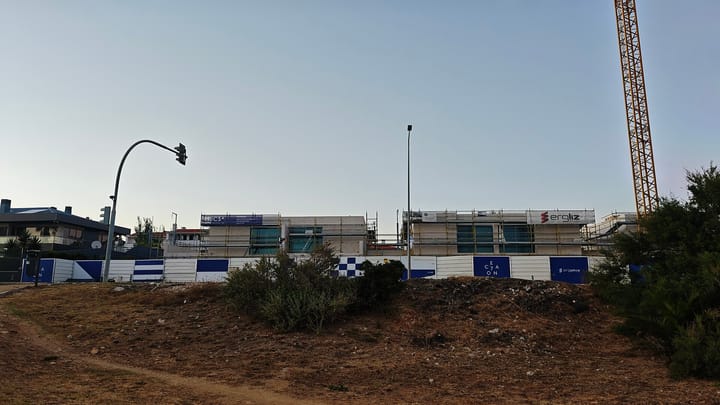
Construction activity has increased, but not at the pace needed. Permitting delays, labour shortages in the construction sector, and rising material costs have constrained new supply. The government's affordable housing programmes, while expanded, remain modest relative to the scale of need.
For foreign residents navigating this market, the challenge is layered. Non-EU buyers typically face lower loan-to-value caps from Portuguese banks — often 60 to 70 percent compared to 80 to 90 percent for residents — requiring larger deposits. The bureaucratic process of securing a mortgage as a foreign national adds time and complexity to transactions in a market where properties move quickly.
The path forward requires action on all three layers simultaneously: accelerating construction, managing tourism's footprint on residential stock, and ensuring that international demand does not crowd out domestic access to housing. Whether Portugal's political system can deliver that kind of coordinated response remains an open question.