Portugal's Renewable Energy Record: 88% Clean Power in 2025 and What Comes Next
Portugal generated 88% of its electricity from renewable sources in 2025 — one of the highest rates in the world. Here is what drove the record, what it means for energy bills, and where the country goes from here.
Portugal's electricity grid achieved a landmark in 2025: 88% of electricity generated came from renewable sources — wind, hydro, and solar — making Portugal one of the world's leaders in clean electricity. For a country that imported most of its energy 20 years ago, the turnaround is remarkable. Here is what happened, what it means in practice, and what comes next.
How Portugal Got Here
The transition has three main pillars:
Hydro: Portugal's rivers — particularly the Douro, Tejo, and Zêzere — have been harnessed for decades. Hydroelectric dams provide flexible, dispatchable power that can be ramped up or down as needed, making them ideal for balancing variable renewables. In 2025, hydro contributed approximately 32% of total electricity production.
Wind: Portugal's Atlantic coast generates some of Europe's strongest and most consistent winds. Onshore wind capacity has grown steadily since the 2000s, and offshore wind is now entering construction phase. Wind contributed approximately 36% of production in 2025.
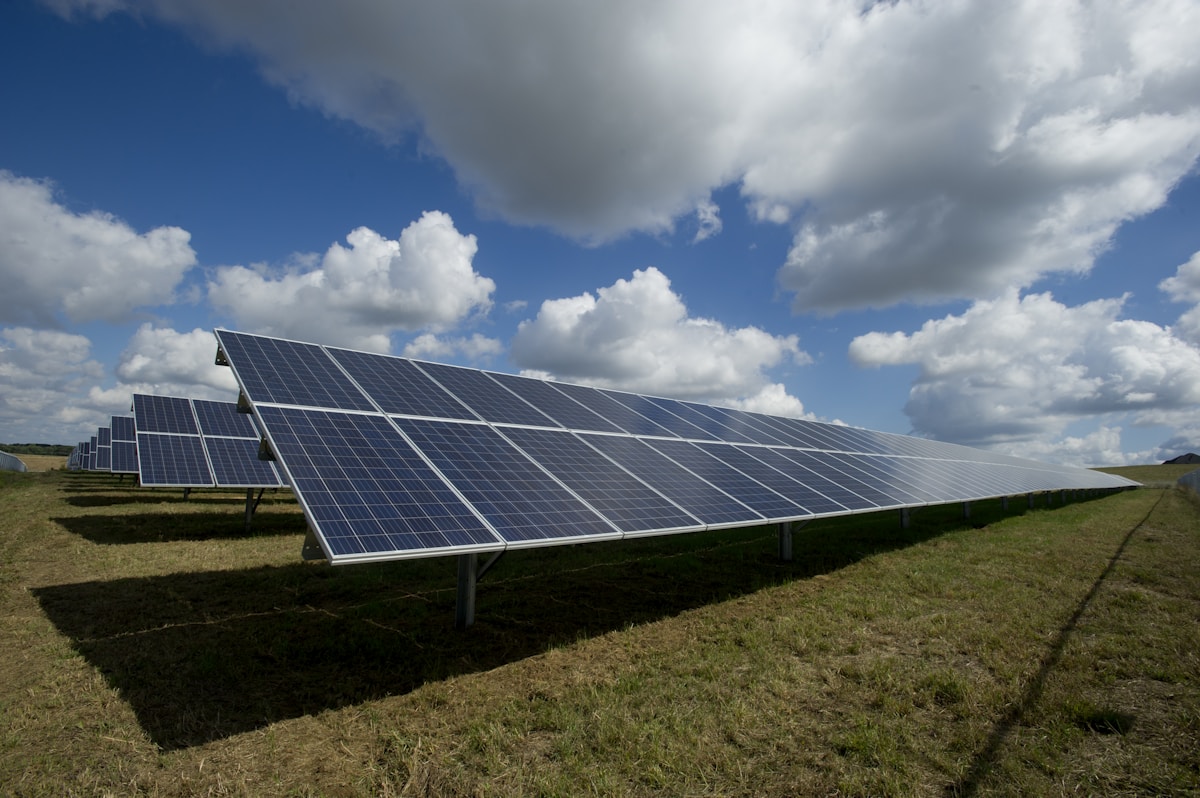
Solar: The fastest-growing sector. Portugal's 300+ days of sunshine per year make it one of Europe's best solar resources. Utility-scale solar capacity tripled between 2021 and 2025, driven by falling panel costs and strong government auction programmes. Solar contributed approximately 20% of 2025 production — up from just 6% in 2021.
The Grid Reality
88% renewable sounds impressive — and it is — but the figure refers to annual production, not instantaneous supply. On calm winter nights when wind drops and there is no solar, Portugal still relies on gas peaker plants and electricity imports from Spain to keep the lights on. Grid management at high renewable penetration is technically complex.
REN (Redes Energéticas Nacionais), Portugal's grid operator, has invested heavily in smart grid infrastructure and cross-border interconnection capacity. The Portugal-Spain interconnector was upgraded in 2024, enabling better balancing across the Iberian Peninsula. A planned new interconnector through the Pyrenees to France — long delayed by French opposition — is now under active EU pressure to proceed.
What It Means for Energy Bills
High renewable penetration has not translated into uniformly lower electricity bills for consumers — a source of frustration for many households. Portuguese electricity prices remain above the EU average partly due to:
- Legacy costs from earlier renewable support schemes (feed-in tariffs guaranteed to early wind and solar projects)
- Grid infrastructure investment costs passed to consumers
- High VAT on electricity (23% standard rate, though there is a reduced 6% rate for the first 100 kWh/month)
That said, wholesale electricity prices in Portugal hit record lows in several periods of 2025 when renewable production exceeded demand. Consumers on variable tariffs (indexadas ao mercado) benefited directly. The government's expansion of the "tarifa social" (social tariff, subsidised rate for low-income households) has also helped cushion bills for vulnerable consumers.
What Expats Should Know
Setting up electricity: New residents register with a commercial supplier (EDP Comercial is the dominant player, but Galp, Endesa, and others compete). The process requires NIF, address, and identification. Done entirely online. Takes 1-3 business days.
Solar self-consumption: Portugal has a favourable regime for residential solar panels with battery storage. Excess generation fed back to the grid is compensated (at lower-than-retail rates, but still meaningful). For property owners, the payback period for a residential solar system has fallen to approximately 6-8 years in 2026. Renters cannot install panels without landlord agreement.
Electric vehicles: Portugal is accelerating EV adoption with purchase subsidies (up to €3,000 for new EVs under €45,000) and an expanding public charging network. The MOBI.E national network covers most motorways and urban centres. EV running costs on Portugal's increasingly cheap overnight tariffs are very low.
What Comes Next
Portugal's National Energy and Climate Plan targets 100% renewable electricity by 2030 — ambitious but achievable given the trajectory. Key developments expected before 2030:
- Offshore wind: First commercial offshore wind farms off the Viana do Castelo coast, with 10 GW of offshore capacity planned by 2030
- Green hydrogen: Portugal positions itself as a green hydrogen exporter to Northern Europe, leveraging cheap renewable electricity. Several large-scale projects under development in Sines and the Alentejo
- Battery storage: Grid-scale battery projects to replace gas peakers are in procurement; first large installations expected 2026-27
- Pumped hydro: Expansion of pumped storage capacity (essentially giant batteries using water elevation) at existing dam infrastructure
For residents, the direction of travel is clear: cheaper, cleaner electricity over the long term, with near-term costs driven by grid modernisation. For Portugal's economy, the strategic bet on renewables is paying off — attracting energy-intensive industries (data centres, green hydrogen production, electrolyser manufacturing) that would not locate here without reliable clean power.
The Portugal Brief covers news and policy for expats and internationals. For households on the consumption side, our 2026 guide to solar self-consumption (autoconsumo) — the UPAC tiers, the DGEG communication and the surplus-injection rules sets the latest reference. On the EDP / EDPR capital-allocation rail, our 19 May EDP read — the intra-group transfer of EDPR's 1.1 GW of Brazilian onshore wind and 0.7 GW of solar to EDP Brasil at roughly €700 million of equity and €1.5 billion of enterprise value, recycling capex into A-rated United States and European pipelines and lifting the share of EDPR EBITDA from A-rated jurisdictions above 95 percent sets the latest reference. For the household-side mechanics of the electricity market, our 2026 Setting-Up-Electricity practical guide — how the liberalised Mibel retail market actually runs in Portugal, the comercializadores shortlist (EDP Comercial, Endesa, Iberdrola, Galp Power, Goldenergy, Plenitude, Repsol, SU Eletricidade), the 20-digit CPE that identifies the connection, the potência contratada ladder from 1.15 to 20.7 kVA, the simples / bi-horária / tri-horária tariff schedules, the IVA 6%/23% split, the Tarifa Social discount and the ERSE switching window sets the latest reference. On the residential-utilities setup side, our 2026 practical guide to setting up water (contrato de água doméstica) — how to identify your municipal operator across EPAL, the SMAS network and the Águas do Norte / Centro Litoral / Vale do Tejo / Tejo Atlântico / Algarve regional companies, the documents and caução at signing, the four-line ERSAR bill structure with disponibilidade and escalão tiers, the Tarifa Social and Tarifa Familiar discount tracks and the self-reading rhythm that prevents back-billing disputes sets the latest reference. On the grid-resilience and consumer-compensation side, our 26 May read on ERSE's evento-excecional ruling on the 28 April 2025 Iberian blackout — REN and E-Redes exempted from automatic quality-of-service compensation to consumers, MIBEL trigger located on the Spanish side, three-year judicial-damages window remains open in Portuguese and Spanish courts sets the latest reference. On the household-electricity-contract side, our 2026 practical guide to setting up an electricity contract in Portugal — the MIBEL liberalised market, the ~30-comercializador retail landscape, the ERSE-regulated tariff framework, the potência contratada bracket choice, the Tarifa Simples vs Bi-Horária vs Tri-Horária decision, the Tarifa Social means-tested discount, the smart-meter rollout and the friction-free switching procedure that lets you change supplier without touching the wires sets the latest reference. On the electricity-market reform and renewable-acceleration side of the file, our 5 June read on President António José Seguro promulgating the Government's electricity decree-law that amends Decreto-Lei 15/2022, transposes EU Directive 2024/1711 plus partial transposition of Directives 2023/2413 (RED III) and 2023/1791 (Energy Efficiency), carves out ZAER renewable-acceleration zones, exempts 800 W self-consumption from prior verification and mandates fixed-price tariffs from retailers above 200,000 customers sets the latest reference. On the Portuguese renewables-equity tape, Acciona Energía portfolio rotation, Iberian wind-and-solar M&A and parent-level strategic-review side of the file, our 19 June read on Acciona Energía plotting a 166 MW Portuguese wind-and-solar divestment — 120 MW wind stack and 46 MW solar cluster go to advisors as the Spanish parent weighs a delisting or buyout of its 91% renewables stake sets the latest reference. On the electricity consumer-protection, mercado livre, tarifa social, ERSE, payment-plan and disconnection-limit side of the file, our 22 June read on the Government shielding vulnerable households from electricity cut-offs and forcing fixed-price contracts from large suppliers — payment plans, billing-dispute protection and a social tariff that follows the customer across switches sets the latest reference. On the gas-network, energy-infrastructure, ERSE-regulation and decarbonisation side of the file, our report on the gas distributors' €406.8 million network plan for 2027–2031 and GEOTA's stranded-asset warning sets the latest reference. On the energy, industry and green-investment side of the file, our coverage of Portugal's bet that cheap electricity can draw green industry sets the latest reference. On the state-ownership and energy-grid side of the file, the State's return to REN's capital looks at Portugal buying back into the national power network. On the household-bill side of the file, our guide to the audiovisual contribution on your electricity bill breaks down the RTP levy hidden in every Portuguese power bill and who can avoid it.