Portugal-DR Congo Bilateral Trade Books a €7.3 Million Goods Surplus on €12.9M in 2024 Exports as Mota-Engil Anchors a €1.1 Billion Pipeline Across the Porto de Banana Container Terminal and the Lobito Corridor Railway Extension
As the Portuguese national football team prepared to open its 2026 FIFA World Cup campaign against the Democratic Republic of the Congo at 18:00 Western European Summer Time (WEST) in Houston, the country's bilateral economic relationship with its...
As the Portuguese national football team prepared to open its 2026 FIFA World Cup campaign against the Democratic Republic of the Congo at 18:00 Western European Summer Time (WEST) in Houston, the country's bilateral economic relationship with its Group K opponent registered a sliver of a trade surplus and one disproportionately large infrastructure foothold. Portugal exported €12.9 million in goods to the DRC in 2024 and imported €5.6 million, leaving a €7.3 million surplus, according to data from the Instituto Nacional de Estatística (National Statistics Institute — INE). Set against the €79 billion Portugal exported worldwide that year, the Congo file is a rounding error.
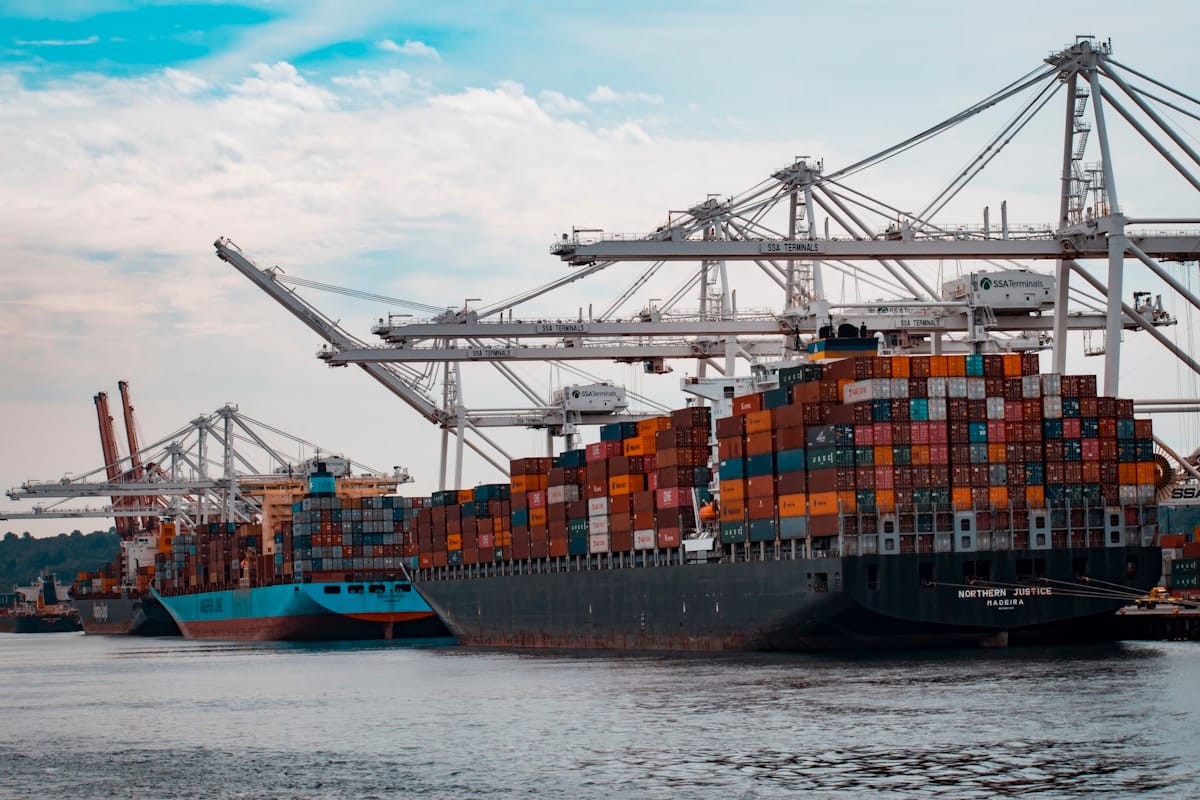
Yet the picture changes when projects are added to the flow data. Portuguese construction group Mota-Engil, led by Carlos Mota Santos, has built a roughly €1.1 billion pipeline of works in the country across just over a year. The anchor contract is a €230 million, 24-month build of a new container-and-cargo terminal at the Porto de Banana, the DRC's only Atlantic deep-water port and the strategic outlet for copper, cobalt and agro-commodities currently routed through neighbouring Angola. "Integrating local workers, it will be an example of sustainability and the promotion of long-term economic development in a country that needs the kind of modern infrastructure we are setting out to deliver," Mota Santos said when the deal was announced last year.
The second tranche is far larger. Mota-Engil is set to sign a contract for the extension of the railway line that will connect the DRC into the Lobito Corridor — the trans-Africa rail project running from the Angolan port of Lobito east through Zambia. Disclosures late last year put the contract value at close to US$1 billion (roughly €860 million). The corridor is backed by the United States International Development Finance Corporation and the European Union under a transatlantic minerals-and-logistics partnership designed to provide an alternative route to Chinese-controlled rail outlets for central African copper and battery-grade cobalt.
On the trade flows themselves, the composition has shifted sharply year to year. In 2022 Portugal ran a €617 million goods deficit with the DRC, driven almost entirely by €624 million in fuel and lubricants imports — a single-commodity spike that did not repeat in 2023 or 2024. With energy purchases absent, the 2024 balance flipped. Portugal's main exports to Kinshasa were oils and fats (€3.5 million), machinery (€3.4 million), meat and dairy (€1.6 million) and wood and cork (€1.4 million). Imports from the Congo concentrated in agro-food products (€3.6 million) and timber (€1.9 million).
The asymmetry is partly structural. The DRC's economy of more than 116 million people remains heavily resource-extractive, with formal export flows dominated by minerals destined for Asian smelters rather than European consumer markets. Portuguese companies have historically used Angola as a gateway for the lusophone-adjacent space, with Sonangol and TAAG offering the practical air-and-sea connections; direct Portugal-DRC logistics remain thin.
That backdrop is what makes Mota-Engil's two contracts so consequential to the bilateral file. The Banana terminal and the Lobito-Corridor extension between them rewire the DRC's outward freight geography — and put a Portuguese construction group at the operational centre of the move. Whether commercial trade flows track the infrastructure build remains an open question; for now, the €7.3 million 2024 surplus and the €1.1 billion construction order book sit in a striking imbalance, with one number dwarfing the other roughly 150-fold.