Portugal Approves a Lufthansa Plan to Train German Air Force Pilots on Portuguese Soil
Portugal has approved a non-binding declaration of intentions with Lufthansa to study a pilot school on Portuguese soil, training around 100 pilots a year for the German Air Force and potentially other NATO allies, alongside the group's growing maintenance footprint in the country.
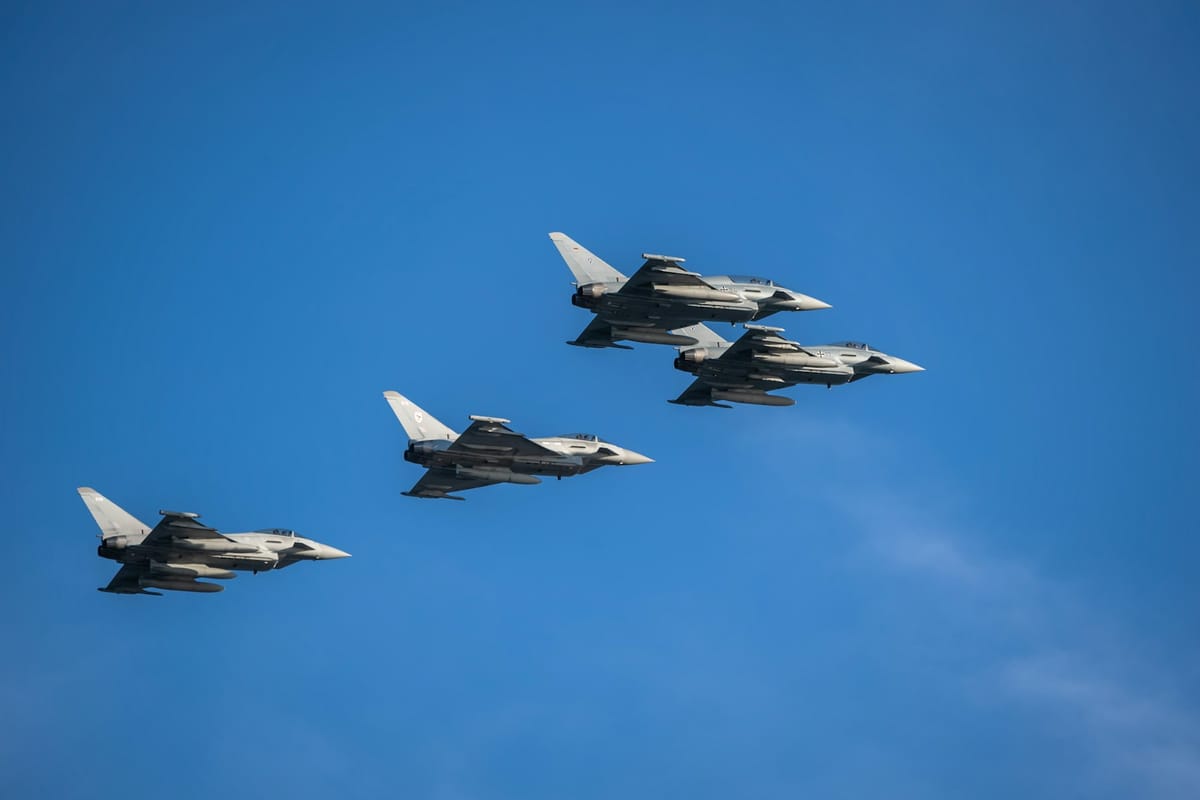
Portugal has taken a first formal step toward turning itself into a training base for foreign military aviators. The government has approved a declaration of intentions (declaração de intenções) with the German group Lufthansa to study the creation of a pilot school on Portuguese soil — one that would, in the first instance, train pilots for the German Air Force (Força Aérea Alemã).
The document was signed on 9 June by the Minister of National Defence (ministro da Defesa Nacional), Nuno Melo, and its approval was published in the official gazette and confirmed publicly on 27 June. It is a three-way arrangement between the Portuguese state, Lufthansa Technik AG and Lufthansa Aviation Training GmbH, the German carrier's engineering and flight-training arms.
What the school would do
According to the government, the planned school could have the capacity to train roughly 100 pilots a year. The initial focus would be Germany's air force, but the project foresees possible expansion to other allied — that is, NATO — countries, positioning Portugal as a shared training ground for European and Atlantic-alliance air forces.
Two caveats matter. First, the declaration is explicitly non-binding: it exists, in the government's words, "exclusively to establish a framework of cooperation and to record the intentions of the parties," without prejudice to the approvals and legal instruments that any later phase would require. Second, no location has been chosen. The project now moves into a round of feasibility studies — technical, operational, legal and economic — before any final decision is taken.
Why Lisbon is interested
The government frames the plan around three goals: strengthening national capabilities in the aeronautics and defence sectors, creating qualified jobs, and deepening cooperation between allied nations. For a country that has spent years trying to anchor higher-value industry, a foreign-funded pilot academy is an attractive proposition — it brings skilled employment without the state having to build the aircraft fleet itself.
It also fits a wider Lufthansa footprint in Portugal. The group is already constructing an aircraft-maintenance plant (a so-called MRO facility, for maintenance, repair and overhaul) at Lusopark, in Santa Maria da Feira, in the Aveiro district — an investment running to hundreds of millions of euros that is expected to create more than 700 qualified jobs by 2027. The pilot-school study extends that relationship into defence and training.
Not without friction
The courtship is not uncontested at home. Earlier this year, Portuguese pilots wrote to the government questioning Lufthansa's labour-relations record, a reminder that the German group's expanding presence — which also includes its bid in the separate TAP privatisation process — draws domestic scrutiny as well as welcome.
For now, the pilot school remains a study, not a commitment. But the signature marks the moment Portugal formally put itself on the map as a candidate to train Europe's next generation of military aviators — and signalled, once again, that its defence and aerospace ambitions increasingly run through Frankfurt.