Port Wine Cuts the 2025 Vintage Authorisation to 75,000 Pipas in a 28% Two-Year Step-Down — €365 Million Business Volume, 65.7 Million Litres Sold and a Driest-Since-1931 Summer Frame the Structural Question
IVDP authorised 75,000 pipas for 2025, a 28% cut from 2023. Port sales at 65.7M litres, business volume €365M (-2%), Brazil exports -29%. IPMA marks 2025 as Portugal's driest and hottest summer since 1931.
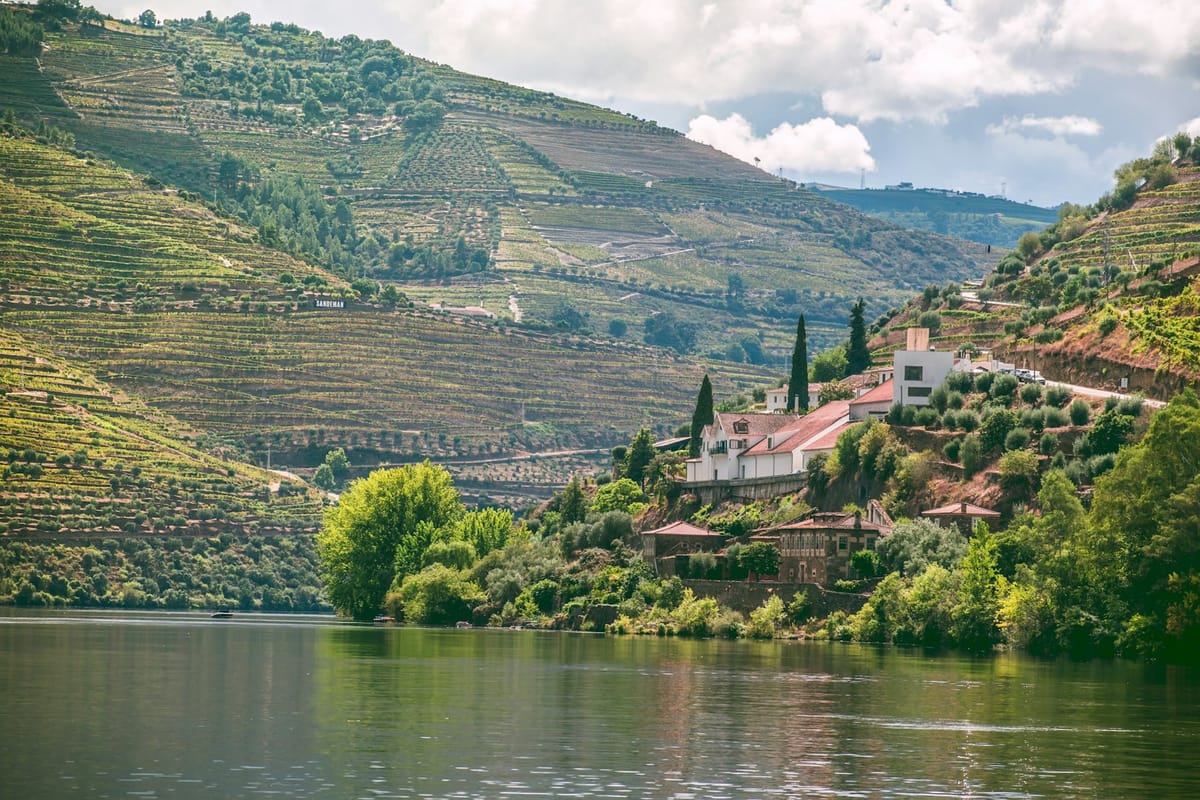
The IVDP Inter-Professional Council voted unanimously on 18 July 2025 to authorise 75,000 pipas of Port wine for the 2025 vintage — equivalent to about 41 million litres, or 56.2 million kilograms of grapes. The figure is a 17% cut from the 90,000 pipas approved for 2024 and a 28% cut from the 104,000 pipas of 2023. IVDP president Gilberto Igrejas framed the decision as a response to "current worldwide needs for wine"; producer-side representative Celeste Marques called the figure "the possible value", citing "the survival of some wine growers". The number was formalised in Regulamento n.º 954/2025, 1 August. Read against the 2025 climate print and the 2024-25 export run, it is a structural step-down, not a cyclical one.
The Sales Curve, Not the Climate, Is the Lead Driver
Port wine sales have fallen from roughly 90 million litres per year two decades ago to 65.7 million litres, with real revenue down some 45% since the early 2000s. 2025 business volume printed at €365 million, down 2% year-on-year. Brazil exports for January-September 2025 fell to €1.85 million, a 29% decline from the same period in 2024 — and Brazil was the growth market thesis of the last fifteen years. The 75,000-pipa figure carries 8,500 pipas of unsold 2024 stock as overhang, with €0.50 per kilogram direct aid for surplus grapes diverted to distillation. That is not a vintage decision — it is an inventory clearance dressed as one.
The Climate Layer Is Now Doing Real Work
IPMA's summer 2025 boletim recorded the hottest summer since 1931 in Portugal Continental — mean temperature 23.51 °C, 1.55 °C above the 1991-2020 normal — and the driest summer since 1931, with rainfall at 10.9 mm, just 24% of the normal. Three heatwaves were registered; the longest ran 16 days from 29 July to 17 August. The full-year boletim makes 2025 the fifth-warmest year since 1931, with meteorological drought covering between 60% and 99% of the territory from July through October. The Douro is the canary terroir for these prints — and the ~20% harvest decline IVDP flagged at the vintage announcement is the immediate output. The lasting question is whether the next cycle of vines that gets planted is suited to the climate IPMA is now charting.
The EU Wine Package Will Shape Adaptation More Than It Shapes Demand
The European Parliament approved the EU Wine Package in February 2026. It raises co-financing for climate-adaptation vineyard investments to 80% of eligible costs, extends third-country promotion programmes from three to five years, and reopens funding for vine-pulling (arranque) and distillation. Bruxelas is positioning Member States to manage a structural surplus, not to grow demand. For Portugal — 7th worldwide by export volume, 9th by value, €965.8 million in total wine exports for 2024 at +4.46% — the package is a managed-decline toolkit rather than a growth engine. The Douro will use the arranque envelope. So will Alentejo, where vine pulling is already politically debated.
What This Means for Expats
- Cellar buys, not vintage chases. The 2025 Port vintage is small and stressed; declared 2023s and 2024s on Lisbon shelves will outperform 2025 in availability terms through 2030.
- Wine tourism, not tasting volume, is the Douro thesis. The IVDP is leaning on yield-and-experience economics — the Régua and Pinhão visitor offer is structurally more important to Douro revenue than another shipment of basic ruby to Brazil.
- Watch the Brazil line. If the -29% holds into the H2 2025 print, the IVDP's 2026 authorisation will land below 75,000 pipas.
The Port wine industry is restructuring out of a sales decline that started before climate became the headline story; climate now compounds it. The 2026 vintage authorisation, due next July, is the next read on whether 75,000 is the new floor or another step on the way down.