Parliament Votes Down Bills for a Regionalisation Referendum as the Centre-Right Blocks Left and Regional Proposals
Parliament rejected a clutch of bills that would have set Portugal on the road to elected administrative regions, with PSD, CDS-PP and Chega voting down proposals from the PCP, PS, Livre and JPP.
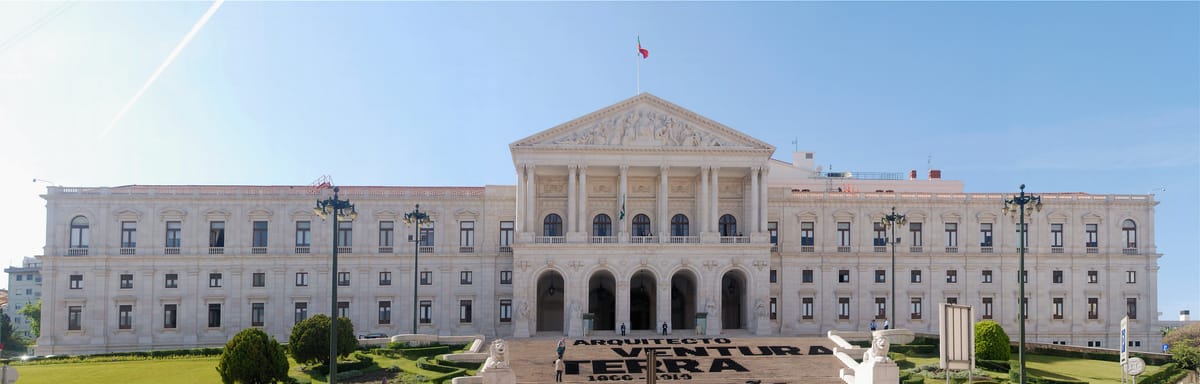
Portugal's parliament has again rejected the idea of creating elected administrative regions, voting down a set of bills on Wednesday that would have opened the way to a referendum on one of the country's oldest and most stubborn constitutional questions.
The debate, in the Assembleia da República (Assembly of the Republic), was scheduled by the Portuguese Communist Party (Partido Comunista Português, or PCP), which put forward the most detailed proposal. Its draft framework law would have converted the existing Comissões de Coordenação e Desenvolvimento Regional (Regional Coordination and Development Commissions, or CCDR) — the state's current regional planning bodies — into full administrative regions with their own elected leadership.
Under the PCP plan, each region would be run by a directly elected Regional Assembly of 30 members, supplemented by 15 chosen by municipal assemblies, together with a Junta Regional (Regional Board) made up of a president and six members. The party proposed holding a national referendum on regionalisation by 2028, with the first elections for the new bodies timed to coincide with the local elections in 2029.
Bills and resolutions from three other parties were debated alongside it: the regionalist Juntos pelo Povo (Together for the People, or JPP), the left-wing Livre, and the Socialist Party (Partido Socialista, or PS), which favoured a national consultation rather than an immediate structural overhaul. All were rejected by the combined votes of the governing Social Democratic Party (Partido Social Democrata, or PSD), its conservative ally the CDS-PP, and the radical-right Chega.
It was the second time this year that the chamber has taken up regionalisation, after a similar round of proposals failed in the spring. The recurrence reflects how the issue refuses to settle: supporters argue that decentralising power to elected regions would rebalance a country heavily concentrated on Lisbon and Porto, while opponents warn of new layers of bureaucracy and cost.
That opposition has deep roots. Speaking against the PCP bill, CDS-PP deputy Paulo Núncio reminded the chamber that Portuguese voters have already had their say — and said no. In a 1998 referendum, close to 60 percent of those who voted rejected a plan to divide the mainland into administrative regions, a result that has frozen the project ever since despite the relevant provisions remaining in the Constitution.
Regionalisation has long been an unfinished item of Portugal's democratic settlement. The 1976 Constitution provided for administrative regions on the mainland — the autonomous regions of the Azores and Madeira already govern themselves — but the mechanism has never been activated. Successive governments have preferred to strengthen municipalities and inter-municipal communities instead.
Wednesday's votes leave that status quo intact. With the centre-right and Chega aligned against any move toward elected regions, and the left unable to assemble a majority, the prospect of a referendum recedes once more — even as parties on both sides signal that the underlying argument over how Portugal should be governed is far from over.