Nuno Melo Hands the Forças Armadas a Standing Authorisation to Move on Wildfires Without a Prior Civil-Protection Request — Monte Real Operations Centre Pulls P-3C CUP+, C-295M, Drones and a Black Hawk Onto the Heat-Wave Watch
Defence Minister Nuno Melo on 19 June hands the Forças Armadas a standing authorisation to act on wildfires without a prior civil-protection request, with a permanent Monte Real operations centre running P-3C CUP+, C-295M, drones and a Black Hawk on heat-wave watch.
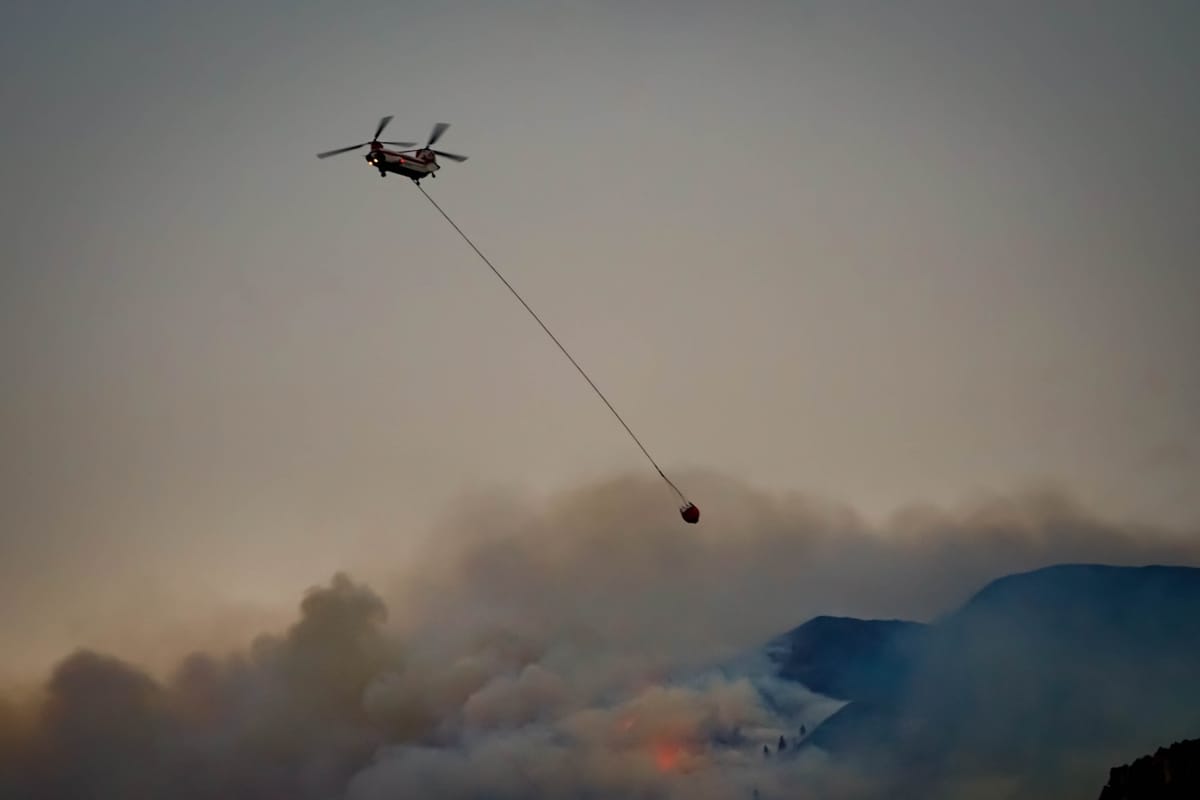
Defence Minister Nuno Melo announced on Friday 19 June that the Portuguese Armed Forces — the Forças Armadas — will from this point on act autonomously on wildfires, without having to wait for a formal request from civil protection or the Ministry of Internal Administration before deploying personnel and aircraft. The decision lands as IPMA holds seven inland districts under aviso amarelo for the 21-22 June heat-wave window and 23 concelhos sit on perigo máximo de incêndio, and it formalises a posture that until now needed a written activation order from the Autoridade Nacional de Emergência e Proteção Civil (ANEPC) before assets could leave their bases.
"As Forças Armadas agem autonomamente e depois reportam aquilo que seja feito. Ou seja, não terão de aguardar um pedido de ação para que essa ação aconteça," Melo told reporters at the Air Force's Base Aérea n.º 5 in Monte Real, Leiria, where the Ministry of Defence has stood up a permanent operations centre that will run on continuous alert across the high-temperature stretches of the rural-fire calendar.
What the change actually moves
The autonomous-deployment posture means three things in operational terms. First, the Forças Armadas can position aircraft on alert at Monte Real and other airbases without an ANEPC request and can scramble those assets as soon as the operations centre reads a fire signature on the surveillance loop. Second, the Defence Ministry no longer has to wait on the Interior Ministry's Dispositivo Especial de Combate a Incêndios Rurais (DECIR) cell to commit assets — although the two ministries continue to coordinate through the joint command. Third, any operation initiated under the new authority is reported up the chain after the fact rather than negotiated in advance.
The previous framework, under which the Forças Armadas formally acted as a complemento to civil-protection forces, required a sequential request-and-authorise loop. In a fast-moving heat-wave window — the kind that hit the Algarve in August 2023 and that IPMA is now flagging across the 21-22 June 2026 weekend — that loop typically cost between thirty and ninety minutes before the first military asset could lift off. The reform collapses that delay to whatever the operations centre's own decision cycle allows.
The asset stack at Monte Real
The Monte Real centre is built around the Air Force's Esquadra 601 "Lobos" patrol fleet. The standing roster includes:
- P-3C CUP+ maritime patrol aircraft — repurposed for long-range fire-detection sweeps. The platform's electro-optical/infrared turret and inverse synthetic-aperture radar can pick up hot spots through heavy smoke and at night.
- C-295M — used for tactical reconnaissance over the interior, with the loiter time to cover an entire district in a single sortie.
- UAS (drones) — including platforms operated alongside the Army for persistent overhead coverage of active fire perimeters.
- UH-60A Black Hawk — six airframes acquired under the helicópteros médios programme are available for personnel transport and resupply into staging areas where civilian rotorcraft cannot land.
The centre is co-located with the existing Esquadra 751 search-and-rescue detachment that flies the EH-101 Merlin, giving the same airbase a single, fused picture of the air space across both rescue and fire missions.
Why this matters for expats and residents
For households in the high-risk concelhos — among them Castelo Branco, Guarda, Vila Real and the eastern Alentejo concelhos that the Instituto Nacional de Estatística put in the elevado or muito elevado fire-hazard band in its most recent Risco Rural de Incêndio read — the practical effect is that military air assets can be on a fire perimeter inside the first hour rather than after the bureaucratic loop runs its course. The Pedrógão Grande catastrophe of 17 June 2017, in which a delayed dispatch was identified by the Guerra-Pereira commission of inquiry as one of the operational failures behind the 66 fatalities, was the political backdrop behind the change.
The autonomy framework runs alongside the civil-protection Dispositivo Especial de Combate a Incêndios Rurais Charlie phase, which the Government activated on 1 July 2025 with 13,335 operatives, 78 aircraft and two Black Hawks rolled into the DECIR pool. The Forças Armadas's standing authorisation effectively adds a parallel, on-call layer above that civilian dispositivo.
The political optics
The announcement comes a day after Internal Administration Minister Luís Neves earmarked the €40 million Fundo Ambiental wildfire-prevention envelope at the Pedrógão Grande nine-year anniversary, and the same week that the Government's Trabalho XXI labour reform was defeated in Parliament. The Forças Armadas authorisation is, in that sense, one of the few executive-branch wins the Montenegro cabinet can hold up this week — and the Defence Ministry was careful to frame it as a structural reform rather than a heat-wave one-off. Whether the standing authorisation survives the next change of government is now a question for Belém and São Bento rather than Monte Real.