NRP Dom João II Floated in Romania — Europe's First Dedicated Drone Warship Takes Shape for the Portuguese Navy
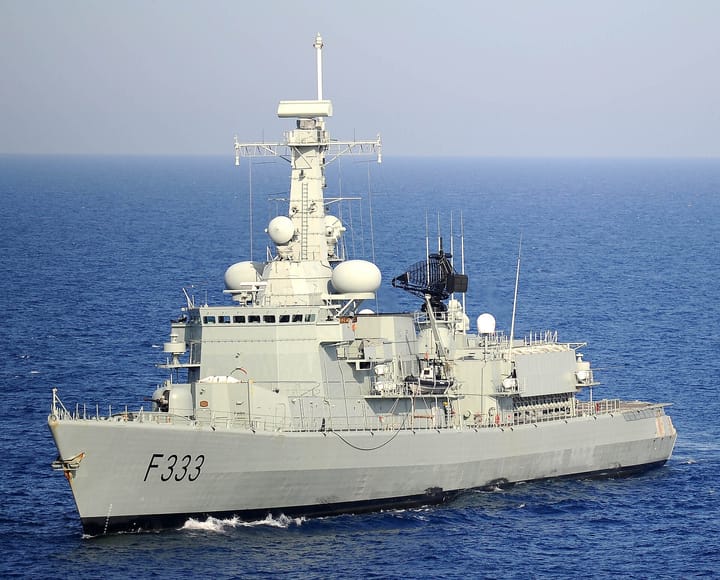
A New Class of Warship for the Atlantic The future NRP Dom João II, a 107.6-metre multi-mission naval vessel designed to operate unmanned aerial, surface, and underwater systems, was floated out on 7 April at the Damen shipyard in Galați, Romania....
A New Class of Warship for the Atlantic
The future NRP Dom João II, a 107.6-metre multi-mission naval vessel designed to operate unmanned aerial, surface, and underwater systems, was floated out on 7 April at the Damen shipyard in Galați, Romania. The milestone marks the point at which the hull is structurally complete and seaworthy enough to sit in water for the first time — the next phases are systems integration, sea trials, and final outfitting before delivery to the Portuguese Navy in the second half of 2026.
The vessel is being called Europe's first dedicated drone carrier. That label requires some qualification — several NATO navies operate drones from existing ships — but Dom João II is the first European warship designed from the keel up around unmanned systems as its primary mission capability, rather than treating drones as an add-on to a conventional platform. For broader context, see our practical guide to surfing in Portugal in 2026.
What It Costs and Who Is Paying
The total programme cost is EUR 132 million, of which EUR 94.5 million — roughly 72 per cent — comes from Portugal's Recovery and Resilience Plan (PRR), the EU-funded post-pandemic investment programme. The remaining EUR 37.5 million is financed from the national defence budget.
The PRR funding makes Dom João II one of the more unusual items in any EU member state's recovery plan. Most PRR spending goes to digital infrastructure, green transition projects, and public administration reform. Portugal argued successfully that maritime surveillance and environmental monitoring in the Atlantic — two of the ship's core missions — qualified under the plan's resilience objectives.
Specifications and Capabilities
Dom João II is built around operational flexibility. The vessel can be reconfigured between mission profiles within approximately one week, switching between maritime surveillance, environmental monitoring, search and rescue, humanitarian and disaster assistance, citizen evacuation, and oceanographic research.
Key specifications include a crew of 48, with accommodation for an additional 42 specialists — scientists, drone operators, and mission-specific personnel. The ship has an endurance of 45 days at sea without close logistical support and a maximum speed of 15.5 knots.
The drone systems it will carry span three domains: aerial drones for surveillance and reconnaissance, unmanned surface vehicles for patrol and interdiction, and underwater autonomous vehicles for seabed mapping, mine detection, and environmental inspection. The Portuguese defence electronics firm EID is supplying the integrated communications system, as confirmed on 9 April.
Why Portugal Is Building This Now
Portugal's maritime responsibilities are vast relative to its size. The country's exclusive economic zone in the Atlantic, including the Azores and Madeira archipelagos, covers approximately 1.7 million square kilometres — one of the largest in the European Union. Patrolling that space with crewed vessels alone is prohibitively expensive and operationally inefficient.
Unmanned systems change the economics of maritime surveillance fundamentally. A single drone carrier operating multiple aerial and surface drones can cover an area that would otherwise require several conventional patrol vessels, at a fraction of the fuel and personnel cost. For a navy that has historically struggled with funding and fleet modernisation, the shift to unmanned-capable platforms represents a strategic bet on doing more with less.
The geopolitical context adds urgency. The current conflict in the Middle East has increased traffic through Atlantic shipping lanes as vessels reroute away from the Strait of Hormuz and the Red Sea. NATO's focus on the Atlantic flank has intensified, and Portugal's position — controlling access to the Mediterranean from the west and sitting astride key transatlantic routes — makes its naval capabilities a matter of alliance-wide interest.
The Broader Fleet Picture
Dom João II is part of a wider, if slow, modernisation of the Portuguese Navy. The fleet has been ageing for decades, with several vessels operating well beyond their intended service lives. The new ship will not solve the Navy's capacity problems on its own, but it signals a doctrinal shift toward unmanned systems and modular mission design that is likely to shape future procurement decisions.
Sea trials are expected to begin later in 2026, with formal commissioning planned for the first half of 2027. Once operational, the ship will be based in Lisbon and deployed primarily in the Atlantic, with the Azores and Madeira as key operating areas.
Sources: Notícias ao Minuto, ECO, Euronews, RTP Madeira, Observador
👉 Related: One Year After the Iberian Blackout, Portugal Unveils a Four-Thousand-Million-Euro Plan to Rewire the National Grid If you are moving with animals, see our 2026 guide to bringing pets to Portugal.