Surfing in Portugal in 2026 — A Practical Guide to the FPS-Registered Surf Schools, Ericeira's World Surfing Reserve, Peniche's Supertubos, Nazaré's Praia do Norte, the Costa Vicentina Spots, the Wetsuit Calendar and the Lesson-Pricing Reality
Portugal has Europe's only World Surfing Reserve (Ericeira), the continent's heaviest beach break (Supertubos), Nazaré's world-record wave and an FPS school registry. A practical guide to the spots, lesson pricing, the wetsuit calendar and season logistics for foreign residents.
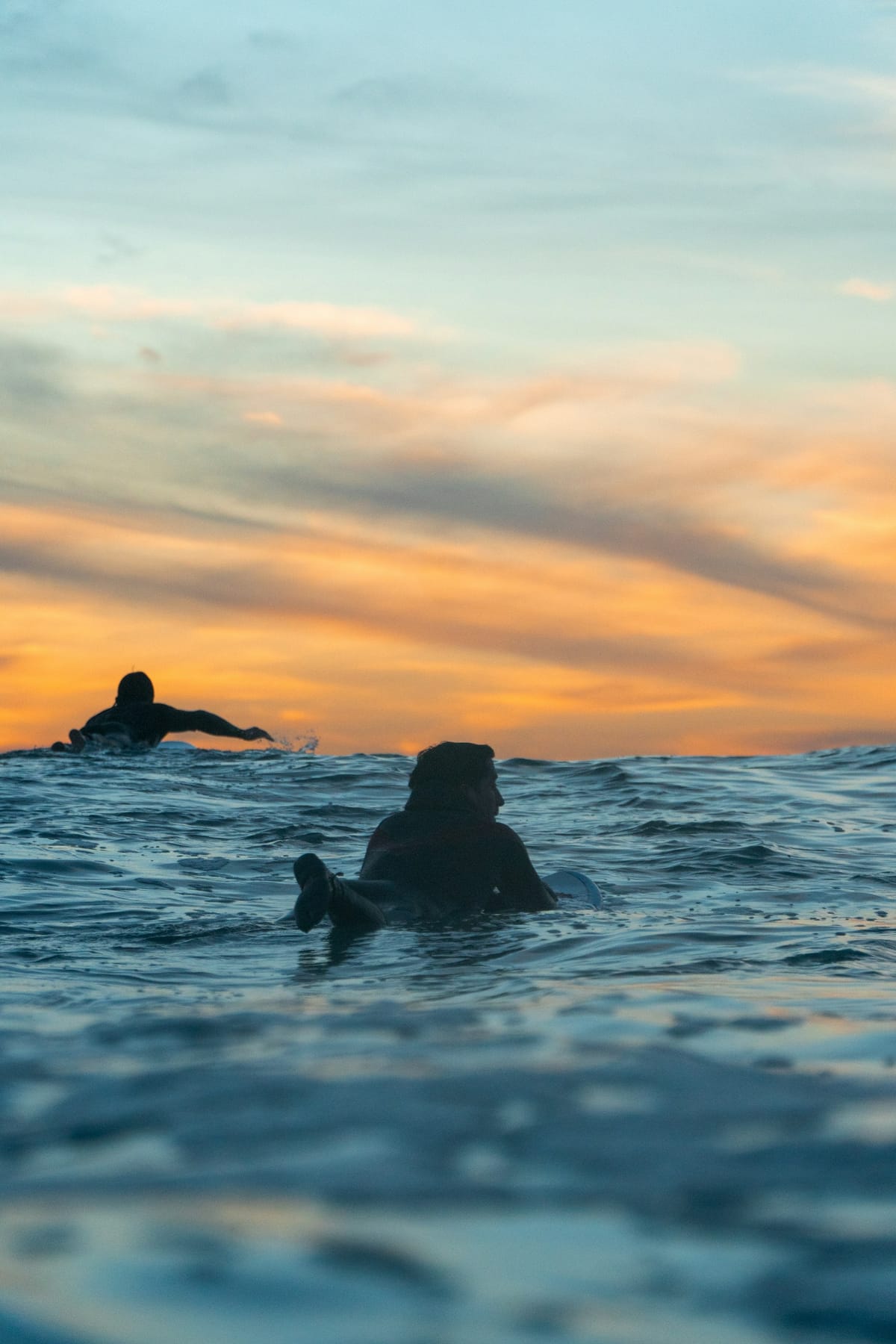
Portugal is Europe's most consistent surf destination — and for foreign residents settling into Lisbon, Porto, the Centro coast or the Algarve, it is also one of the most accessible. The country runs a recognised national federation, the Federação Portuguesa de Surf (FPS), which maintains a registry of accredited schools; it operates Europe's only World Surfing Reserve at Ericeira; it hosts the WSL Big Wave Tour finale at Nazaré's Praia do Norte; and it offers a 950-kilometre Atlantic coastline of beach breaks, reef breaks and point breaks that catch swell from October through April and supply summer-friendly conditions from May through September.
This guide covers the four canonical surf regions (Ericeira/Lisbon-Centro, Peniche, Nazaré, the Costa Vicentina/Algarve), the FPS school-accreditation system, the lesson-pricing reality, the wetsuit calendar and the practical logistics for foreign residents picking up the sport.
The FPS School Registry
The Federação Portuguesa de Surf publishes a Lista de Escolas Registadas — the public-facing registry of accredited surf schools — at surfingportugal.com. FPS registration is the relevant accreditation: it requires school instructors to hold the FPS Treinador (coach) qualification at Grau 1 or above, the school's facility to meet the equipment-and-safety baseline (including an in-water rescue craft and trained water-rescue cover for advanced sessions), and an active liability-insurance policy covering students. The registry is the right starting point for foreign residents choosing a school for the first time. There are non-registered operators who run lessons informally, particularly in the smaller Algarve coves and on Costa Vicentina beach access points; they may be perfectly competent, but the FPS registration is the structural quality signal.
School numbering — for example, FPS escola 409 for a Costa da Caparica operator — is the sequential registry number, not a quality grade.
What a Beginner Lesson Costs in 2026
The standard FPS-registered school lesson runs two hours at the beach (about 90 minutes in the water) and costs €20-€35 for a single lesson depending on region — Lisboa-Estoril coast and Costa da Caparica are the cheapest, Ericeira and Peniche slightly higher, Nazaré comparable to Ericeira, the Costa Vicentina and Algarve at the upper end of the range. Five-lesson packages bring the per-lesson rate to €15-€25; ten-lesson packages further. Equipment (board, wetsuit, leash, rashguard, insurance) is included in every FPS-registered school's lesson price.
Standalone equipment hire — for surfers who already have the skill but not the kit — runs €15-€20 a day for a soft-top board, €20-€30 a day for a fibreglass board, and €10-€15 a day for a wetsuit. Weekly hire rates are typically 40-50% off the per-day price.
Region One — Ericeira (the World Surfing Reserve)
Ericeira holds the only World Surfing Reserve designation in Europe, awarded by Save The Waves Coalition in 2011. The reserve runs 4 km of coastline from Praia da Empa in the south to São Lourenço in the north, encompassing eight world-class breaks. The flagship reef break is Ribeira d'Ilhas — a long, mechanical right-hander that has hosted WSL Championship Tour events since 2009 and is the most photographed surf spot in continental Europe. South of the reserve, Coxos is a fast, hollow right-hand point break for advanced surfers only. Pedra Branca, between Ribeira d'Ilhas and Coxos, is a heavier reef-and-slab option.
For beginners, the relevant Ericeira beaches are Foz do Lizandro at the southern end of the reserve and Praia do Sul in the village itself — both forgiving beach breaks suitable for first lessons. Foreign residents based in Lisbon can reach Ericeira in 45 minutes by car (A8 then EN247) or about 90 minutes by Mafrense bus from Campo Grande.
Region Two — Peniche (the Three-Direction Peninsula)
Peniche is a peninsula projecting into the Atlantic, which means it catches Atlantic swell from three directions simultaneously — and gives surfers the practical option to find rideable conditions on at least one side of the peninsula on any given day. The crown jewel is Supertubos, a heavy beach break on the south side of the peninsula that has hosted the MEO Pro Portugal WSL Championship Tour event for over a decade and produces some of the heaviest barrels in continental Europe.
Supertubos is for advanced surfers only. For beginners, Peniche offers Praia da Consolação and Baleal on the north side of the peninsula — both far gentler beach breaks with beginner-friendly waves on the inside and intermediate sections further out. Baleal is the more developed of the two, with a dense cluster of FPS-registered schools and the largest concentration of surf hostels in Portugal. Lisbon residents reach Peniche in about 75 minutes by car (A8 then EN114) or by Rede Expressos coach.
Region Three — Nazaré (the Big Wave Mecca)
Nazaré is the biggest wave on Earth. Praia do Norte, on the north side of the headland, sits above an underwater submarine canyon (the Canhão da Nazaré) that focuses Atlantic swell into wave faces measured at over 30 metres. The November 2020 Sebastian Steudtner ride is the official Guinness world record at 26.21 m; subsequent unverified rides have exceeded that. The big-wave window runs from October to March, with the largest swells typically arriving in December and January.
The Nazaré big-wave scene is jet-ski-towed only and is not accessible to recreational surfers. The relevant surfing for foreign residents is on the south-side beach Praia da Nazaré, which is a gentle beach break suitable for lessons through the summer months. The north-side cliff lookout at Forte de São Miguel Arcanjo is the world's most spectacular spectator location for big-wave surfing and runs a small museum and visitor centre. Lisbon residents reach Nazaré in about 90 minutes by car (A8 to its terminus then EN242).
Region Four — Costa Vicentina and Algarve
The west coast south of Lisbon — Costa Vicentina through to the western Algarve — runs along the most exposed Atlantic-facing stretch of Portuguese coast and offers the most consistent waves on average. The hub spots are Sagres at the south-western tip (with multiple beach breaks in driving distance and the option to switch from west-coast to south-coast depending on swell direction), Arrifana midway up the Costa Vicentina (a north-facing crescent bay with a sheltered lineup), and Amado further north (an exposed beach break and the most-photographed surf landscape on the southwest coast). The water is colder than the central coast on average — the Costa Vicentina sees more Atlantic upwelling than the Estoril-Cascais line.
The southern Algarve coast (Faro, Tavira, Vila Real de Santo António) is sheltered from the prevailing Atlantic swell direction by the coastal orientation and so produces fewer rideable days; it is not the surfing Algarve. The surfing Algarve is the western Algarve, from Sagres up to the Costa Vicentina line.
The Wetsuit Calendar
Portuguese water temperature varies by region and by month. The reading that matters for kit selection:
December-March: water 14-16°C across all regions. 4/3mm fullsuit, hood and booties optional but recommended for sessions over an hour. Costa Vicentina runs colder than the central coast in this window and a 5/4mm becomes appropriate for any extended session.
April-May: water 15-17°C. 3/2mm fullsuit across all regions. Beginners taking lessons in this window will be comfortable in the school's standard 3/2mm rental.
June-September: water 17-21°C, with the warmest readings on the Algarve south coast (where you don't surf) and the central Estoril line. Spring-suit (2mm short-arm) or shorty (2mm) on the central coast and the southern surf-relevant Algarve; full 3/2mm still appropriate on the Costa Vicentina and the Norte coast where upwelling keeps water cooler.
October-November: water 16-18°C. 3/2mm fullsuit across all regions, with hood beginning to make sense in November.
Best Time to Surf — by Skill Level
Beginners: late spring through early autumn (May to early October), when the swell is smaller and more forgiving and the water warmer. The summer crowd at the beginner-friendly beaches (Costa da Caparica, Foz do Lizandro, Baleal, Praia da Nazaré sul) is high but the schools manage capacity through booking caps and rotation across multiple beach access points.
Intermediates: spring (April-May) and early autumn (September-October) are the dream windows — sustained, moderate Atlantic swell, smaller summer crowds and water still warm enough for a 3/2mm. The September-October Atlantic-storm cycle delivers the most consistent intermediate-friendly conditions on the central coast.
Advanced: October-March on the central and northern coast. The biggest wave windows at Nazaré, the heaviest sessions at Supertubos and the cleanest Ribeira d'Ilhas barrels arrive in this window. Wetsuit and water-temperature reality matter — December-January conditions are unforgiving.
What Foreign Residents Should Know Before First Lesson
Bring a swimsuit, a towel, sunscreen and a water bottle. The school provides board, wetsuit, leash and rashguard. Most schools meet at a beach access point rather than at a building — confirm the meeting location when booking.
Pre-lesson briefing covers wave selection, paddling technique, the pop-up, lineup etiquette and the surf priority rule (the surfer closest to the peak has priority). The first lesson is conducted in waist-to-chest-deep water on a soft-top foam board; you will be standing up on small whitewater within the first hour. The second and third lessons move into deeper water and toward the green wave.
Lineup etiquette is non-trivial and is enforced by the local surfer community at the more crowded breaks (Ribeira d'Ilhas, Supertubos, Coxos). Beginners should stay at beginner beaches; the intermediate-only and advanced-only breaks are unwelcoming to novices and the lineup priority rule is taken seriously. The FPS coach briefing covers etiquette before the first lesson; it is worth listening to.
Children and Family Lessons
FPS-registered schools take children from age 5 in summer-friendly beach conditions, with dedicated junior groups at most central-coast schools. Family group lessons (parent + child) are available at most schools and are typically priced as two adult lessons; children aged 12 and under are usually offered at a discounted rate. Junior board sizes (soft-top from 6'0" to 7'6") are standard equipment at FPS schools.
Buying Your Own Kit
Once you have committed to the sport, the standard first kit purchase is a 7'0" to 8'0" soft-top funboard (€250-€450 new, €150-€300 used), a 3/2mm full wetsuit (€150-€300 for entry-level brands, €300-€500 for premium), a leash (€20-€40), a board bag (€40-€80) and wax (€5 a bar). The Lisboa Surf Center, Ericeira Surf Skate, Sopa de Pedra in Cascais, and the FNAC and Decathlon chains all sell entry-level kit. Premium brands (Quiksilver, Billabong, Patagonia, Vissla) are available at the Cascais and Ericeira specialist retailers and at the larger schools' shop counters.
The intermediate-and-up board purchase is a longer conversation with the local shaper community — Portugal has a dense network of independent shapers, particularly in Ericeira, Peniche and Costa da Caparica, and a custom shortboard or fish runs €450-€650 against a comparable name-brand stock board at €600-€900.
Insurance and Safety
FPS-registered schools include liability and accident insurance in the lesson price for the duration of the session. For independent surfing — once you are out of school cover — the relevant insurance is either a private accident policy that explicitly includes surf or a federation-tied licença federativa through a local FPS-affiliated surf club. The latter costs €40-€80 a year, includes federation-level accident insurance, and is the relevant cover for surfers who participate in any organised event or contest.
The Atlantic is not a forgiving ocean. Rip currents are present at every beach break and are the most common cause of surfing-incident lifeguard call-outs in Portugal. The bandeira amarela (yellow flag) means swimming and surfing are restricted to the marked area; the bandeira vermelha (red flag) means the water is closed. Surfing in red-flag conditions is illegal under Decreto-Lei 100/2005 outside the FPS-permit zones for organised events.
Calendar Highlights for 2026
The WSL MEO Pro Portugal Championship Tour event runs at Supertubos in Peniche, traditionally in October. The WSL Big Wave Tour Nazaré finale runs in the December-February window depending on swell. The Ericeira Capítulo Perfeito contest runs in autumn at Ribeira d'Ilhas. The Liga MEO Surf national circuit runs across the year at multiple central-coast beaches. All four are spectator-friendly and free of charge.
Surfing is one of the genuinely good Portuguese practical lifestyle decisions for foreign residents. The cost of entry is low, the FPS school network is dense and well-regulated, the coastline is consistent across the year, and the cultural openness of the Portuguese surf community to incoming surfers is real. The single most important practical tip: take the lessons. The four-to-six-lesson investment at an FPS-registered school compresses what would otherwise be a six-month self-taught learning curve into a manageable arc.