Middle East Conflict Pushes Energy Prices Higher — What Portugal Households Should Do
Escalating Middle East tensions are pushing natural gas prices higher across Europe. Here's how it affects Portugal's energy bills — and what expats can do to protect themselves.

Natural gas prices have risen sharply in recent weeks as tensions in the Middle East escalate, with renewed concerns about supply disruptions putting upward pressure on energy costs across Europe — including Portugal.
What's Happening in Energy Markets
The latest escalation in the Iran conflict has sent natural gas futures higher on European exchanges. Portugal, like most EU member states, sources a significant portion of its natural gas via Liquefied Natural Gas (LNG) tankers — making it sensitive to global supply dynamics in a way that pipeline-dependent countries in Central Europe are not.
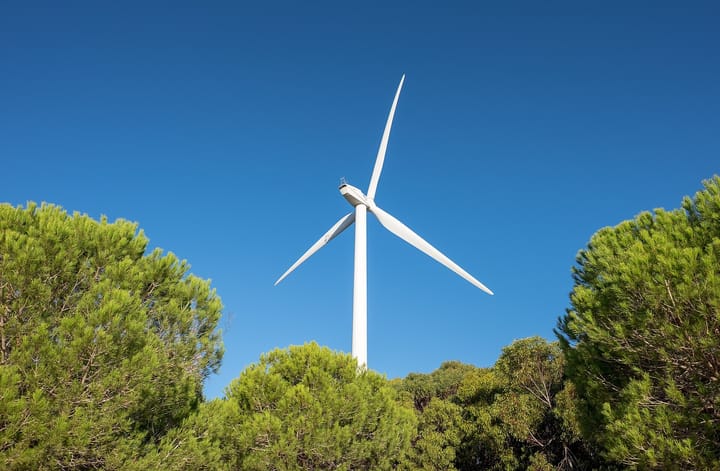
The good news is that Portugal's energy mix is increasingly diversified. In 2025, renewable energy — wind, solar, and hydro — covered approximately 65% of Portugal's electricity generation. This reduces, but does not eliminate, the country's exposure to fossil fuel price spikes.
Why This Affects Portugal's Energy Bills
Despite the renewable progress, natural gas remains critical for two reasons:
- Electricity generation backup: Gas-fired power plants run when renewables fall short — during dry winters with low hydro or calm periods with minimal wind
- Direct heating and cooking: Many Portuguese households use bottled butane or piped gas for cooking and water heating, particularly outside major cities
When European gas prices rise, Portuguese energy retailers typically pass through increased costs within one to two billing cycles. ERSE, Portugal's energy regulator, monitors and must approve tariff changes, which provides some buffer — but prices do follow the market over time.
Current Price Context
Portugal's electricity prices for residential customers rank among the higher in the Iberian Peninsula, though MIBEL (the Iberian electricity market) typically produces lower rates than the EU average thanks to Spain and Portugal's renewable capacity.
In 2025, Portugal introduced an electricity bill subsidy for lower-income households, which remains in place for 2026. Expats on higher incomes are generally not eligible but benefit indirectly from Portugal's regulatory caps on tariff increases.
What Expats Should Do Now
For expats concerned about rising energy costs, several steps can help manage exposure:
- Fixed tariff contracts: Some Portuguese electricity suppliers offer fixed-rate contracts that lock in your per-kWh price for 12 or 24 months. In a rising price environment, these can be valuable — shop via the ERSE comparator tool (comparador.erse.pt)
- Solar panels: Portugal's solar irradiation levels are among the highest in Europe. Residential solar installations have seen strong uptake, and the payback period has shortened considerably as panel costs fall
- Energy efficiency: Portuguese homes, particularly older properties, often lack insulation. Basic retrofits — double glazing, draft proofing, heat pump water heaters — can significantly reduce both gas and electricity consumption
- Monitor ERSE announcements: Any tariff changes affecting residential customers must be published by ERSE at least 30 days in advance, giving time to switch supplier or adjust usage
Outlook
Energy analysts are cautious about predicting the duration of the current price spike. If the Middle East situation stabilises in the coming weeks, gas prices may ease. However, European energy markets remain structurally tighter than pre-2022 levels, and the transition away from Russian pipeline gas is not yet fully replaced by alternative sources.
Portugal's renewable buildout — with several large offshore wind projects planned for 2026–2028 — should reduce long-term energy price volatility. But for now, 2026 energy bills may come in higher than 2025 for many households. For the household-side mechanics of the gas market, our 2026 Setting-Up-Natural-Gas practical guide — how the liberalised Mibgas retail market actually runs in Portugal, where the Floene distribution footprint reaches (and where it doesn't), the comercializadores shortlist, the 20-character CUI identifier, the escalão de consumo ladder (1 to 4), the Tarifa Social de Gás Natural, the dual-fuel bundling option with the electricity contract and the LPG-bottle alternative outside the network sets the latest reference. On the household-energy, electricity-and-gas contract, potência contratada, mercado livre, tarifa social, supplier-switching and ERSE-comparator side of the file, our 2026 practical guide to setting up household electricity and gas in Portugal — the free market, contracted power in kVA, tariff schedules, the social tariff, switching suppliers and the new consumer protections sets the latest reference. On where these prices land for households, what the regulator has now put on the October electricity bill sets out the 0.005 euro per kilowatt hour rise ERSE approved for the regulated tariff from 1 October 2026, about 2.7 percent on the average monthly bill, which turns the 1 percent increase announced for this year into 1.7.