Lisbon Lifts Its Paid-Parking Tariffs for the First Time in 15 Years
Lisbon's mobility company EMEL is raising on-street parking tariffs for the first time since around 2011, with hourly rates rising by 5 to 15 cents depending on the zone — from €0.80 to €0.85 in green zones up to €2.00 to €2.10 in the priciest applied ones. The council cites inflation and the cost o
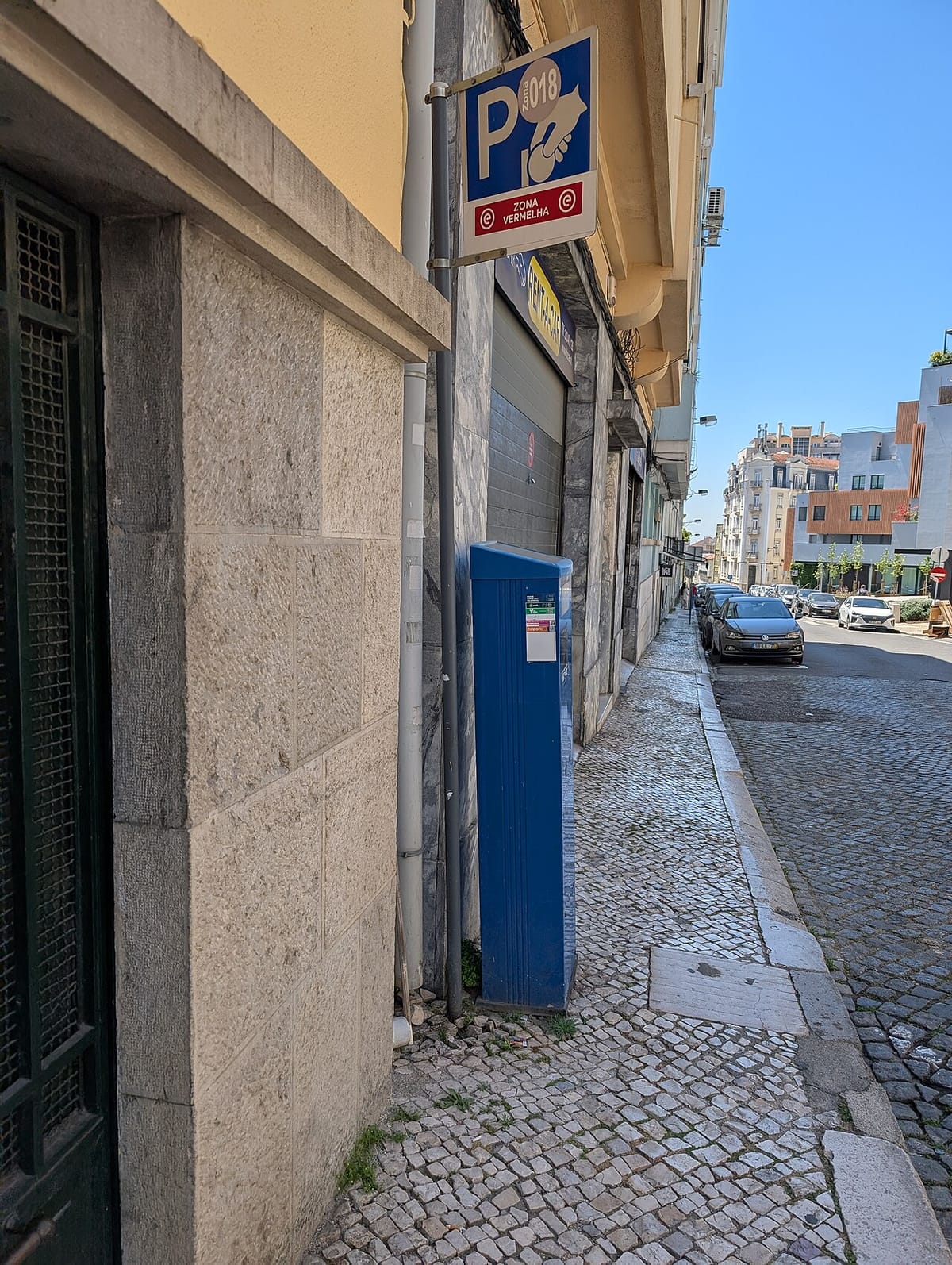
Parking on the streets of Lisbon is about to get more expensive for the first time in a decade and a half. The city's mobility and parking company, EMEL (Empresa Municipal de Mobilidade e Estacionamento de Lisboa), is set to raise its on-street tariffs across the capital's paid-parking zones, in an adjustment the council has framed as overdue after fifteen years of frozen rates.
The increases are measured rather than dramatic, and they vary by zone. In the cheapest “green” areas, the hourly rate rises from €0.80 to €0.85; in “yellow” zones it moves from €1.20 to €1.25. The busier “red” zones climb from €1.60 to €1.70, and the priciest applied “brown” zones go from €2.00 to €2.10. A theoretical “black” tariff, listed at €3.00 rising to €3.15 but never actually charged, completes the table. The steepest increases, in cash terms, fall on the central zones where demand for kerb space is highest.
EMEL and the council justify the move by pointing to inflation. The tariffs have not changed since they were last set around 2011, a period over which cumulative price rises have steadily eroded their real value; officials cited a consumer price index (índice de preços no consumidor, or IPC) increase of 4.82% over 2024–2025 alone as part of the case. The extra revenue, the company says, is needed for its “financial sustainability” and to cover operating costs, salaries, cycling infrastructure, the city's bike-sharing scheme and traffic-signal management.
The proposal was due to be discussed at a meeting of the municipal executive this week and looks assured of passage: the governing coalition of the PSD (Partido Social Democrata), CDS-PP and Liberal Initiative (Iniciação Liberal, or IL), which runs the city under mayor Carlos Moedas, holds an absolute majority on the council. Barring a surprise, the new tariffs will take effect once the deliberation is formally approved and published.
Paid on-street parking covers a large share of central Lisbon, and the change will be felt most by commuters and visitors who leave a car at the kerb for hours at a time rather than by residents, who pay separately discounted rates for a permit in their own neighbourhood. Even so, the rise lands at a sensitive moment, with the cost of living already a live political issue and fuel prices set to jump next week.
The broader thrust of the policy is not simply to raise money but to nudge behaviour. Like other European capitals, Lisbon has spent years trying to loosen the car's grip on its streets — expanding cycle lanes, promoting the flat-rate Navegante public-transport pass and reclaiming road space for pedestrians — even as a majority of journeys in the wider metropolitan area are still made by private car. Making kerbside parking dearer is a small lever in that effort, and directing the proceeds toward cycling and public transport is meant to reinforce the shift.
For drivers, the immediate takeaway is straightforward: a few extra cents an hour at the meter from the moment the new rates go live. For the city, it is a modest but pointed signal that the era of parking priced as though it were still 2011 has come to an end. On the Lisbon quality-of-life side of the file, the new quality-of-life barometer for the Lisbon region sets the latest reference. On shared bikes in the interior, the rules for Alto Alentejo's new CICLAA bike-share sets out who rides free, the three-hour limit and fines of 250 to 1,500 euros for overstaying, abandoning a bike or carrying a passenger. If your car is towed or clamped, our guide to getting your car back after it is towed explains where to find it, what you pay, and what to bring. Update: in September 2026, a Francisco Manuel dos Santos Foundation survey found only 58 percent of Lisbon-area residents satisfied with their city against 76 percent in the Porto area, with housing costs, noise and traffic weighing most.