INE Reads New-Housing Construction Costs Up 5.8% in March 2026 — Labour Component Climbs 8.2% Against a 3.7% Materials Print, the Wedge Widens 1.0 Percentage Points From February and the Index Now Sits 30%-Plus Above the 2021 Base
INE reads the Construction Cost Index for new housing at +5.8% year-on-year in March 2026 — labour climbs 8.2%, materials 3.7%, and the headline wedge widens 1.0pp from February. The labour-cost trajectory is the structural read inside Portugal's housing-affordability calculus.
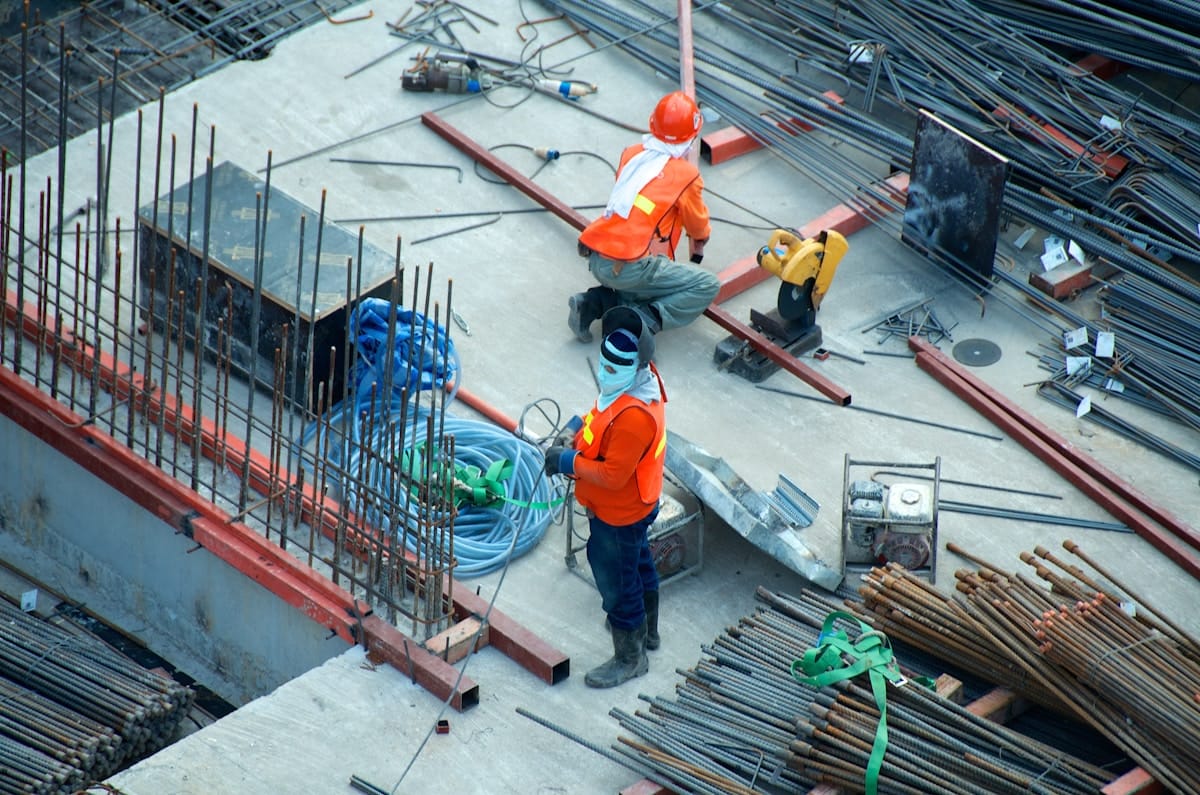
The Instituto Nacional de Estatística (INE) released its monthly read on the Índice de Custos de Construção de Habitação Nova (ICCHN) on Monday 11 May 2026, and the print is the cleanest illustration yet of where Portuguese housing inflation is genuinely originating. New-housing construction costs rose 5.8% year-on-year in March 2026 — an acceleration of 1.0 percentage points from the 4.8% February print and the strongest monthly variation since the post-2021 supply-shock window closed. The two underlying components moved in opposite directions on the trend, with a wedge that is now the dominant structural feature of the index: materials rose 3.7% year-on-year, broadly in line with the moderating European industrial-input cycle, while labour climbed 8.2%, more than double the materials print and well above the headline CPI. The ICCHN sits at roughly 30% above its 2021 = 100 base — the cumulative cost-push that the post-pandemic housing cycle has loaded onto every new building permit landing in 2026. The paperwork behind the building has its own guide: the ficha técnica da habitação, the building datasheet your notary stopped asking for.
The ICCHN is the monthly statistic Portuguese builders, developers, mortgage lenders and the public-sector procurement function use to track the input-cost side of new residential construction. It does not capture transactional housing prices — those run through INE's separate Índice de Preços da Habitação — and it does not capture the cost of renovating existing stock. What it does capture is the all-in cost envelope of putting a new residential unit on the ground: the materials shopping basket (cement, steel, aggregates, ceramics, electrical components, plumbing fittings, insulation, joinery), the labour shopping basket (the wage-and-social-charge cost of every trade involved in building construction), the equipment depreciation that flows into the contracted job cost, and the overhead recovery that sits between input cost and contracted bid.
Why the Labour Print Is the Structural Read
The headline 5.8% on the ICCHN is not, on its own, a particularly elevated reading by the recent five-year history of the index — the 2021-2022 cycle printed monthly readings comfortably above the 10% mark on the materials-driven supply-shock window, and the index has been running in the mid-single-digit range for most of the post-shock recovery. What is structurally different about the March 2026 print is the composition: materials inflation has rolled over into the moderating range that the European industrial-input cycle is now showing, while labour inflation has accelerated and is now running at a multiple of the materials figure. The 8.2% labour-component print sits roughly 5 percentage points above the rolling Portuguese CPI (headline inflation has run in the low-3% range through Q1 2026), and roughly 4 percentage points above the materials-component print.
The labour-and-materials wedge matters because it tells you where the cost pressure is going to sit through the rest of 2026. Materials inflation is partly an external-supply phenomenon — Portuguese builders import a significant share of the materials basket from Spain, Germany, France and the wider European industrial-input chain, and the index moves with the European Producer Price Index trajectory. Materials inflation rolling over into the 3-4% range is consistent with the European Central Bank's disinflation path and the moderating energy-input baseline that the post-Iran-war-spike Brent print has now stabilised at. Labour inflation, by contrast, is essentially a domestic Portuguese phenomenon driven by the structural labour-market tightness inside the Portuguese construction sector — and that pressure is not going to roll over in line with the European cycle. The 8.2% March print suggests the labour-cost trajectory is more likely to accelerate than moderate through the second half of 2026.
Where the Labour-Cost Pressure Is Coming From
The Portuguese construction-sector labour market is being squeezed from four directions simultaneously, and the 8.2% print is the price-side aggregation of those structural pressures:
- The PRR and Portugal 2030 public-works pipeline. The Plano de Recuperação e Resiliência (PRR) is now at 61% execution with the €14.9 billion drawn-down tape against the October 2026 hard deadline. The Portugal 2030 envelope sits below at €4.06 billion drawn against a €22.6 billion envelope. The pipeline of public-sector infrastructure projects competing for the same labour pool — railway expansions, hospital construction, school refurbishments, social-housing schemes funded under the 1.º Direito programme — has been pulling experienced trades out of the private-residential market and bidding up the wage envelope for the workforce that remains.
- The structural worker-shortage in the trade base. Civil construction in Portugal lost a generation of younger entrants through the 2010-2014 austerity cycle and the 2008-2014 emigration wave, and the trade-school pipeline did not rebuild at sufficient scale through the recovery period. The active workforce in the construction sector is older than the Portuguese labour-market average and is now retiring out at a faster pace than new entrants are coming through. The labour-supply side is mechanically constrained.
- The third-country-national labour-permit cadence. The construction sector has been one of the major absorbers of foreign labour through the AIMA work-permit framework — Brazilian, Cape Verdean, Bangladeshi, Indian and Nepalese workers fill a material share of the daily construction-site headcount, particularly in the Lisbon and Algarve metro regions. The AIMA processing-backlog pressure (covered through the recurring coverage of the lawyer-cap reimpositions at the Porto loja and the broader AIMA Conformity reform window) has slowed the cadence of new-permit issuance and tightened the labour-supply side at the margin.
- The Trabalho XXI labour-reform calendar. The labour-reform bill walking into parliament this week (covered in the morning briefings through last week) carries no specific construction-sector provisions but the broader signalling around banco-de-horas, fixed-term-grounds and SME-reintegration is feeding into the sector's wage-bargaining cycle. Construction-sector collective-bargaining contracts (the contrato colectivo de trabalho do sector da construção civil) have settled at the upper end of the inter-sector range through the most recent renewal rounds.
The four pressures are mutually reinforcing. The public-works pipeline pulls labour out of the private-residential market; the trade-base shortage means the supply curve is steep; the third-country-national permit slowdown reduces the safety valve at the bottom of the wage distribution; and the labour-reform overhang adds a wage-negotiation premium across the cycle. The 8.2% labour-cost print is the aggregation of all four into a single monthly figure.
What the Materials Print Tells the Other Direction
The 3.7% materials-component reading is the cleanest evidence yet that the post-2021 industrial-input supply shock has worked its way through the Portuguese construction-materials shopping basket. The materials shopping basket inside the ICCHN tracks cement, ceramic products, concrete-and-aggregates, steel structural products, plumbing-and-electrical fittings, joinery, insulation and glazing — the typical materials envelope of a Portuguese residential build. The 2021-2022 cycle saw double-digit-percentage moves in several of these inputs as the energy-input spike, the supply-chain dislocation and the post-pandemic demand surge converged. The 2026 reading is the disinflation-cycle endpoint of that earlier shock: cement is rising at low-to-mid-single-digit percentages, steel is running flat-to-down on Q1 2026 against the prior year, ceramics is running at the headline-CPI rate, and the energy-intensive components (cement clinker, glass, ceramic kiln output) are benefiting from the moderation in industrial-electricity prices that the wider Portuguese energy-supply mix is delivering.
The 3.7% materials print sits roughly in line with the wider European industrial-input cycle. Eurostat's Construction Input Price Index for the euro area printed in the 3-4% range through Q1 2026, and the Portuguese reading is consistent with that. The takeaway is that the materials side of the construction-cost equation is no longer the dominant source of housing-cost inflation — it has rolled over into a steady-state cycle that is now running at roughly the headline-CPI rate, which is what a normalised disinflation environment looks like.
How This Feeds Into Housing Prices
The ICCHN is an input-cost index, not a transactional-price index. The transmission from construction-cost inflation to housing-list-price inflation is not one-for-one and runs with a lag — typically twelve to eighteen months from input-cost realisation to finished-product list-price reflection. The 5.8% March 2026 print will land in the listing prices of new units coming to market through late 2026 and into 2027. The mechanism is structural: developers run feasibility analyses on the all-in construction cost (plus land, plus financing, plus margin) and project the corresponding list price at delivery. When the construction-cost component rises, the floor on the post-delivery list price moves up with it.
The compound effect of three years of post-2021 construction-cost inflation is now embedded in the new-residential-supply pipeline. Units coming to market through the second half of 2026 and into 2027 will be priced against an ICCHN that is roughly 30% higher than the 2021 base, against a backdrop where the Portuguese median household income has risen by significantly less over the same window. The affordability gap that has dominated Portuguese housing-policy discussion through the recent cycle is, structurally, the product of this wedge between construction-cost inflation and median-income growth. The labour-cost trajectory the March 2026 print captures is the single largest contributor to whether the gap widens further or stabilises through the rest of the year.
The Public-Sector Procurement Read
The ICCHN is also the reference index for cost-revision clauses in Portuguese public-works contracts under the regime de revisão de preços. Contracts signed against an earlier ICCHN baseline carry automatic price-adjustment clauses that flow through to the contracting authority. The 5.8% March 2026 print will land in the public-works cost envelope on contracts indexed to the index, with the most material exposure sitting at the municipal-and-regional-government level (where the bulk of the social-housing, school-and-hospital-renovation pipeline runs). The Portugal 2030 envelope under the IFRRU and the PRR funding lines will absorb the cost-revision burden inside the European-funded share; the Portuguese state budget absorbs the rest.
The 1.º Direito social-housing programme is the most direct public-policy exposure to the index. The programme was launched on a per-unit cost envelope that has been progressively revised upward as the construction-cost trajectory has moved against it, with the consequence that the originally-projected number of units delivered against a given financial envelope has been falling. The Tribunal de Contas auditing of the programme has flagged the cost-overrun trajectory in recent reporting.
The Mortgage-and-Banking Read
The construction-cost trajectory feeds into the banking sector through two channels. First, the financing of new residential development runs through the corporate-and-real-estate-credit lines of the major Portuguese banks (CGD, BCP, Novobanco, Santander Totta, BPI) — rising construction-cost envelopes mean larger development-finance loans per project, with the loan-to-value ratio recalculated against the higher cost base. Second, the post-delivery mortgage market absorbs the higher list prices through larger mortgage notional amounts, with the affordability calculation running through the Banco de Portugal's macroprudential measures (the 90% LTV cap on owner-occupied housing, the 35% debt-service-to-income cap, the under-35 100% LTV public-guarantee scheme covered in the 10 May reporting). The under-35 scheme — 32,338 contracts signed and €905 million drawn as of the latest update — is operating against a rising construction-cost backdrop that is mechanically compressing the affordability headroom it was designed to deliver.
The Banco de Portugal Macroprudential Brake
The construction-cost trajectory is one of the inputs the Banco de Portugal is weighing in its work on a potential macroprudential brake on the under-35 guarantee scheme (the BdP-drafted brake covered in the 10 May reporting). The mechanism the BdP is exploring is a cap on the share of bank mortgage origination running through the under-35 100% LTV scheme, designed to slow the price-feedback loop that the scheme has been accelerating. The 8.2% labour-component print and the 5.8% headline ICCHN trajectory feed into the BdP's assessment of how rapidly the scheme is feeding through into the price-floor side of the market. The decision window on the BdP macroprudential brake has been signalled for the second half of 2026.
The Methodological Note
The ICCHN uses 2021 as the base year (= 100) and is published monthly by INE with a two-month-plus delay (the March 2026 print landed on 11 May 2026). The materials-and-labour decomposition runs at the level of the residential-construction shopping basket — there is no equivalent published decomposition for non-residential construction (commercial, industrial, infrastructure) in the headline series, though INE publishes related construction-input indices at the broader sectoral level. The geography of the index is national; regional breakdowns are not published in the headline monthly release, though the underlying data feeds INE's broader Statistical Bulletin tables. On the appraisal-tape side of the housing file, our 27 May read on the INE bank-housing appraisal release for April 2026 — national median to a fresh record €2,174/m² on a 1.1% monthly lift and 16.5% YoY climb across 34,483 valuations, apartments at €2,546/m² (+21%) and single-family homes at €1,561/m² (+12.7%), Grande Lisboa at €3,352/m² and the Algarve at €2,910/m² leading the regional ladder, Oeste e Vale do Tejo at +26.2% as the steepest YoY climber sets the latest reference. On the Q1 2026 detailed national-accounts decomposition, the +0.2% QoQ / +1.7% YoY GDP breakdown, the public-sector wage-adjustment carry-through and the H2 2026 fiscal-trajectory side of the file, our 15 June read on INE's detailed Q1 2026 Contas Nacionais Trimestrais decomposing the +0.2% QoQ / +1.7% YoY print across private consumption, public consumption, gross fixed capital formation, net exports and the public-sector wage adjustment — and how the Pacote Defesa profile, the IRC-cut glide path and the OE2027 cativações 7.5% cap frame the H2 trajectory sets the latest reference. On the BPF, ICO, Iberian bilateral, habitação social, arrendamento acessível, PME guarantees, Castro Almeida and Carlos Cuerpo side of the file, our 18 June read on Banco Português de Fomento and Spain's ICO penning a cross-border habitação social memorandum at Castro Almeida's Madrid stop — affordable rental, SME-guarantee and internationalisation stack extends the 6 March Cimeira Iberian declaration sets the latest reference. On the legal labour-migration, work-visa, Lusophone-recruitment and labour-shortage side of the file, our read on Portugal recruiting nearly 160 Mozambican workers through an IEFP state-to-state labour-migration protocol sets the latest reference. On the immigration, labour-market and Segurança Social side of the file, our coverage of foreign workers passing one in five Segurança Social contributors sets the latest reference. On the workplace-safety and labour-conditions side of the file, Portugal's 2024 workplace-accident toll sets the latest reference. On the employment-contract, wages and payslip side of the file, our guide to Portuguese employment contracts and payslips sets the latest reference. On the housing-cost, property-tax and construction side of the file, Portugal's new 6% construction VAT and housing tax package sets the latest reference. On the labour-rights, court-ruling and pay-entitlement side of the file, the Supreme Court ruling on Caixa's holiday meal allowance sets the latest reference. On the labour-market, wages and worker-mobility side of the file, the OECD's finding on non-compete clauses in Portugal sets the latest reference. On the self-build, construction-licensing and property-tax side of the file, our guide to building your own home in Portugal sets the latest reference. On the housing-supply side of the file, the Bank of Spain's estimate of Portugal's 300,000-home shortfall sets out how far construction has fallen behind what the country needs.
What This Means for Expats
- New-build housing will continue to price up through 2026 and into 2027. The 5.8% construction-cost print lands in the post-delivery list price with a 12-18 month lag — buyers in the new-build segment should expect 2027-delivery units to price several percentage points above the equivalent 2025-delivery comparable, even before any further input-cost escalation.
- The under-35 100% LTV scheme is being squeezed. The 100% LTV guarantee is calibrated against a list-price ceiling per unit type — as construction costs push transactional prices through that ceiling, fewer eligible properties remain inside the scheme's perimeter. The scheme's 31 December 2026 expiry plus the BdP's potential macroprudential brake plus the rising price floor combine into a narrower window for under-35 buyers.
- Renovation-and-conversion projects benefit from the materials-roll-over. Buyers and tenants undertaking property renovations under the obras de reabilitação framework are exposed to the materials-side index moderation more than the labour-side acceleration. Materials-heavy projects (kitchen-and-bathroom refits, structural works, insulation upgrades) have seen the cost-base steady through Q1 2026 even as the labour-intensive projects (full architectural renovations) have continued to escalate.
- Construction-sector employment opportunities remain strong. The 8.2% labour-cost trajectory is the price-side reflection of a labour-market that is structurally short of trade skills. Foreign-resident workers with civil-construction trade qualifications (electricians, plumbers, masons, carpenters, equipment operators) face a strong demand environment with wage growth running well above the cross-sector Portuguese average.
- The IMI municipal property tax on new-build units rises with the construction-cost envelope. The valor patrimonial tributário (VPT) calculation for new units uses the regulated preço por m² construído coefficient, which is itself revised against the construction-cost index. New-build owners face a structurally higher IMI base than equivalent older-stock owners on the same property type.
- The 1.º Direito social-housing programme will deliver fewer units per envelope euro. The cost-revision dynamic running through the public-housing programme means the unit-delivery target sits structurally below the originally-planned schedule. Foreign residents who qualify for the means-tested social-housing applications (foreign residents with stable Portuguese tax residence can apply on the same basis as Portuguese citizens) face a longer waiting list as the unit-delivery cadence stretches out.
Sources
- INE — Custos de construção de habitação nova aumentaram 5,8% — Março 2026 (11 May 2026)
- INE — Índice de Custos de Construção de Habitação Nova (ICCHN) — base 2021 = 100
- Eurostat — Construction Input Price Index, euro area
- Banco de Portugal — under-35 100% LTV housing-guarantee scheme reporting (May 2026)