ICNF Walks the Centro Nacional de Reprodução do Lince-Ibérico in Silves Into Direct State Management on 1 June — Maria da Graça Carvalho Reads the Switch as 'Gestão Interna' as Rodrigo Serra's 14-Person Team Warns of a Three-Week Transition Vacuum
ICNF takes over management of the Centro Nacional de Reprodução do Lince-Ibérico in Silves on 1 June, ending the operating team's near-20-year run. Minister Maria da Graça Carvalho calls it 'gestão interna'; technical coordinator Rodrigo Serra warns no formal transition plan exists three weeks out.
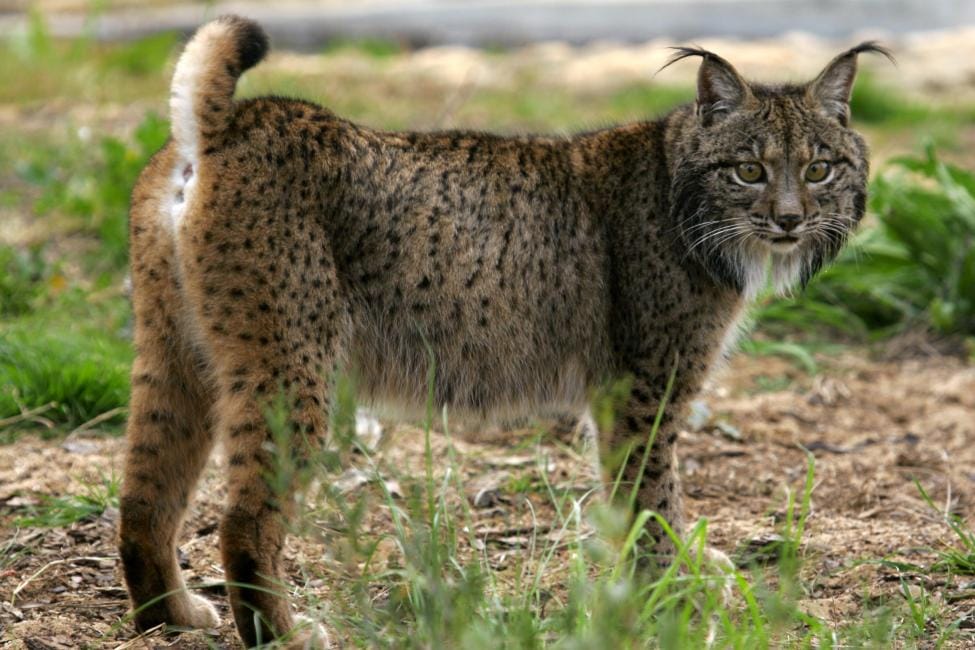
The Instituto da Conservação da Natureza e das Florestas takes over direct management of the Centro Nacional de Reprodução do Lince-Ibérico (CNRLI) at Silves on 1 June 2026, ending a near-two-decade run for the operating team that turned the Algarve facility into the Portuguese node of one of the EU's flagship recovery programmes. The transfer was confirmed in Lisbon on Wednesday 13 May by Environment and Energy minister Maria da Graça Carvalho, who told reporters at the margin of an environmental event that the change is a matter of gestão interna and that ICNF will keep the centre's technical objectives unchanged. The current operating contracts run only until 31 May. Three weeks before handover, the team running the centre says no formal transition plan has reached them.
The CNRLI is not a marginal site in the Iberian programme. Since opening in 2009 the Silves centre has produced more than 180 cubs in captive breeding and prepared over 100 animals for release into the wild, feeding the reintroduction nuclei that have lifted the Iberian-wide population from fewer than a hundred individuals at the species low to more than 2,400 today. About 350 of those lynxes live in Portugal, spread across the Vale do Guadiana, the Mourão-Moura-Barrancos belt and the recently established Vale do Côa nucleus. The 14-person operating team that ICNF will replace includes the full veterinary, animal-handling, monitoring and field-release stack, and several of its members have been in role for the entire 15-to-16-year arc of the programme. Technical coordinator Rodrigo Serra has run the operation for 16 of those years.
Serra and the team's pushback, made public on the eve of the minister's statement, sits at two levels. The operational complaint is that captive Iberian lynx are conditioned to specific handlers across complex reproduction, weaning and pre-release training cycles, and that abrupt changes in handlers translate into measurable behavioural disruption in animals destined for reintroduction. Serra frames it directly: each abrupt change of handlers alters lynx behaviour, and a 24/7 specialised operation of this kind cannot be transferred on a notional date without a written technical, legal and operational continuity plan. The institutional complaint is that no diagnostic justifying the change has been made public, no transition timetable has been delivered to the team, and the contracts of the existing 14 staff expire eight days before the change of management — leaving an arithmetic gap between the end of one regime and any documented start of the next.
ICNF's own reading, conveyed through the minister, is that the current arrangement was not stable, that staff turnover has run through the centre's life, and that bringing the operation in-house is the way to lock continuity into a single public-administration line of authority. The institute also points to a financial scaffold that arrived earlier this year: the support protocol signed with Águas do Algarve commits €350,000 per year until 2037 specifically to underwrite the captive-breeding programme, a twelve-year revenue line that the executive treats as the predicate for sustained direct management. The Carvalho ministry's broader argument is that the Silves centre and the wider lynx programme have outgrown the operating model that built them, and that direct ICNF management is the natural next stage rather than a punitive intervention.
The 1 June takeover lands inside a wider lynx policy package the same ministry presented eleven days earlier. At Ovibeja in Beja on Saturday 2 May Carvalho rolled out the new Plano de Acção para a Conservação do Lince-Ibérico em Portugal — PACLIP 2026–2030 — replacing the predecessor plan that formally expired in 2020 and inserting metas vinculativas for the first time: overall mortality capped below 18.3%, road mortality below 15%, illegal persecution below 10%, disease-related mortality below 4%, and genetic heterozygosity loss capped below 5% per generation. The new plan locks in an end-of-2026 deadline for approving the next reintroduction area, with the Serra da Malcata in Penamacor (Castelo Branco) confirmed on 6 May as the leading candidate, and assigns the LIFE Lupi Lynx transboundary project a €3.5 million budget anchored across the Iberian strategy's eight-new-nuclei target. The Silves operational reshuffle is the first hard executive act inside that plan; the political fight over who runs the captive-breeding stack is happening before any of the binding-target machinery has been tested.
The CNRLI question also runs through the bigger restructuring file that the same minister opened on the environmental administration in early May. Despacho 5797/2026, signed by Gonçalo Matias and Graça Carvalho on 28 April and published 6 May, gave an inter-ministerial team until 28 June 2026 to inventory the licensing and operational processes that APA and ICNF run, with a substantive code-change package to follow. The Silves operational change is being delivered ahead of that diagnostic — which has prompted Zero, Quercus and SPEA to point out that the executive is restructuring on the ground before the formal restructuring exercise has reported. The Concertação Social table is not the venue for the lynx file, but the political optics of an internal-management decision delivered ahead of the diagnostic phase are exactly the optics those organisations flagged in the broader APA-ICNF dispatch.
What This Means for Expats
- Algarve residents: The CNRLI sits inside the Silves municipality and is the most cited environmental success story in the region. Expect heightened local political attention through May and June — the centre is a Câmara-de-Silves talking point and the operational reshuffle will land in the regional press well beyond the species-conservation niche.
- Property owners near reintroduction zones: If you hold rural land in the Vale do Guadiana, the Mourão-Moura-Barrancos belt or the Vale do Côa nucleus, the PACLIP 2026–2030 plan includes formal compensation and conflict-resolution mechanisms that will land in 2028. Existing livestock-protection arrangements continue to run on the predecessor regime in the interim.
- Serra da Malcata buyers and tourism operators: The Penamacor designation as the next reintroduction area is the first time a Beira Interior reserve has been pulled into the active lynx programme. Expect formal designation steps through end-2026 and a measurable rise in tourism listings tagged to the species — the PACLIP plan targets a 20% increase in visitor numbers in lynx-presence municipalities.
- Donors and NGO members: Águas do Algarve's €350,000-per-year, twelve-year commitment is the largest single private predicate for the captive-breeding programme in Portugal. Any further private-sector co-financing announced before end-2026 will sit on top of that floor, not replace it.
The team's request, in operational terms, is a written transition plan that bridges the gap between 31 May and 1 June and protects the captive animals during the changeover. The ministry's position, in political terms, is that the change is administrative and the technical objectives are unchanged. Whether the next four weeks deliver a documented transition or a documented gap is the part of the file that will be visible in the daily political tape. Beyond that, the substantive question is whether the in-house operating model can sustain the kind of multi-decade specialist continuity that the species recovery has so far depended on — a test that the PACLIP metas vinculativas will start measuring from the first reintroduction window after the handover. On the conservation front, Rewilding Portugal's release of wild rabbits in the Côa valley aims to rebuild the prey base that Iberian lynx, wolves and eagles depend on. On the national framework this now sits inside, the draft nature restoration plan Portugal has just delivered to Brussels sets out the 28 August filing under Article 16 of Regulation (EU) 2024/1991, the consultation that cut the measure list, the habitat targets of 30 percent by 2030 and 90 percent by 2050, the farmland bird index Portugal has to lift to 105 by 2030, and the twelve months of Commission assessment that follow.