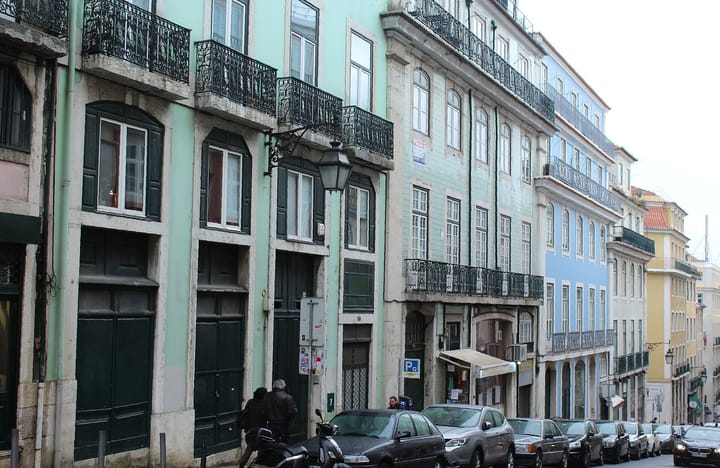
Condomínio (Homeowner Association) in Portugal in 2026 — A Practical Guide to the Lei 8/2022 Framework, the Permilage Vote, the Annual Assembleia Geral, the 10% Fundo Comum de Reserva and the Acta as Executive Title for Quota Collection
Owning an apartment in Portugal puts you inside a condomínio under the propriedade horizontal regime — Código Civil articles 1414–1438-A, Decreto-Lei 268/94 and the Lei 8/2022 modernisation set the rules for the assembleia geral, the 10% Fundo Comum de Reserva and the acta as executive title.

The Propriedade Horizontal Regime in Portugal
Any time a building in Portugal is split into multiple privately-owned apartments or units sharing common walls, a staircase, a lift, a roof or a façade, the building sits under the regime da propriedade horizontal — the horizontal-property regime codified in articles 1414 to 1438-A of the Código Civil, complemented by Decreto-Lei n.º 268/94 of 25 October and modernised by Lei n.º 8/2022 of 10 January which entered force on 10 April 2022. Every owner of a unit is automatically a condómino and automatically a member of the building's condomínio — a legal collective that owns the common parts (telhado, fachadas, escadas, elevadores, instalações de água-luz-gás, espaços comuns) jointly and runs the building's governance through an annual assembly and a designated administrator. There is no opt-out: the moment you sign the escritura for an apartment in Portugal, you are a condómino with both the rights and the obligations the law sets out.
The Two Documents That Govern Every Condomínio
Two documents control the day-to-day operation of every Portuguese condomínio:
- Título constitutivo da propriedade horizontal — the founding deed lodged at the Registo Predial when the building was first split into independent fractions. It assigns each unit a fracção autónoma letter (A, B, C…) and a permilage figure (a per-thousand share of the building) that drives both voting rights and the per-unit share of common expenses. The permilage is fixed at constitution and only the unanimous assembly of all condóminos can change it.
- Regulamento do condomínio — the rule-book the assembly adopts and amends to govern everything the title constitutivo leaves open: quiet hours, pet rules, terrace and balcony use, parking allocation, short-term-rental restrictions, common-parts use, the schedule for the annual Fundo Comum de Reserva contribution and any pecuniary sanctions for breach. The regulamento is mandatory for buildings with four or more fractions under article 1429-A of the Código Civil.
The Annual Assembleia Geral de Condóminos
The yearly governance hinge is the Assembleia Geral Ordinária de Condóminos — the annual general assembly the administrator must convene during the first fortnight of every year under article 1431 of the Código Civil. The Lei 8/2022 modernisation tightened the convocation rules: the notice must be sent at least 10 days before the meeting, must specify the date, hour, location, agenda items and the documents on offer for voting, and may now be sent by email rather than by registered post if the owner has consented to electronic notification.
The standing agenda items for the ordinary assembly are:
- Approval of the previous year's accounts and the administrator's annual report.
- Approval of the next year's budget (orçamento), the monthly quota schedule and the maturity dates.
- Election or re-election of the administrator for the standard one-year mandate (renewable). Article 1435 sets the default at one year unless the regulamento or assembly resolves otherwise.
- Review of the Fundo Comum de Reserva, the cumulative reserve balance and any planned drawdowns for major repairs.
- Any major-works (obras) authorisations, common-parts insurance renewal and contract reviews.
Owners who cannot attend in person may issue a procuração (proxy authority) authorising another condómino, a tenant or a third-party to vote in their name. The procuração needs no notarial form: a signed-and-dated written instrument suffices.
How the Permilage Vote Works
Under article 1418 of the Código Civil, each condómino has as many votes in the assembly as the integer number of whole permilage points the unit carries. A 25-permilage apartment carries 25 votes; a 100-permilage penthouse carries 100. Decisions are taken by simple majority of votes present at the meeting on ordinary matters. The Lei 8/2022 calibration introduced a critical detail: the simple-majority threshold runs against the permilage represented in the room, not against the total permilage of the building. A meeting with only one-third of the permilage represented can still pass an ordinary motion by a simple majority of that one-third. The exceptions where higher thresholds apply:
- Two-thirds of the building's total permilage for major-works decisions affecting the structure or the common parts under articles 1422-A and 1425.
- Unanimity for any change to the título constitutivo (permilage reallocations, fraction redefinitions) and for any decision that alters the proportional cost-sharing rule for common expenses under article 1424.
- Specific majorities for short-term-rental restrictions, the use of common parts for commercial activity, and the installation of lifts in buildings without one — set in the article-by-article detail of the Código Civil.
If an ordinary assembly fails to reach quorum for a particular item, the administrator must convene a second assembly within 15 days, which can resolve by a simple majority of the votes present regardless of total permilage represented.
The Acta — Why It Has Become an Executive Title
Every assembly produces an acta (meeting minutes) signed by the assembly president and at least two condóminos. The acta documents: the date and venue, the condóminos present and represented, the agenda, the deliberations taken, the voting result for each motion, and a final confirmation that the acta was read and approved. The acta is the single most important governance document a Portuguese condomínio produces.
The Lei 8/2022 modernisation added a structural change to article 6 of Decreto-Lei 268/94: the acta that approves the annual quota schedule and the maturity dates is an executive title against any defaulting condómino. That single sentence collapsed the prior debt-recovery route — which required the condomínio to file a ação declarativa to obtain a court judgment first — into a direct ação executiva. The administrator can now route a defaulting condómino straight to enforcement (penhora of the bank account, the rents on the unit, or in extreme cases the unit itself) on the basis of the acta and a current quota-payment record. The executive-title coverage extends to:
- The unpaid quota amount itself.
- Legal interest from the date of default.
- Any pecuniary sanctions approved by the assembly or set out in the regulamento.
The flip side: under the same article 6 as revised, the administrator is now legally obliged to initiate the enforcement action within 90 days of the first non-payment when the unpaid debt reaches one IAS (€537.13 in 2026), unless the assembly deliberates otherwise. A passive administrator who lets defaults accumulate beyond the 90-day window without an assembly resolution to that effect is exposed to civil liability claims from the other condóminos.
The Monthly Quota and How It Is Calculated
The quota mensal de condomínio is the monthly contribution each condómino pays to fund the common expenses. The default cost-sharing rule under article 1424 is by permilage: an apartment carrying 50 permilage of a building pays 5% of the total monthly budget. The unanimity-requiring exception lets the assembly resolve to share specific cost lines on a different basis (per-fraction-equally for the lift line, by-floor for the staircase line, by-occupancy for the water line where individual meters are absent) — but every such departure from the permilage rule needs the unanimity of all condóminos.
Typical monthly quota lines for a mid-size Lisbon or Porto building running on a professional administrator:
- Limpeza das partes comuns — cleaning service for entrance hall, stairs, lift, garage.
- Manutenção do elevador — lift maintenance contract under the DGEG-supervised regime.
- Electricidade das partes comuns — lighting and lift power consumption.
- Água das partes comuns — common-area water and, where individual meters are absent, the shared-meter pro-ration.
- Seguro multirriscos condomínio — the building-level insurance covering fire (compulsory under Decreto-Lei 268/94 article 1428), water damage, glass breakage and third-party liability for the common parts. The fire cover is mandatory; the broader multirriscos cover is the operational standard.
- Administração — the administrator's service fee, either as a fixed monthly figure or as a percentage of the budget.
- Fundo Comum de Reserva — the statutory reserve contribution (next section).
- Manutenção de equipamentos — porteiro automático, central de incêndio, bombas, equipamentos de gás.
Most professional administrators issue a monthly aviso de pagamento with the quota detail and the IBAN for SEPA-credit transfer. Some buildings still run on cheque or cash collection door-to-door; the trend post-Lei 8/2022 is firmly toward IBAN-based payment trails that match the executive-title evidence requirements.
The Fundo Comum de Reserva — The Mandatory 10%
The Fundo Comum de Reserva is a mandatory reserve fund every Portuguese condomínio must maintain under article 4 of Decreto-Lei 268/94. Each condómino contributes — on top of the standard quota schedule — an amount equivalent to at least 10% of their share of the condomínio's other expenses. The fund's exclusive purpose is to cover building-conservation expenses: major repairs, structural works, façade interventions, roof renewals, lift overhauls. The administrator cannot raid the Fundo Comum de Reserva for current-year operational expenses without an express assembly authorisation.
The fund sits in a separate bank account in the condomínio's own name, with a tax number (NIPC) and the administrator and assembly president as joint signatories on the standard mandate. Lei 8/2022 specifically required the fund to be held in a dedicated bank account — the prior practice of commingling reserve and current-year balances inside a single condomínio account is no longer compliant.
The Administrator — Election, Mandate, Duties
The administrador de condomínio is the executive officer the assembly elects under article 1435. The mandate runs for one year by default, renewable. The role can sit with a condómino (an unpaid neighbour-administrator), with an external professional administrator (a firm or individual specialising in condomínio management), or — in the absence of a properly-convened assembly — with a court-appointed administrator under article 1435-A. The professional-administrator model is now the standard in buildings with more than six fractions and is mandatory in any building where the condóminos cannot reach a quorum to elect a neighbour-administrator.
The administrator's statutory duties under article 1436 include:
- Convene the annual ordinary assembly and any extraordinary assemblies the assembly itself or the regulamento requires.
- Execute the assembly's resolutions and the regulamento.
- Collect monthly quotas and the Fundo Comum de Reserva contributions; pursue defaulting condóminos under the 90-day rule.
- Settle current-year expenses, contract suppliers, renew the multirriscos insurance, manage the cleaning and maintenance contracts.
- Issue a declaração de não-dívida ao condomínio at any condómino's request — the certificate confirming the unit is up to date on quotas, required at every property sale (article 1424-A) and demanded by every Casa Pronta property-transaction counter and every notary closing a sale escritura.
- Keep the books and the cumulative acta archive available for inspection by any condómino.
- Maintain the dedicated bank account for the Fundo Comum de Reserva and reconcile movements at every annual assembly.
Multirriscos Condomínio Insurance
The compulsory floor is fire insurance under article 1428 of the Código Civil and Decreto-Lei 268/94 — every Portuguese condomínio must carry fire cover on the building. The market standard is the broader seguro multirriscos condomínio sold by Fidelidade, Tranquilidade, Lusitania, Generali, Allianz, Zurich, Mapfre, Liberty and Ageas, which bundles fire, water-damage, electrical-fault, glass-breakage, storm-damage and third-party liability covers into a single group policy. Premiums weight on building square-meter footprint, age, location, fire-protection equipment and historical claims record. The seguro multirriscos premium is paid out of the monthly quota and runs in the condomínio's name, with the bank-mortgage lender for each financed unit typically named as beneficiário for the share corresponding to that unit's permilage.
Individual condóminos still need their own seguro multirriscos habitação for the interior of the unit — the contents, the interior fittings and the personal third-party liability — which the group policy does not cover.
Selling a Unit — The Declaração de Não-Dívida
Every transfer of a Portuguese apartment requires the seller to produce a declaração de não-dívida ao condomínio issued by the administrator under article 1424-A of the Código Civil. The declaração confirms whether the unit is up to date on quotas and on Fundo Comum de Reserva contributions. If there is an outstanding debt, the buyer becomes jointly liable with the seller for the unpaid amount unless the declaração is produced and the buyer acknowledges the debt in writing. Both the Casa Pronta single-act service and any notary issuing the escritura will refuse to close the transfer without the declaração in the file. The administrator has 10 days to issue the declaração after the seller's request and may charge a small administrative fee for the document (typically €10–€30).
Disputes and Where They Go
Condomínio disputes follow a layered route. Decisions taken at an assembly that any condómino believes are illegal can be challenged in court within 60 days of the deliberation under article 1433 — the action runs against the condomínio represented by its administrator. Smaller disputes between condóminos (noise, balcony use, animal nuisance) typically route through:
- Direct mediation through the administrator or a Câmara Municipal mediation service.
- Julgado de Paz for monetary disputes below the €15,000 ceiling — the small-claims tribunal that handles many condomínio-quota and minor-damage cases without the cost of full court representation. Any solicitador or the regulated solicitator profession can also accompany a condómino through small-claims or quota-collection procedures.
- Tribunal Judicial de Comarca for higher-value disputes, structural-works disagreements and complex regulamento-interpretation cases.
What This Means for Expats
- If you have just bought your first apartment in Portugal, ask the administrator (or the seller) for: the título constitutivo, the regulamento, the last three annual actas and the current-year orçamento. These four documents tell you exactly what you have bought into and what your share of the next year's expenses will look like.
- If you are reading the título constitutivo, the permilage figure on your fracção is the single most important number — it sets both your vote and your share of every common expense for the duration of your ownership. Permilage is occasionally redistributed by unanimous deliberation, but in practice the figure rarely changes once set at building constitution.
- If you cannot attend the annual assembly, issue a procuração to a neighbour you trust. The procuração needs no notarial form — a signed-and-dated written instrument is sufficient under article 1432. Leaving your vote unrepresented means decisions on your monthly quota are taken without your input.
- If you are paying the monthly quota, set up a SEPA Standing Order from your Portuguese current account to the condomínio's IBAN. The Lei 8/2022 executive-title regime makes late payment expensive: late-payment interest accrues immediately, pecuniary sanctions are enforceable, and the administrator is legally obliged to initiate the executive action at the 90-day mark once your debt reaches €537.13 (the 2026 IAS figure).
- If you are letting your unit short-term, check the regulamento before filing the Alojamento Local Comunicação Prévia. The Lei 8/2022 framework lets the assembly resolve to restrict or ban short-term rentals by a qualified majority of the building's permilage. Many Lisbon and Porto buildings have already adopted such restrictions; an AL registration that runs against an assembly deliberation is exposed to a quota-sanction track and potentially to municipal-level enforcement.
- If you are selling your unit, request the declaração de não-dívida from the administrator at least three weeks before the closing. The administrator has 10 days to issue it and the document is mandatory for the Casa Pronta or notary escritura. Sales fall through every week over a missing declaração — the timing is the single most overlooked item on the seller's checklist.
- If you cannot read the Portuguese-language acta and regulamento, a certified translation is rarely needed for the actual reading — most professional administrators in Lisbon, Porto and the Algarve issue regulamentos and actas in English on request, and the Lei 8/2022 framework permits the documents to be circulated bilingually so long as the Portuguese version is the controlling text.
The Portuguese condomínio is a tightly-regulated collective with a clear governance hinge — the annual Assembleia Geral — and a clear enforcement spine — the acta as executive title under Lei 8/2022. Once the foreign-resident apartment owner understands the permilage vote, the 10% Fundo Comum de Reserva contribution and the 90-day administrator's duty to sue defaulters, the rhythm of the year becomes predictable: one assembly in the first fortnight of January, one monthly quota paid by SEPA standing order, one declaração de não-dívida pulled at the moment of sale. The friction points — short-term-rental restrictions, major-works votes, regulamento amendments — sit inside the qualified-majority architecture and are best handled by attending in person or issuing a procuração to a neighbour who will.