Coaches Outnumber Trains Nine to One on the Algarve–Lisbon Route
Express coaches run about nine times as often as long-distance trains between the Algarve and Lisbon, and this week's electrification of the Algarve Line does little to close the gap, since capital-bound trains still terminate in Faro and require a transfer.
Anyone trying to reach Lisbon from the Algarve without a car quickly learns an awkward truth: the coach turns up far more often than the train. On the corridor between the southern region and the capital, express buses run roughly nine times as frequently as long-distance rail, according to reporting by Público — a gap that a much-publicised upgrade to the Algarve's railway does little to close.
The imbalance comes down to how thin the rail service is at the top end. CP — Comboios de Portugal (Portuguese Railways) runs only a handful of long-distance trains a day between Faro and Lisbon: three Intercidades (Intercity) services and two Alfa Pendular (tilting long-distance) ones per direction, with stretches of the day — several hours around midday — when no train leaves Faro for the capital at all. Against that, the coach operators field far more departures: Rede Expressos alone schedules around nine Lisbon services on its summer timetable, with FlixBus and the Algarve's EVA Transportes adding more on top.
Journey times and fares do little to tip the balance back toward rail. The fastest Alfa Pendular covers Lisbon to Faro in about three hours, with the Intercidades slower, for a second-class fare in the region of €23.50. The coaches take a broadly comparable time but sell seats far more cheaply, with promotional fares advertised from just a few euros. For a traveller comparing options on a phone, more departures and lower prices point in one direction.
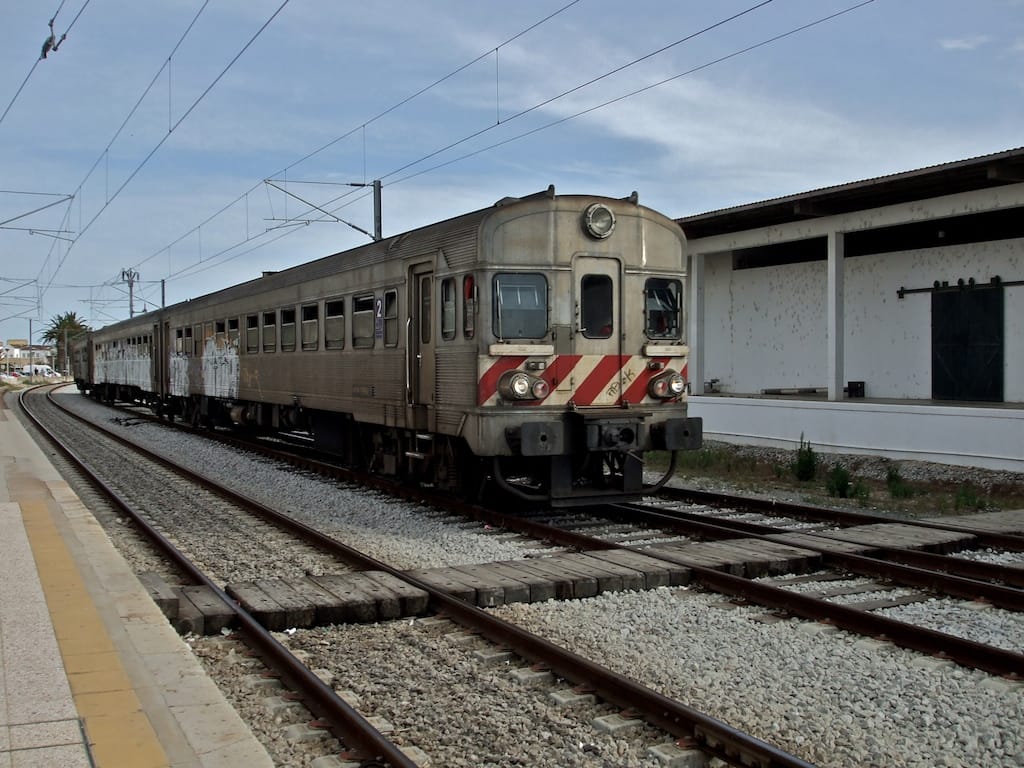
What makes the frequency gap notable now is that the region's railway has just been substantially upgraded. From Sunday, 19 July, the Algarve Line is fully electrified along its length from Lagos to Vila Real de Santo António, with older diesel units replaced by electric trains that add around 40% more capacity, boost regional service by roughly 18%, and, for the first time, offer direct Lagos–Vila Real journeys without a change. Those are real gains for travel within the region.
They do not, however, fix the connection to Lisbon. As Público notes, the long-distance trains still start and end in Faro, so passengers heading to or from the rest of the line must change at Faro or Tunes to reach a capital-bound service. Extending the Intercidades and Alfa Pendular deeper into the Algarve is not yet possible: the metal bridges along the route cannot bear the load and would need reinforcing first. Electrification improves comfort and local times, but the bottleneck that sends travellers to the bus remains firmly in place.
For residents in one of Portugal's most tourism-dependent regions — and for the visitors who make up much of the traffic in summer — the practical upshot is that the coach stays the default way to reach Lisbon by public transport. It is a reminder that headline investment in rolling stock and overhead wires does not automatically translate into a better link to the capital, and that the Algarve’s rail relationship with Lisbon still lags the road. The upgrade itself, which brings electric trains and direct Lagos services from 19 July, remains a genuine step forward — just not on the journey most travellers to Lisbon actually make.