Civil Protection's Hollowed Senior Cadre Heads Into Portugal's June 1 Período Crítico — What 'Ten Commanders Gone in 18 Months' Actually Means for the 2026 Wildfire Season Operationally
Thirty days from Portugal's Período Crítico opens 1 June with ANEPC short ten senior commanders in 18 months. End-of-day analysis on what the cadre gap means for command-and-control through the 2026 fire season.
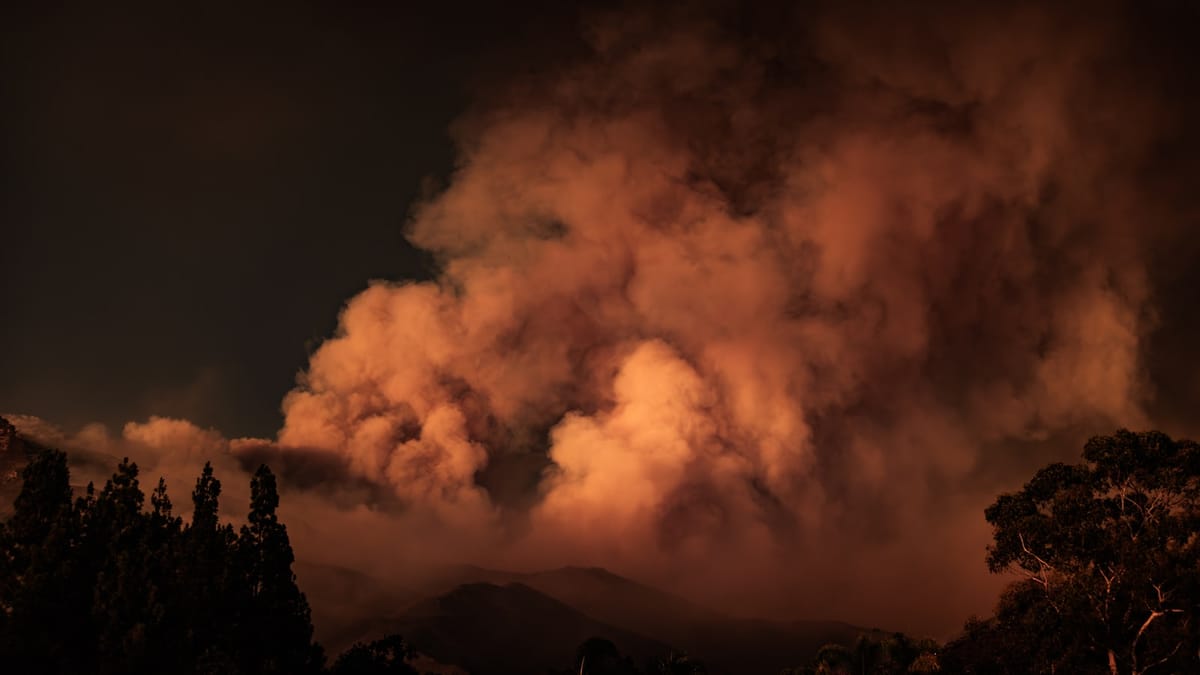
Thirty days from the start of Portugal's official Período Crítico — the legally defined wildfire season that runs from 1 June to 30 September — the country's civil-protection command structure is running with ten senior commanders gone in eighteen months. The Wednesday Público report that surfaced the number quoted multiple ANEPC officers naming a 'verão terrível' as the realistic baseline. Read tonight against what the climate side of the data set is also telling Portugal — that Copernicus and WMO confirmed Europe is warming twice as fast as the global average and that 1.034 million hectares burned across the continent in 2025 — and the operational stakes sharpen.
The cadre number is not an HR statistic. In a command structure where one Comandante Operacional Distrital can be coordinating 200+ vehicles and 800 operationals across simultaneous theatres on the same August afternoon, ten missing senior decision-makers is the difference between a managed initial attack and a stretched response that lets the rural-urban interface go.
Why the Cadre Matters More Than the Vehicle Count
Portugal's wildfire response stack has improved meaningfully on the equipment side since the 2017 Pedrógão Grande disaster — more aircraft contracts, more terrestrial vehicles, the FEB programme on Bombeiros Profissionais, the seasonal pre-positioning of Special Force operationals. The 2024 and 2025 seasons demonstrated that on the kit side, Portugal can now move resources between distritos faster than at any point in the post-1986 era.
The variable that has degraded is decision-making depth. A Comandante Operacional with twenty years inside the system reads weather windows, fuel-moisture indices and ROS — rate-of-spread — projections without needing the ECIN dispatch screen to tell them. A newly-promoted commander filling a vacancy one fire season after sub-distrital duty does not yet have the pattern library. The cost of that gap is measured not in headcount but in the seconds and minutes of decision latency that determine whether a 50-hectare incident closes at 200 hectares or breaks into a 5,000-hectare conflagration.
The Operational Substitution Problem
- The pull from GNR-SEPNA. Some of the cadre churn has bled towards the GNR's environmental and territorial structures, where pension and posting conditions are more stable. ANEPC cannot match the Guarda's career certainty without legislative change.
- The internal acting-rank workaround. ANEPC's option through summer is to fill commander posts on acting (em substituição) basis with the next-tier-down officers. That keeps the formal structure populated but compresses the experience curve at the second tier as well.
- The Forças Armadas backstop. Joint protocols with the Army, Air Force and Navy provide reinforcement on transport, evacuation and logistics. They do not provide command depth on the wildfire-specific decision tree.
- The European Civil Protection Mechanism. Portugal can request — and reciprocally provides — pre-positioned aircraft and crews. The 2025 season already saw rescEU assets deploy to Iberia. That mitigates equipment shortfalls. It does not substitute for distrital command.
What Changes Between Now and 1 June
The Período Crítico opens 1 June with the Estado de Alerta Especial regime activating earlier in regions with above-normal fuel and temperature anomalies. IPMA's outlook through 17 May already places Portugal above the 1991-2020 normal across most of the mainland, with Beja and Santarém touching 28-31°C this long weekend — early-season heat layered on a winter that left fuel loads largely intact in interior and northern districts.
The realistic checklist for ANEPC over the next four weeks: confirm the acting-rank slate at distrital level, lock the seasonal aircraft contracts, finalise the rescEU pre-positioning request, and run the joint exercise calendar with the GNR, Bombeiros and Forças Armadas before the first heatwave window opens. Whether any of that is sufficient depends on a meteorological variable the agency cannot control and a cadre variable it has not been able to fix in 18 months.
What This Means for Expats
- If you live in interior or northern Portugal: The fuel-management work around your property — the 50-metre limpeza around buildings, the 100-metre cleared band around aglomerados — is a personal obligation enforced by câmara and GNR. Penalties run €280 to €10,000 for individuals and rise sharply for legal persons. Treat the deadline as binding.
- If you have second homes in rural areas: Verify your home insurance covers wildfire — a meaningful share of expat-held rural properties are under-insured for the catastrophe layer.
- If you are evacuated: The civil-protection alert system pushes notifications through the cell network. Keep mobile devices powered, keep documents accessible, and treat 'evacuação' messages as binding rather than advisory.
- The August window: Plan summer travel through interior Portugal aware that road closures and air-quality alerts can cascade fast. The IPMA fire-risk map at ipma.pt updates daily and reads simply.
The 2026 fire season will turn on weather, fuel and human behaviour in roughly that order. The cadre gap does not change those drivers. It changes what Portugal's response looks like when they break the wrong way.