Banco de Portugal's June Boletim Económico Flips Portugal's Demographic-vs-Supply Housing Gap to Surplus for the First Time in 11 Years — 300,000-Unit Decade Deficit, 26,700 Completions and the Immigration Cut Frame the Reset
The Banco de Portugal (Bank of Portugal, BdP) Boletim Económico — Junho 2026 (June 2026 Economic Bulletin), published Sunday 15 June, carries a thematic study titled Housing in Portugal: determinants of supply and dynamics of prices and rents that...

The Banco de Portugal (Bank of Portugal, BdP) Boletim Económico — Junho 2026 (June 2026 Economic Bulletin), published Sunday 15 June, carries a thematic study titled Housing in Portugal: determinants of supply and dynamics of prices and rents that reaches a striking conclusion: in 2025, the gap between demographic dynamics and new housing supply was, in large measure, eliminated — the first time the country's housing flow has been in nominal balance with household formation in 11 years. The reversal does not erase the ~300,000-unit cumulative housing deficit Portugal accumulated over the preceding decade, but it changes the directional pressure that has been driving prices and rents since 2017.
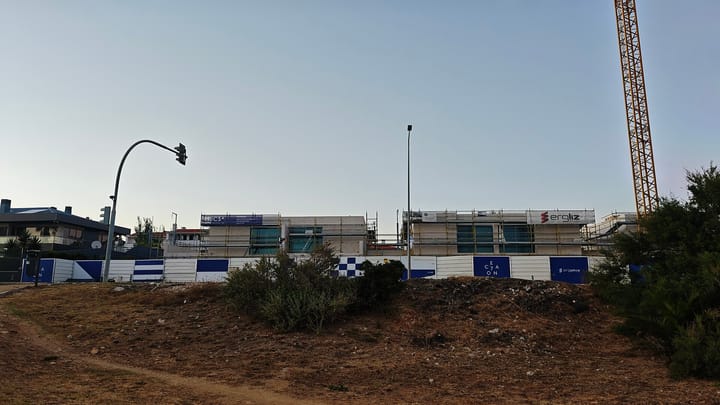
The BdP's tallies are precise. In 2025, Portuguese contractors completed 26,700 new dwellings — well below the 2007 peak of 67,500 units a year, but climbing. Licences issued during the same period totalled 41,900 units, the highest figure since 2008 and a forward indicator that completion volumes will keep rising into 2026 and 2027. The supply line did not move by itself: the demographic line moved more. Net immigration into Portugal dropped from an average of 13,200 arrivals a month in 2024 to 6,200 a month in 2025, a halving that reflects the AIMA (Agência para a Integração, Migrações e Asilo — Agency for Integration, Migration and Asylum) reagrupamento familiar backlog, the manifestações de interesse cut-off, and the broader political shift in immigration administration since 2024.
Governor Álvaro Santos Pereira framed the finding bluntly at the Bulletin presentation: resolving the accumulated deficit would require “building a city the size of Lisbon, or two the size of Porto” on top of the new flow. The 2025 balance, in other words, is a flow statement, not a stock correction. The structural problem — the 300,000-unit shortfall built up since 2014 — is still sitting in the price tape.
What the price line looks like underneath the supply reset
The Bulletin's price-and-rent decomposition makes that distinction visible. Between 2017 and 2024, the median sale price per square metre rose 88%, and median rents climbed 81%; transaction prices between 2019 and 2025 added another 86%. The credit channel only added a fraction of that pressure — housing credit growth across the same 2019-2025 window came in at 22.2%, a lag wide enough for the BdP to attribute the price movement to a supply shortfall, not to looser financing. That is also the analytical frame the Banco de Portugal carried into its macroprudential mortgage recommendations earlier this month, which tightened the taxa de esforço (debt-service-to-income) cap from 50% to 45% from 1 July — an attempt to keep the demand side from re-loading the moment supply caught up.
The reset is not yet visible in the asking-price data either. Idealista's May 2026 asking-price tape marked a seventh consecutive monthly high at €3,142/m² nationally, with Lisboa crossing €6,124/m². The implication is that the demographic-vs-supply gap closing in 2025 will translate into price moderation only with a lag, and only if construction can hold or extend its current cadence — which is the part of the BdP's study where the optimism narrows.
The construction-sector bottlenecks the Bulletin flags
The BdP audits the supply side for capacity and finds it thin. 32% of construction workers in Portugal are foreign-born, up from 6% in 2010 — a sectoral profile that makes the construction pipeline directly exposed to exactly the immigration cut that just rebalanced the demand side. 98% of construction firms are micro or small enterprises, a fragmentation that limits scale, slows licensing throughput, and pushes input costs up. The Bulletin pairs that with the INE construction-cost index that posted a 5.9% year-on-year lift in April, with labour costs running at 7.3% — an inflation rate the small-firm structure has limited capacity to absorb.
The Bulletin describes Portuguese licensing as “slow and unpredictable,” flags land scarcity in the major urban concelhos, and notes that the 2024-2025 rebound in licence issuance was concentrated in mid-rise residential rather than the large-scale build-to-rent product that other European jurisdictions have used to compress rent volatility. The conclusion the BdP reaches is that the 2025 flow balance is contingent on the supply pipeline holding — and the supply pipeline is contingent on labour availability, which the same Bulletin notes has just halved at the source.
The social-housing chapter and the EU comparator
The study runs a parallel analytical line on social and affordable housing. Portuguese social housing accounts for roughly 2% of the total housing stock, “reduced both in absolute terms and in comparison with international standards.” The BdP compares Portugal to Austria, the Netherlands, Denmark and Finland — the four EU jurisdictions with the largest public, cooperative and non-profit rental sectors — and finds the comparator group exhibits “lower rent volatility, greater affordability and less market segmentation.” The social-housing footprint in Portugal is also geographically concentrated: the Porto metropolitan area, Madeira, several Açores islands, and the Portalegre and Évora districts carry an outsized share, leaving the high-demand Lisboa-Setúbal axis structurally under-served.
The Bulletin stops short of a specific quantitative recommendation, but the analytical framing aligns directly with the government's recent decision to triple the IHRU (Instituto da Habitação e da Reabilitação Urbana — Institute of Housing and Urban Rehabilitation) multi-annual envelope to €1.85 billion for 12,000 affordable-rent homes by 2030. The Bank's view is that public, cooperative and non-profit rental supply “reduces demand pressure and introduces indirect competition that moderates the transmission of exuberant price movements” — an argument for scale, not just for spend.
What this means for expats and residents
- Price moderation is structurally on the table, but not for 2026. The 2025 flow balance is a leading indicator, not a price signal. Existing tenants and buyers should not expect rents or asking prices to flip downward in 2026 — the cumulative stock deficit is still binding. The BdP's own projection is “stabilisation of housing pressures,” not correction.
- The mortgage rules are tightening regardless. The 45% taxa de esforço cap lands 1 July, and the April housing-credit print already shows the stock-implied rate ticking up. Buyers in the €200-400k bracket should run their numbers under the new cap before assuming current pre-approval headroom carries forward.
- Affordable-segment supply has actually shrunk. Idealista's Q1 2026 audit counts fewer than 40,000 homes under €300,000 nationally, a 31% twelve-month shrink. The flow balance from the BdP is in the mid-market, not the affordable tier — first-time buyers and IMT Jovem candidates are still chasing a shrinking pool.
- Construction-labour exposure is the new risk vector. A third of construction labour is foreign-born and the immigration tap is cooling. If completions slip in 2026-2027 because the labour pipeline tightens, the 2025 flow balance unwinds before the stock deficit closes.
- The rental-side reset depends on social-housing scale. The IHRU envelope tripling is consequential, but 12,000 homes by 2030 is a fraction of the 300,000-unit shortfall. Renters in Lisboa, Porto and the Algarve should not assume the social-housing pipeline will materially compress private-market rents inside this Parliament's mandate.
The BdP closes the housing chapter with a forward orientation rather than a forecast: continued demographic moderation and a holding completion pace would, on the Bank's read, push the cumulative deficit downward through the late 2020s. The lever the Bulletin leaves on the table is the supply-side capacity question — the labour, the land, the licensing throughput, and the firm-structure constraint — which the same document just confirmed has not been resolved.
Sources: Banco de Portugal, Boletim Económico — Junho 2026; ECO; Observador; Jornal Económico (16 June 2026).