Azores Volcanic Alert: Santa Barbara Volcano Remains Under Watch on Terceira Island
The volcanic alert at the Santa Barbara Volcano and the Western Fissure Volcanic System on Terceira Island, in the central Azores, remains at V2 -- a designation indicating that the volcanic system is in a phase of instability. The Institute for...
The volcanic alert at the Santa Barbara Volcano and the Western Fissure Volcanic System on Terceira Island, in the central Azores, remains at V2 -- a designation indicating that the volcanic system is in a phase of instability. The Institute for Volcanological Research and Risk Assessment of the University of the Azores (IVAR) confirmed the status following its latest Crisis Cabinet meeting on seismic-volcanic activity in February.
The announcement continues a period of heightened geological vigilance on Terceira that began in late 2025, when the alert was raised to V3 (volcanic system in a phase of reactivation). IVAR downgraded it to V2 at the beginning of February, acknowledging a stabilisation in the most acute indicators while maintaining that conditions remain above normal background levels.
What the Data Shows
According to IVAR's latest report, seismic activity on Terceira Island "although of low magnitude, remained clearly above reference levels and close to that recorded in January, particularly at the Santa Barbara Volcano and the Western Fissure Volcanic System." Seismicity has also been recorded further south, in the vicinity of Angra do Heroismo, the island's principal city.
The strongest earthquake during the monitoring period reached a magnitude of 1.7 on the Richter scale. Notably, no earthquakes related to the crisis were felt by the population -- the same pattern observed in the preceding month.
IVAR also reported that "some crustal deformation continued to be recorded in the area where the seismic-volcanic crisis is developing," though it characterised the deformation as "not very intense." In terms of volcanic gases, the institute found no anomalies that could be linked to the ongoing crisis.
A Precautionary Watch, Not a Panic
While the V2 alert level sits below the more urgent V3 (reactivation) and V4 (eruption in progress) thresholds, it signals that the volcanic system remains unsettled and warrants close monitoring. IVAR cautioned that "any change in the observed activity pattern may lead to adjustments to the aforementioned alert levels" and urged the public to follow developments through official civil protection channels.
The population has been advised to adopt self-protection measures "appropriate to the ongoing activity, in particular, to minimise the risks arising from the possible occurrence of a larger magnitude earthquake or the development of slope movements at the level of unstable slopes and the coastline."
Terceira's Volcanic History
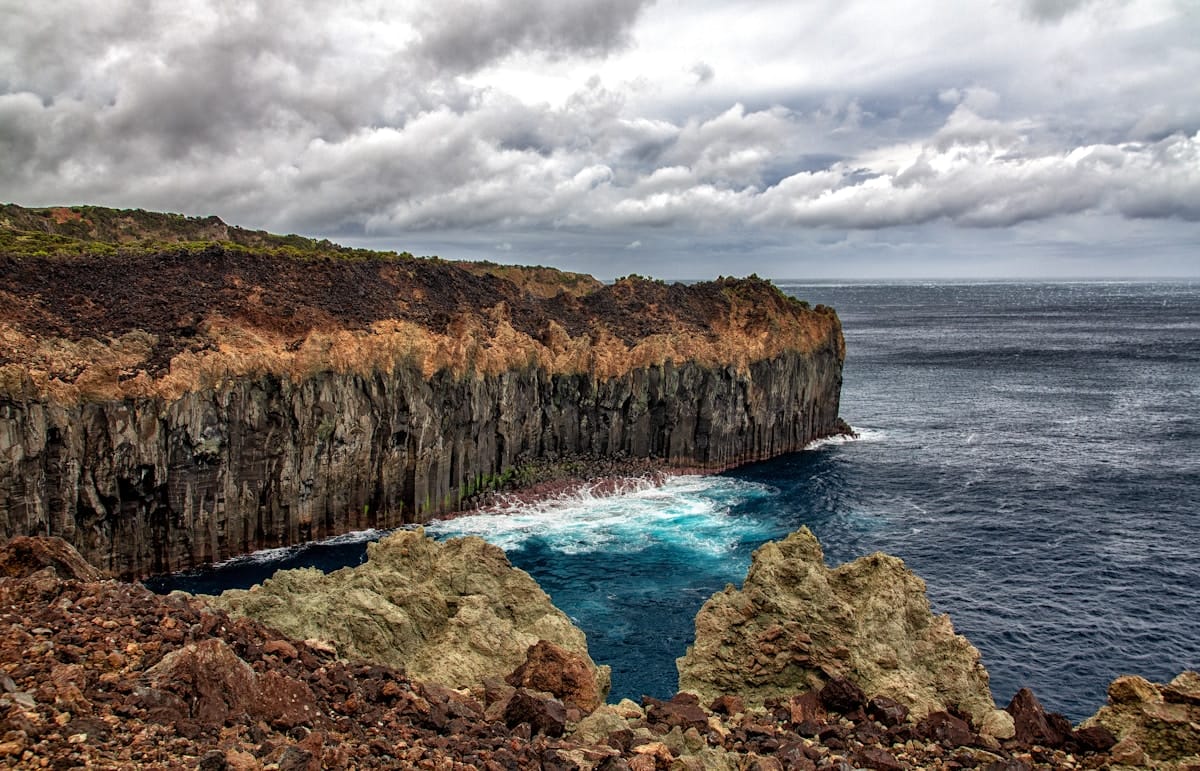
The Santa Barbara Volcano, rising to 1,023 metres, is one of the most significant volcanic structures in the Azores archipelago. Its last confirmed eruption dates to 1761, when a fissure eruption at the Mistério Negro produced lava flows on its western flanks. The Western Fissure Volcanic System, which stretches across Terceira's interior, has its own history of activity spanning thousands of years.
The Azores sit on the junction of three tectonic plates -- the Eurasian, African, and North American -- making the archipelago one of the most seismically active regions in Europe. The nine islands are home to numerous volcanoes, fumaroles, and hot springs, and have experienced significant eruptions within living memory, most recently the Capelinhos eruption on Faial Island in 1957-58.
What This Means for Expats and Visitors
For residents and visitors on Terceira, the V2 alert does not require evacuations or major lifestyle changes. However, it is a reminder to stay informed and prepared. The regional civil protection authority (SRPCBA) publishes regular updates, and newcomers to the island should familiarise themselves with local emergency procedures.
Terceira attracts a steady flow of international visitors and a small but growing expat community, drawn by its affordable living costs, UNESCO-listed Angra do Heroismo, and the Lajes Air Base, which historically supported American military families. The volcanic monitoring infrastructure in the Azores is considered among the best in Europe, providing a degree of reassurance even during periods of elevated activity.
IVAR's next scheduled review will assess whether conditions continue to stabilise or warrant a reassessment of the alert level.