A 19-Year-Old From Ovar Drops Out of University to Plug Global Fashion Brands Straight Into Portuguese Factories
Matias Santos, 19, left an economics degree to build NovaSupplier, a sourcing platform that links clothing brands directly to Portuguese factories and cuts out the agents who charge 10-20% commissions. It now has ~30 factories, 120+ brands and a US investor resident in Portugal.
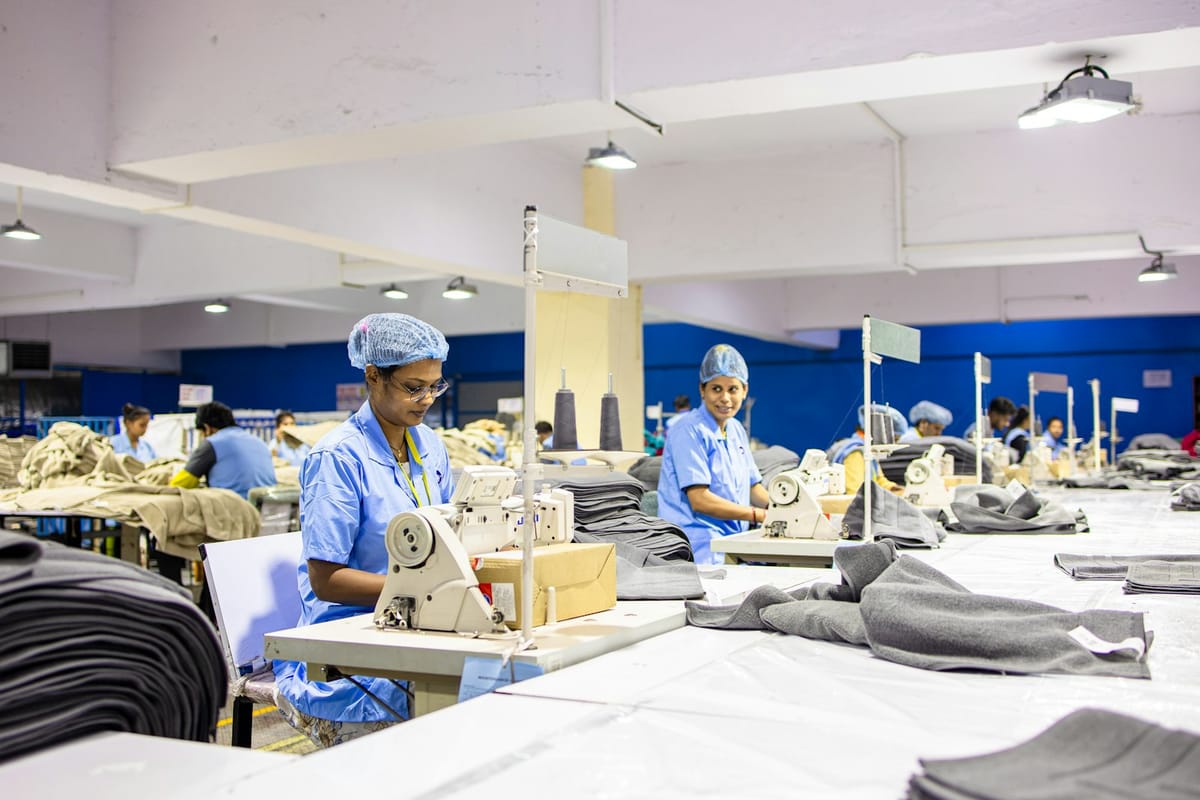
At an age when most of his former classmates are still sitting exams, Matias Santos is running a company that wants to rewire how the global fashion industry buys from Portugal. The 19-year-old from Ovar, on the country's northern coast, dropped out of an economics degree at the Catholic University of Porto (Universidade Católica do Porto) to work full time on NovaSupplier — a digital sourcing platform that connects clothing brands directly to the Portuguese factories that can make their products.
The pitch is simple and aimed squarely at a long-standing inefficiency. Brands that want to manufacture in Portugal have traditionally relied on agents and intermediaries to bridge the gap to the factory floor, and those middlemen typically charge commissions of between 10 and 20 percent. NovaSupplier proposes to cut them out.
How the platform works
Founded at the end of 2025, NovaSupplier functions as an online marketplace where a brand anywhere in the world can search for the Portuguese manufacturer best suited to its project, request quotes, communicate directly and complete payment — all without an agent in the middle. The company makes its money by charging factories a 3.5 percent commission on each transaction completed through the platform, a fraction of the cut traditional intermediaries take.
The early traction is modest but real: the platform currently brings together around 30 Portuguese factories and more than 120 registered brands. It has also drawn outside capital. Late last year, a United States investor resident in Portugal took a minority stake through a five-figure investment, an early vote of confidence in the model.
Why Portugal is the product
Portugal's textile and clothing industry is one of the country's quiet export champions, concentrated in the north around the Vale do Ave — the belt of towns near Guimarães, Famalicão and Barcelos that has supplied European fashion for generations. The sector has spent the past decade trading on quality, speed and proximity rather than the rock-bottom prices of Asian competitors, and it now counts luxury labels among its clients precisely because it can turn around smaller, higher-end orders quickly.
That repositioning has created exactly the kind of buyer NovaSupplier is courting: smaller and mid-sized international brands that want "Made in Portugal" on the label but lack the contacts, scale or local knowledge to find a reliable factory on their own. For those brands, the agent's commission has long been the price of entry. Removing it, and replacing opaque introductions with a searchable directory of vetted manufacturers, is the gap the startup is trying to fill.
What this means for expats
- A window into the local startup scene. NovaSupplier is the kind of lean, export-facing venture Portugal increasingly produces — founded by a young entrepreneur, funded in part by a foreign resident, and built to sell a Portuguese strength to the world.
- Useful if you are in the trade. Foreign entrepreneurs running a clothing brand, or thinking of launching one, now have a lower-friction route into Portugal's manufacturing base without paying an intermediary's margin.
- Foreign capital, local industry. The US investor's stake is a small example of a larger pattern: residents who arrive in Portugal increasingly put money into local companies, not just property.
- Early days. Thirty factories and a teenage founder make for a compelling story, but the platform still has to prove it can scale and win the trust of factories that have worked through agents for decades.
Whether NovaSupplier becomes a fixture or a footnote, it captures something about where Portugal's economy is trying to go: turning an established industrial strength into a digital service, and betting that a 19-year-old with a laptop can disintermediate a supply chain that has run on personal contacts for as long as anyone can remember. On the shape of the sector itself, our report on the Fundação Francisco Manuel dos Santos study sizing Portugal's textile and clothing industry at 11,965 companies, 118,000 jobs and 7.8 percent of national exports sets the latest reference.