Wednesday's Concertação Social Is the Last Stop Before Parliament Decides Portugal's Pacote Laboral — Six Disputed Points, a UGT Standoff, the 3 June General Strike and Chega's 60-Seat Wildcard
Wednesday 7 May closes social concertation on Portugal's pacote laboral. Six points still in dispute, UGT refusing to yield, CGTP locked into 3 June general strike, and a Parliament path through Chega's 60 seats. End-of-day analysis on what is at stake.
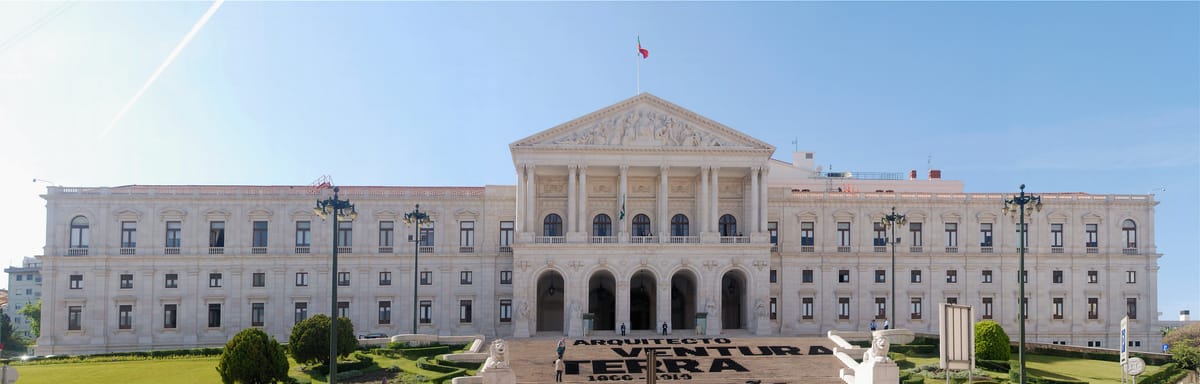
Wednesday 7 May closes Portugal's social-concertation cycle on the Government's pacote laboral. Labour Minister Maria do Rosário Palma Ramalho convened the meeting at the explicit request of the UGT, whose national secretariat unanimously rejected the latest Government text on Friday. Prime Minister Luís Montenegro went on the record on Saturday saying the executive 'does not abandon its convictions' on the package and pointed at the UGT as 'the social partner with least concession.' If 7 May ends without an agreement, the package travels to São Bento on its way to Parliament — and Parliament does the deal Concertação Social could not.
Sunday evening's read: this is no longer a negotiation about whether the Government wins its labour reform. It is a negotiation about which path it wins on, and the consequences flowing from each path are different.
The Six Disputed Points
Of the original cluster, Montenegro now says the Government has yielded on four pillars — fixed-term contracts, reinstatement after dismissal, hour banks via collective agreement, and outsourcing perimeter. UGT secretary-general Mário Mourão's read disagrees on every count. The points still openly contested include:
- Outsourcing. The Government wants to relax the prohibition on rehiring redundant workers as outsourced labour. UGT and CGTP read this as a structural facilitation of dismissal-then-rehire arbitrage.
- Banco de horas. Government text reopens the individual hour bank that the previous Socialist majority closed. UGT will not sign that off; CGTP calls it the centrepiece of the package.
- Trabalho temporário cap. Government wants the agency-work share extended; unions argue it cements the precarity Pordata's youth-precarity ranking already documents.
- Despedimento por inadaptação. Easier dismissal on adaptation grounds remains a UGT veto line.
- Greve and serviços mínimos. Tighter minimum-service obligations during strikes is a CGTP red line — the framing that drives Tiago Oliveira's '3 June general strike' calendar.
- Direito de actividade sindical. Curtailed credit hours and access rights for shop stewards.
None of these are technical. Each carries a constituency the Government has chosen not to fully accommodate.
The Two Possible Wednesday Outcomes
- Skinny deal with UGT. Government offers a final concession on outsourcing or the hour bank, UGT signs an instrumento de concertação social, the package travels to Parliament with a tripartite stamp. CGTP still strikes 3 June, but with isolated political weight.
- No deal. The most likely path on the current public posture. Government drafts the proposta de lei alone, sends it to São Bento and to the Assembleia. UGT then converges with CGTP on the strike, magnifying the 3 June mobilisation and pulling forward a second strike window in early summer.
The Parliamentary Arithmetic
If the package lands in Parliament without a tripartite agreement, the AD bloc (PSD-CDS-PPM) does not have a working majority. PS has already signalled it will vote against the package as currently drafted; José Luís Carneiro is using the cost-of-living frame to land the political punch (the DECO cabaz alimentar climbing €16.69 in four months sharpens that case). Bloco, PCP, Livre and PAN line up against. That leaves Chega's 60 seats as the only viable arithmetical path to passage.
Chega has not yet committed. André Ventura's bench has historically tilted pro-employer on labour flexibility but anti-Government on confidence votes. The party will extract a price — almost certainly an unrelated migration or judicial concession — for its enabling votes, in the same week it tables its comissão parlamentar de inquérito on Operação Influencer. That conditionality is exactly what makes the no-deal path strategically expensive for the Government even when it wins the floor vote.
Why This Matters Beyond the Labour File
The package sits inside the broader mid-July reform cliff the Government has to clear before the Assembleia rises. The four PRR-conditional reforms — taxação automóvel, social-security regime for self-employed, energy-licensing reform and labour reform — must pass before Parliament's recess to keep the €1.5 billion PRR tranche on the table for Q4 disbursement. Any Wednesday outcome that pulls the labour timetable past July compresses every other reform in the queue. Pedro Dominguinhos already flagged Iran-war drag on the project pipeline; the political clock is the second drag the Government cannot extend.
What This Means for Expats
- If you employ Portuguese staff: Wednesday's outcome is your mid-2026 HR file. A skinny deal stabilises the contractual rules through 2027; a no-deal Parliament path leaves the framework contestable into Q4 and into a possible 2027 rerun if the political composition shifts.
- If you are on a contrato a termo: Watch the fixed-term clauses specifically. Both paths cap the absolute duration but differ on renewals and on the minimum interval before a new fixed-term contract can be signed for the same role.
- If you commute on a strike day: 3 June is now a confirmed national general strike. Health sector struck 4-5 May; the next mobilisation window opens once the parliamentary path is locked in. Plan medical appointments and travel accordingly.
- If you are watching the OE: Labour reform is the political leverage the Government will spend to keep the OE 2026 mid-year revision on track. A bruising labour fight increases the cost of every other concession the Finance Ministry has to extract from the same Parliament.
Wednesday is not the end of the file. It is the moment the file changes addresses — from São Bento's tripartite room to São Bento's parliamentary floor — and the political price the Government pays for the change is what the rest of May will turn on.