Walking the Caminho Português de Santiago in 2026 — A Practical Guide to the Central, Coastal and Senda Litoral Routes From Porto, the Pontevedra Variante Espiritual, the 613-km Lisbon Start and the Credencial and Albergue Mechanics
The Caminho Português is the second-busiest Camino de Santiago and the only one that crosses Portugal — 243.5 km of inland Central Route, 274 km of mixed Coastal Way, 280 km of seafront Senda Litoral and the Pontevedra Variante Espiritual all converging on the Praza do Obradoiro.
The Caminho Português de Santiago is the only Camino de Santiago route that crosses Portugal end-to-end and the second-busiest of the official Camino network after the Camino Francés. The 2026 walking season — peaking in May and again in September — sets up four sanctioned starting points and four sanctioned route variants, all of which converge on the Praza do Obradoiro in Santiago de Compostela and entitle the walker to the same Compostela certificate at the Pilgrim Welcome Centre. This guide covers the Central, Coastal, Senda Litoral and Variante Espiritual variants from Porto, the longer 613-kilometre Lisbon route, the credencial mechanics, the albergue network, the daily-budget arithmetic and the practical infrastructure that foreign residents and visitors need to know to step on to a route in the spring or autumn 2026 walking window.
The four sanctioned variants from Porto
The Sé do Porto cathedral is the canonical Portuguese starting point, the city the modern Caminho Português Central was carved out of in the 1990s reactivation of the medieval pilgrim route, and the entry point for foreign-resident walkers flying into Sá Carneiro Airport. The cathedral sits at the head of all four sanctioned routes and the credencial-stamping office at the Sé opens daily at 09:00.
Caminho Central — 243.5 kilometres, 10 to 12 days at the canonical 20-25-kilometre-daily pace, the most-walked variant. The route runs Porto–Vilarinho–Barcelos–Ponte de Lima–Rubiães–Tui (border crossing into Spain over the Minho International Bridge)–O Porriño–Redondela–Pontevedra–Caldas de Reis–Padrón–Santiago. The Central crosses the medieval-route towns of Barcelos (the city of the Galo) and Ponte de Lima (Portugal's oldest village) and the Roman-era stretch around Rubiães, with steep ascents at the Labruja pass.
Caminho da Costa — 274 kilometres, 12 to 14 days, the Atlantic-coast variant that tracks the seafront from Vila do Conde and Esposende up to Viana do Castelo, Caminha and the Galician border at A Guarda before merging with the Central at Redondela. The Coastal Way takes the Atlantic wind, the cold and the rain harder than the Central — the Coastal-route corkboard at Caminha pilgrim hostels carries near-permanent rain warnings — but the seafront stretch from Vila do Conde to Caminha is the most photographed section of the entire Camino network outside the Galician finish.
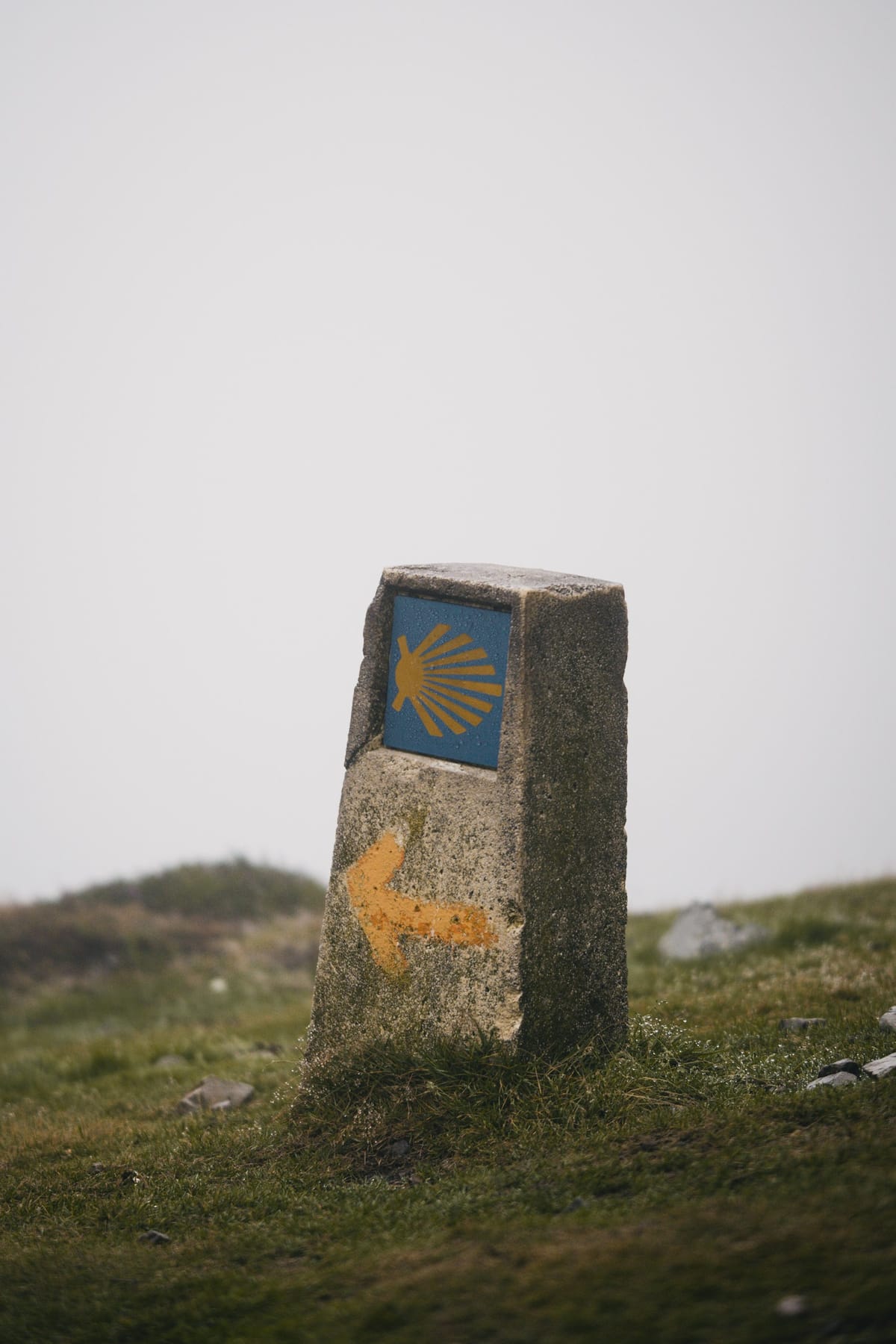
Senda Litoral — 280 kilometres, 12 to 14 days, the strict-coastline variant that runs 80% along the Atlantic edge with the Douro estuary, the Vila do Conde harbour, the Esposende dunes and the Caminha estuary as its anchors. The Senda Litoral is poorly waymarked north of Vila do Conde — the yellow-arrow infrastructure that defines the rest of the network thins out — and walkers should plan with the Wise Pilgrim Camino Portugués app or with a paper Cicerone Press guidebook because the route relies more on wayfinding than on official signage.
Variante Espiritual — 75 kilometres, 3 days, the Pontevedra-to-Padrón loop that branches off the Central route at Pontevedra, climbs through the Combarro fishing village, the Monasterio de Poio and the Armenteira convent and concludes with a boat-day on the Ulla River from Vilanova de Arousa to Pontecesures, retracing the legendary route of the Translatio of St James's body. The Variante crosses the Sea of Arousa on a regulated commercial pilgrim boat (€20-€25 booking through the Naviera Reig company) and feeds back to the Central route at Padrón. Walkers picking up the Variante log roughly the same total kilometres but the experience is markedly different from the inland Central.
The longer 613-kilometre Lisbon start
For walkers wanting the full Portuguese experience, the canonical starting point is the Sé Cathedral in Lisbon. The Lisbon-to-Santiago route runs 613 kilometres on the southern Caminho through the Alenquer, Santarém, Tomar (with the Templar convent loop), Coimbra (the Mondego university city), Águeda, Albergaria-a-Velha, Oliveira de Azeméis and Grijó stretches before joining the Central at Porto. The Lisbon route takes 25 to 30 walking days at the 20-25-kilometre pace, makes the Tomar Templar deviation and the Coimbra cathedral stop, and is best approached in two stages — Lisboa-to-Porto in spring or autumn, then Porto-to-Santiago either continuously or split across a second walking window. Foreign residents based in Lisboa, Cascais, Sintra or the southern bay area can pick up the route from the Sé without any train transit.
The Credencial — €4.07 at the Sé, two stamps per day in the last 100 km
The Credencial do Peregrino is the canonical pilgrim-passport document that authorises hostel access, qualifies the walker for the Compostela certificate at Santiago and stamps the route at every stop. The Credencial is sold at the Sé do Porto, the Sé de Lisboa, the official store of the Caminho Português de Santiago Association and most municipal tourist offices on the route. Pricing in 2026: €4.07 for the standalone Credencial and €8.13 for the Credencial + traditional scallop-shell kit, which most walkers buy together because the shell is the canonical waymarking emblem and most albergues accept it as a recognition signal.
The stamping rule: at least one stamp (carimbo, sello in Galician) per day along the route, and at least two stamps per day in the last 100 kilometres. Stamps are collected at albergues, churches, cafés, restaurants, tourist offices and even municipal libraries. The 100-kilometre rule is the legal threshold for the Compostela certificate when walking — for cyclists, the threshold is 200 kilometres. Foreign residents should keep the Credencial in a waterproof case because the rain on the Coastal Way and the Senda Litoral has a documented record of erasing stamps that the Pilgrim Welcome Centre has rejected.
The albergue network — €10-€12 municipal, €20 private, €30-€50 hotels
The Caminho Português albergue (hostel) network is the operational backbone of the route and the cheapest accommodation tier, with the Portuguese-side network thinner than the Galician-side. Municipal albergues charge €10-€12 a night for a dorm bed, accept the Credencial as the booking instrument, do not accept advance booking and operate on a first-come-first-served basis from roughly 13:00 onward. Private albergues charge €18-€22, accept advance booking through Booking.com or direct, and provide more amenity (kitchen, towel service, single-sex dorms). Casas rurais and pensões charge €30-€50 for a single private room and are the canonical mid-tier choice on the Central. Hotels in the larger towns (Barcelos, Ponte de Lima, Viana do Castelo, Tui, Pontevedra) charge €40-€80 in the May/September peak and are the upper-tier option. The dorm-bed option is the most authentic, the private-room option is the rest-day option, and most multi-day walkers mix the two.
Daily budget arithmetic on the Central in 2026: €25/day low-budget (municipal albergue + supermarket food), €35-€40/day mid-budget (private albergue + one café meal + supermarket lunch), €55+/day comfortable (private room + café-restaurant meals + ad-hoc snacks). The Pilgrim Menu (menu del peregrino in Galician, menu peregrino in Portuguese) at most route restaurants runs €12-€15 for a three-course meal with wine in 2026 and is the canonical lunchtime option.
Best months, equipment and the Pilgrim Welcome Centre
The two peak windows are May (mild, dry-but-not-yet-hot, longest daylight before the summer crowd) and September (post-summer heat reset, harvest season in the Galician vineyards, shoulder-period prices). July and August are the largest crowds and the highest temperatures (the Senda Litoral can hit 35°C). November to March is the off-season — most municipal albergues close and the Coastal Way carries Atlantic-storm risk. The 2026 weather window is on track to follow the multi-year pattern: May 2026 has so far been mild and dry across northern Portugal and Galicia, with the IPMA forecast carrying no significant rainfall through 14 May, and September 2026 is the second-best window.
Equipment list (the canonical Camino kit): broken-in trail-running shoes or light hiking boots; merino-wool layered tops; a 35-45-litre backpack; a lightweight waterproof shell; trekking poles (essential for the Labruja pass and the Pontevedra-to-Padrón descent); a sleeping-bag liner (most albergues provide bedding); a head-torch; a quick-dry towel; a first-aid kit with blister-prevention tape; the Wise Pilgrim Camino Portugués app, the Buen Camino app or the Cicerone Camino Portugués paper guidebook; a power bank; a refillable water bottle (water fountains are reliable on the Central and Variante Espiritual but thinner on the Senda Litoral). The Portuguese network of pharmacies (farmácias) along the route stocks the canonical foot-care supplies — Compeed, Dactarin, foot-tape — and most are open Monday-Saturday 09:00-19:00.
The endpoint: the Pilgrim Welcome Centre, Rúa Carretas 33, Santiago de Compostela, 100 metres from the Praza do Obradoiro. Opening hours April-October 09:00-21:00, November-March 10:00-19:00. The Compostela certificate (the canonical Latin-language certificate of completion) is issued free; the more decorative Distancia version is €3 and the Pilgrim Welcome Centre also issues the Distance Certificate (separate document showing kilometres walked) for €3. The Centre records pilgrim demographic data on issue, the queue runs longest 11:00-15:00 in the May and September peaks, and the Welcome Centre's online queue-booking through pilgrimwelcomecentre.com is the canonical workaround for the high-season wait.
What this means for foreign residents
For foreign residents living in Portugal, the Caminho Português is uniquely accessible — there is no other 100-kilometre certified pilgrimage route that starts at the foot of a Portuguese cathedral. Health coverage. EU residents on the European Health Insurance Card (EHIC), or non-EU residents on the SNS Cartão de Utente, have full coverage on both the Portuguese and the Galician (Spanish-public-system) sides of the route — the SNS-Sergas reciprocity agreement is what makes the cross-border walking medical safety net work. Financial buffer. The Camino is one of the cheapest multi-day vacations in Europe — the Central from Porto runs €250-€500 all-in across 10-12 days, well below any equivalent European long-distance trail. Spanish language. Portuguese speakers cross seamlessly into Galician (the local Romance language of Galicia, intelligible to Portuguese speakers); foreign residents with conversational Portuguese can walk the full Galician stretch without language barriers, which Camino Frances walkers cannot. Annual repeat. Most foreign-resident Camino walkers report repeat visits — the May window is the canonical first-time choice and the September window the second-time choice; many walkers return for the Variante Espiritual specifically as a second-walking option once the Central is complete. Group dynamics. The Caminho Português has a more dispersed walker community than the Camino Francés — the trail community is smaller, the international mix higher (the Czech, German and Brazilian contingents are particularly large) and the album of social connections accumulated across 10-12 days is in the dozens. Camino fitness. Foreign residents over 55 walk the Central comfortably at the 20-25-km daily pace; walkers under 35 routinely complete it in 8-9 days at 30-35-km pace. The route is one of the most accessible long-distance walks in Europe and the only one that uses Portuguese as the operational language for the first half.
The walking infrastructure is reset for 2026. The Caminho Português Association has confirmed the new Senda Litoral signage upgrade for 2026, the Pontevedra-to-Padrón Variante Espiritual boat-service operating window (March to October only), and the Tui credencial-stamping office's new 09:00-21:00 opening schedule. The municipal albergue network has stable 2026 pricing, the Galician Sergas medical-reciprocity protocol with the SNS is current, and the Camino Frances diversion that historic walkers sometimes take from Tui to Sarria remains an option for those wanting to extend the route. May 2026 is set up to be one of the best walking windows on record.