US Orders for Portuguese Wine Dry Up as 15 Per Cent Tariff Bites — Industry Warns of Market Loss Above 20 Per Cent
American importers have stopped placing orders for Portuguese wine, according to the president of the National Association of Wine and Spirits Traders and Exporters (ANCEVE), as a 15 per cent US tariff on EU wines reshapes transatlantic trade flows....

American importers have stopped placing orders for Portuguese wine, according to the president of the National Association of Wine and Spirits Traders and Exporters (ANCEVE), as a 15 per cent US tariff on EU wines reshapes transatlantic trade flows. The freeze threatens a market worth EUR 102 million to Portuguese producers in 2024 — and the industry warns the damage could exceed 20 per cent of total US sales.
What Happened
The United States imposed a 15 per cent tariff on most EU exports — including wine — under an agreement reached with the European Union. The levy applies alongside existing specific duties of between USD 0.06 and USD 0.20 per litre, effectively raising the landed cost of a bottle of Portuguese wine by a margin that importers say makes mid-range labels uncompetitive against domestic and Southern Hemisphere alternatives.
"The US has stopped orders for Portuguese wines and wines from Europe," Paulo Amorim, ANCEVE president, said in an interview. "The uncertainty is terrible." He described the tariff as "a perfect storm" that would make 2026 worse than the already difficult 2025 vintage for the Portuguese wine sector.
The Numbers
In 2024, the United States was Portugal's second-largest wine export market, importing EUR 102.1 million worth of Portuguese wine — a 2 per cent increase on the previous year. The country's wine sector has set a target of EUR 1 billion in total exports for 2026, but the US freeze has undermined that ambition.
The European Association of Wine Companies (CEEV) estimates that the tariff-driven order halt is costing European wine producers EUR 100 million per week across the continent. Portugal, with roughly 1 per cent of global wine production but a higher-than-average dependence on premium export channels, is disproportionately exposed.
Frederico Falcão, president of ViniPortugal, the sector's promotional body, said the consumption drop in the US would "most likely be above 20 per cent." He described the 15 per cent tariff as a level that "causes us some difficulty" — diplomatic language for an industry facing its most serious trade disruption since the 2008 financial crisis.
Winners and Losers
The tariff creates an uneven playing field. Australian and Chinese wines face a lower 10 per cent US tariff, giving them a price advantage over European bottles. Within Europe, Portuguese wines — which tend to occupy a lower price bracket than French or Italian equivalents — have less room to absorb the additional cost without losing shelf space.
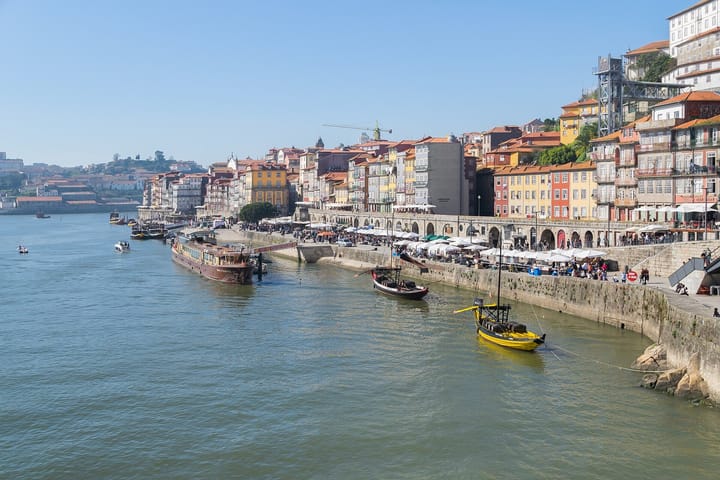
The Douro Valley, which produces both Port wine and an expanding range of still wines, is particularly vulnerable. Several producers have reported suspended or cancelled orders from US distributors, with no clarity on when — or whether — they will resume.
What Comes Next
The tariff was imposed under Section 122 of the US Trade Act of 1974, which limits temporary levies to 150 days unless Congress votes to extend them. That puts the expiration date around late July 2026 — offering a narrow window of hope for producers, but no certainty.
The Portuguese government has included wine in a broader EUR 10 billion support package for exporters affected by US tariffs. The details of how that funding will reach individual producers remain unclear. For now, the cellars of the Douro and Alentejo are full, the American orders have stopped, and the industry is watching Washington. On the Douro unit-economics side, our 23 May read on the Mesão Frio vitivinicultores file — green diesel doubled to €1.60/L, tractor repairs at €700, treatment passes at €500 each, while pipa-of-Porto stays frozen at €1,000 and pipa-of-Douro DOC at €300, with the 2026 vindima negotiation and benefício allocation through the IVDP and Casa do Douro the operational pressure point sets the latest reference. On the wine sector, EU-Mercosur trade, Brazilian export market and ViniPortugal-AICEP commercial side of the file, our 8 June read on Portuguese wines closing in on Argentina for second place in the Brazilian import market — the EU-Mercosur free-trade agreement tariff schedule that dropped the still-wine duty from 27% to 24% in May 2026 and steps to zero by 2034, Portugal's 18% current share against a forecast 22%, Cartuxa commercial director João Teixeira's 15% Brazilian-revenue forecast, the 80-producer Rio de Janeiro fair, and the Brazilian Imposto Seletivo offset risk pencilled for 2027 sets the latest reference.