University of Coimbra Experts Trace the February Mondego Dike Rupture to Failed Flood Defences and Years of Neglected Maintenance
A University of Coimbra working group has traced February's rupture of the Baixo Mondego flood dikes to protection systems that largely failed, a channel silted by debris trapped under the A1 bridge and years without maintenance — concluding the fix is repair and upkeep, not a new strategy.
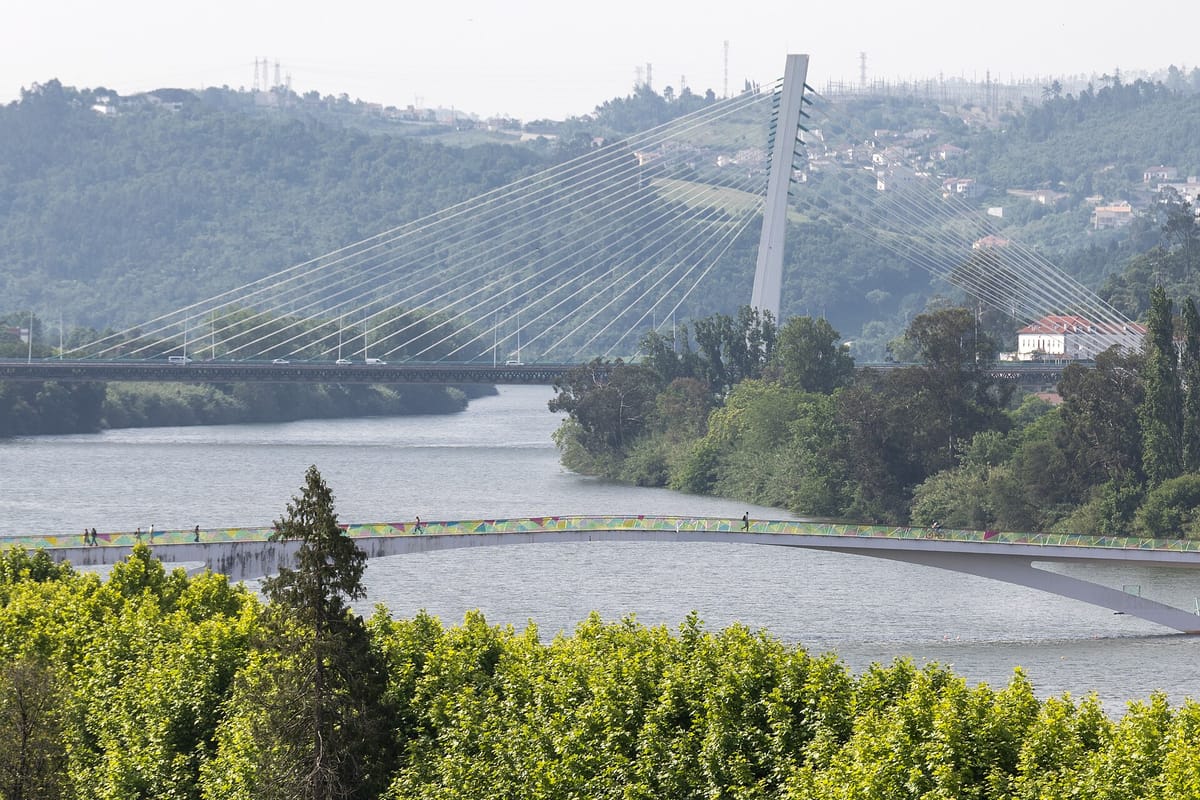
The rupture of the Baixo Mondego flood dikes in February 2026 — which forced evacuations around Coimbra and brought down a stretch of the A1 motorway — was caused not by an act of nature beyond control but by flood defences that largely failed to work, a channel choked with debris and years of neglected maintenance. That is the verdict of a working group from the Universidade de Coimbra (University of Coimbra) that has spent months dissecting what went wrong, and whose findings were presented at a recent colloquium in the city.
The group was led by Fernando Seabra Santos, a former rector of the university, and brought together engineers and hydrology specialists including Alfeu Sá Marques, Cidália Fonte, Isabel Pedroso de Lima, Nuno Simões, Paulo da Venda Oliveira, Ricardo Martins and Rita Fernandes de Carvalho. Their central message is uncomfortable precisely because it is undramatic: the system that was supposed to protect the lower Mondego valley was buildable, maintainable and fixable — and it was none of those things when the water came.
Why the dike broke
The first and, in the group's reading, most important cause of the failure of the Casais dike on the river's right bank was that its protection systems did not work as designed. Of three diques-sifão (siphon dikes) installed to relieve pressure, only one functioned fully. With the safety valves largely inoperative, the structure took a load it was never meant to bear alone.
A second cause sat downstream at the A1 bridge. Tree trunks and other debris piled up against the twenty pillars carrying the motorway over the river, partially blocking the channel. The experts estimate that, without that obstruction, the water level would have been roughly 30 centimetres lower — a margin that, in a system already at its limit, is the difference between holding and breaching.
Compounding both problems was vegetation. The dikes had been left thick with trees and shrubs whose deep roots destabilise the earthworks structurally and, by slowing the flow, added an estimated further 20 centimetres to the water level. The group also flagged deficiências técnicas graves (serious technical deficiencies) in recently executed works that compromised the waterproofing of the dike, and drainage outlets that have been discharging motorway run-off onto the structure since 1982.
A problem that was already old
None of this was new. The Casais dike had already ruptured once before, in 2001, and specialists have warned for years that the hydraulic works of the Baixo Mondego were being allowed to decay. The February 2026 floods simply exposed, at scale, a fragility that had been documented and left unaddressed — a pattern our reporting has traced in the wider debate over whether Portugal's infrastructure is ready for more frequent extreme-weather events.
What the experts want done
The working group's conclusion is, in one sense, reassuring: it found no need to tear up the strategy for the valley and start again. The defences can work — if they are actually completed and looked after. Its recommendations are correspondingly concrete: carry out the repairs, finish the works that were designed but never fully executed, draw up a maintenance programme for the infrastructure and stick to it, and create a dedicated team with a real mandate to keep the system in condition rather than waiting for the next flood to reveal the gaps. The group's full analysis is due to be published as a book in September or October 2026.
The distinction matters for accountability. If the valley needed an entirely new flood-control philosophy, February would look like a design failure. Because the experts say the existing plan was sound but unfinished and unmaintained, it points instead at choices made — and not made — over years by those responsible for the works.
What This Means for Expats
- Flood risk is local and knowable: If you live, rent or are buying in the Baixo Mondego or any Portuguese river valley, ask about the zona inundável (flood zone) classification. Municipal risk maps exist and are worth consulting before you commit to a property.
- Infrastructure condition is a fair question: The lesson of the Mondego is that defences on paper are not defences in practice. Proximity to a dike, dam or embankment is only reassuring if it is being maintained.
- Insurance rarely covers floods automatically: Standard Portuguese home insurance often excludes inundação (flooding) unless you add it. Check your policy's riscos cobertos (covered risks) if you are in a low-lying area.
- Know the emergency channels: Warnings and evacuation orders come through Proteção Civil and the 112 system; the state has moved to widen the disaster-aid framework to cover storms and floods, not just wildfires.
- Accountability is still unfolding: The technical findings are in, but the questions of who let the maintenance lapse — and who pays for the repairs — will play out over the months ahead.
The Mondego report is a study in a quiet kind of risk: not the storm itself, which will always come, but the slow administrative erosion of the defences meant to meet it. Its most striking finding is how ordinary the failures were — a valve that did not open, branches nobody cleared, roots left to grow — and how avoidable, therefore, the next one should be. On the money behind the physical repairs, the Territorios Resilientes fund the government widened on 31 August sets out Resolução do Conselho de Ministros 176/2026, the rise in the ceiling to 80,088,647 euros, the five inland councils added to Annex I after reporting their damage late, the seventeen categories of river and coastal work it pays for, and the carry-over that lets unspent 2026 money run into 2027.