Turismo de Portugal Signs 12 Contracts Worth €11 Million to Rewrite the Map of Inland Tourism — Alentejo and Ribatejo Take the Lion's Share
Turismo de Portugal has signed twelve investment contracts totalling €11 million — €4.5 million in state support — for new tourism projects in the interior of the country, with Alentejo and Ribatejo leading on nature, gastronomy, wellness and heritage niches.

Turismo de Portugal has signed twelve investment contracts worth a combined €11 million to fund new tourism ventures in the interior of the country, the agency confirmed this week — with Alentejo and Ribatejo taking the largest slice and a further tranche falling in the centro region. The package carries €4.5 million in direct state support under the “Crescer com o Turismo” programme, which launched in February 2025 with a €30 million envelope designed to push investment past the Lisbon–Porto–Algarve axis.
For expats weighing a move away from the coast, the contracts read as a rough map of where inland Portugal plans to put its money over the next three years.
The numbers behind the headline
The €11 million is the aggregate investment value — what project promoters will put on the ground, counting both their own capital and the agency’s support. Turismo de Portugal’s own contribution of roughly €4.5 million reflects typical co-financing ratios of 40 to 50 per cent for inland projects, a threshold designed to be generous enough to trigger private matching but not so rich that it funds schemes that would have happened anyway.
The target sectors, as listed by the agency, are tightly defined: nature tourism, gastronomy, active tourism, wellness, cultural heritage, smart territories and urban regeneration. Each contract must sit inside one of those buckets, which is how the agency stops the programme from leaking into generic hotel-build-outs.
Where the money is going
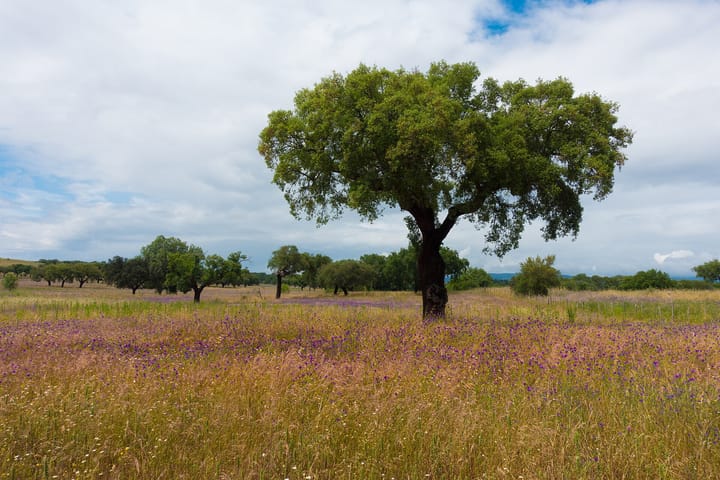
The bulk of the twelve projects lands in Alentejo and Ribatejo — a belt that runs from the Tagus at Santarém down through the cork-oak plains of Évora and Beja and ends at the Algarve border. The official communication emphasises “valorização turística” (tourism upgrading) of existing heritage assets: historic villages, monastic buildings, river-based cultural routes, thermal sites.
The remainder split between centro Portugal — Beiras and the Serra da Estrela corridor — and northern interior municipalities. On Monday the agency released a parallel note listing further centro-region awards under the same programme, confirming an underlying logic: Turismo de Portugal is using the scheme to build a spine of experience-based destinations along the depopulated interior, not to fund another wave of resort hotels.
Why expats should care
For foreign residents, the direct effect shows up in two ways. First, mid-sized inland towns — the kind that don’t appear on Golden Visa maps — are about to get better restaurants, better trails, and better small-scale lodging. Idanha-a-Nova, Monção, Serpa, Castelo de Vide and Mirandela have all featured in previous “Crescer com o Turismo” tranches; the new contracts continue that pattern.
Second, the programme’s wellness and gastronomy focus tracks with where inland property values are moving. “Smart territory” funding pays for broadband, co-working, and remote-work amenities — infrastructure that turns a village from a weekend stop into a practical base for a nomad family. The agency has been explicit that it sees this as a workforce-retention tool as well as a tourism play.
The territorial cohesion argument
Minister of Economy Pedro Reis, speaking at an earlier tranche, framed the programme as an answer to the uncomfortable fact that Lisbon and the Algarve absorb the overwhelming share of Portugal’s tourism receipts — receipts that rose again in 2025 to a record 32.5 million international visitors. Interior municipalities, by contrast, continue to lose population and see year-round businesses thin out. The €11 million is modest against that scale; it works only if it triggers private capital behind it.
On current execution, it does. Turismo de Portugal’s internal accounts show average private-matching multiples of roughly 2.4 times for the Crescer envelope, meaning every public euro is pulling in around €2.40 of private investment alongside it. Two such rounds a year — the agency has signalled another tranche for the summer — would take the full programme past €25 million in project value before the end of 2026.
For foreigners already considering an inland move, the quiet line to watch is not the €11 million headline. It is the rate at which centro and Alentejo broadband, cycling routes and restored casas senhoriais start showing up on platforms that English-speakers actually use. For foreign residents on the practical telecoms side, our 2026 guide to Portugal's mobile network operators — MEO, NOS, Vodafone, the ANACOM substrate, 5G coverage and the number-portability process sets the latest reference. On what is being done with publicly owned heritage in the north, the derelict Douro spa coming back as the region's seventeenth thermal house sets out the four million euro restoration of the Termas das Caldas de Moledo between Peso da Régua and Mesão Frio, the undertaking that one of its two bath houses stays in public use, and the REVIVE concession model that decides what happens to the rest of the complex.