Trabalho XXI Closes Nine Months of Concertação Social Without an Agreement — Rosário Palma Ramalho Walks the Anteprojeto Into Parliament as the CGTP's 3 June General Strike Loads
Nine months of negotiations on Portugal's Trabalho XXI labour package ended on Wednesday evening without a tripartite signature. Minister Rosário Palma Ramalho will now hand the anteprojeto to Parliament, with the CGTP's 3 June general strike already on the calendar.
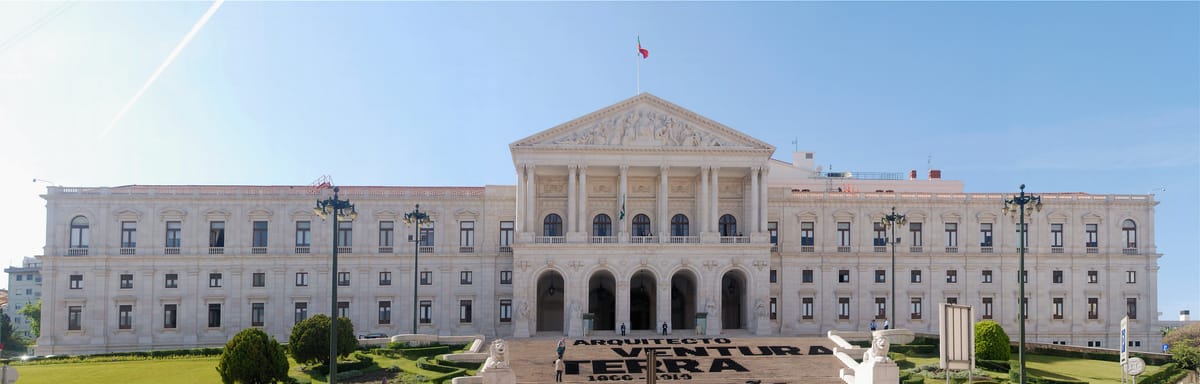
The Permanent Commission of Concertação Social met on Wednesday, 7 May for what proved to be the closing plenary on Trabalho XXI, the labour-reform package the Government has been negotiating since early September 2025. Labour Minister Maria do Rosário Palma Ramalho confirmed afterwards that no acordo would be signed: the anteprojeto now becomes a proposta de lei and goes to Parliament for the legislative path. Her line at the press conference — "todas as negociações têm um fim. O fim foi hoje" — closed a nine-month process the Government had wanted to wrap with a tripartite signature.
The Government's Reading
Palma Ramalho placed the failure on the UGT, accusing Mário Mourão's central of refusing to move on any of the union's red lines and of arriving at the final session without a fresh proposal. She also said the CIP did not table a new offer in the room, despite Wednesday's pre-published CIP cedências on outsourcing, banco de horas, reintegração após despedimento ilícito and formação contínua. Armindo Monteiro, for his part, characterised the talks as a "never-ending story," pointing to the more than twenty critical points the UGT raised after the first five had been addressed.
What Goes to Parliament
The Minister was explicit that the version landing in São Bento will not be the last draft from the Concertação Social table. Instead, the Government will rebuild around the original July 2025 anteprojeto and overlay only the contributions it considers "useful" from the nine months of negotiation. In practical terms, that means several of the cedências floated late in the process — the six-month outsourcing brake, the formação 40-hour floor, the narrower non-reintegração scope — may or may not survive into the proposta de lei. The text will be approved by the Council of Ministers before it is sent to the Assembleia da República.
The seven sticking points that the room never resolved span the core of the package: the outsourcing brake on firms that conducted collective dismissals, the individual banco de horas with a 50% supplement, non-reintegração após despedimento ilícito, the 30-hour formação floor for microempresas, the rules on contratos a termo, the alterações to the regime of arbitragem necessária, and the framework for sucessão de contratos. These are the items most likely to be reopened on the parliamentary committee floor.
The Strike on the Calendar
The CGTP, which sat outside the talks from the beginning, has scheduled a general strike for 3 June 2026. The UGT has not yet committed to joining; Mário Mourão's signal is that the central will keep its options open while it engages directly with the parliamentary groups. December's joint UGT-CGTP general strike against an earlier draft of the same package is the precedent both centrals have in mind. The Government is meanwhile committing political capital on the parliamentary path that runs through the PSD-CDS-IL bloc, and where Chega's lower-retirement-age demand sits as the alternative price of a majority — a price the PS, increasingly active in São Bento on its own bills, has signalled it will not match.
What This Means for Workers and Employers
- Banco de horas: watch the 50% supplement and weekly-hour cap closely on the parliamentary version — it has been the most contested clause for white-collar contracts.
- Outsourcing: firms that completed collective dismissals between September 2024 and now should expect the brake to remain in some form, even if shorter than 12 months.
- Formação: the microempresa 30-hour proposal is still on the table; SMEs should plan training budgets for both scenarios.
- Strike day: 3 June is a Wednesday — public-sector services will be the first to feel it, with transport and schools the typical second wave.
Council of Ministers approval and the formal envio to Parliament are the next two procedural milestones. After that, the timeline for committee debate and floor vote depends entirely on the Government's appetite for a clean reading versus a negotiated one. On the Portuguese carga-horária read, our 27 May read on Pordata's Eurostat-based labour tape setting the Portuguese working week at 37.4 hours — 1.5 hours above the 35.9-hour EU-27 average and sixth among the 27 Member States, with the hospitality, manufacturing and transport stacks pulling the national mean up and the public-sector and education stacks pulling it down sets the latest reference.