TAP Pushes Toward Its Largest Ever Fleet — Six A320neo, Two A321neo and Two A330neo Land in 2026 to Take the Carrier From 99 to 106 Aircraft as the EU Restructuring Plan Closes
TAP Air Portugal is on track for the largest fleet in its 81-year history. Saturday's Público exclusive: six A320neo, two A321neo and two A330neo arrive in 2026, lifting the carrier from 99 to 106 aircraft as the EU restructuring plan expires 31 December.
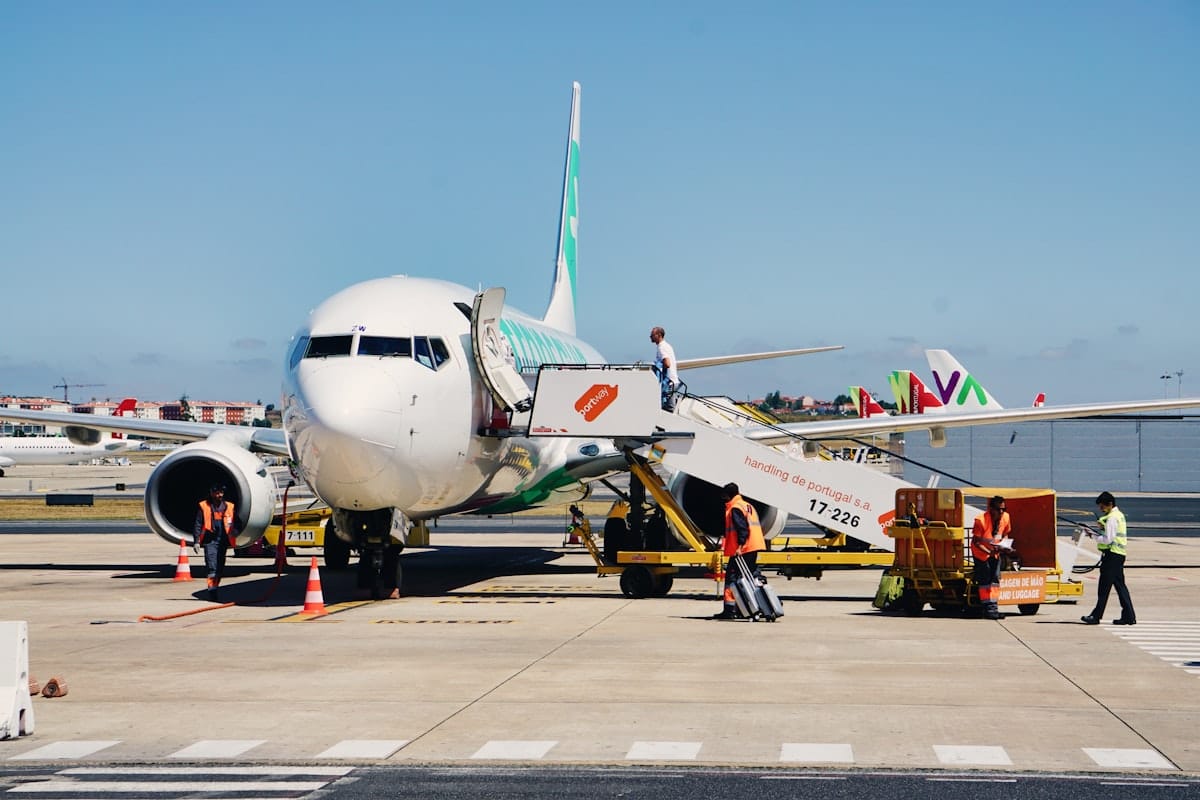
TAP Air Portugal is on track to operate the largest fleet in its 81-year history by the end of 2026, with the carrier moving from 99 aircraft on 31 December 2025 to a working target of 106 aircraft twelve months later. Público's Luís Villalobos broke the airframe-by-airframe plan in a Saturday exclusive: six Airbus A320neo, two A321neo and two A330neo are scheduled for delivery during 2026, a gross intake of ten aircraft offset by three end-of-life retirements and two leasing returns for a net seven-frame increase.
The numbers
TAP's published 2025 close stood at 99 aircraft — 17 wide-bodies (mostly A330neo) and 82 narrow-bodies (A320 and A321 family). The 2026 plan continues the carrier's full-Airbus consolidation: every incoming airframe is from the European manufacturer, and CEO Luís Rodrigues has previously described the relationship with Toulouse as 'a parceria estruturante' for the next decade. The order pipeline keeps running into 2027, with up to 15 additional aircraft pencilled in across the two-year horizon — a number that should crystallise into a formal binding order in the second half of 2026, when the European-Commission-imposed restructuring plan that has constrained TAP's growth since the 2021 state bailout finally runs out.
Why the cap matters
The COVID-era restructuring plan agreed with Brussels in December 2021 limits TAP's ability to grow aggressively, to acquire other airlines, to dispose of major assets without state approval, or to expand into routes outside its hub strategy. That regime expires 31 December 2026. The lifting unlocks two things that have been bottled up for half a decade: a binding fleet plan beyond the existing legacy orderbook, and freedom for the next majority owner — Lufthansa or Air France-KLM, whichever wins the 44.9% privatisation tender that closed its third stage on 24 April — to set strategic direction without case-by-case Commission clearance.
Routes, capacity and what it means for travellers
The capacity uplift in 2026 is concentrated on the South Atlantic (the two A330neos add roughly 600 long-haul seats per day in each direction once fully utilised), with the eight narrow-bodies reinforcing the European short- and medium-haul network rather than opening structural new destinations. Two new Brazilian routes — Belém do Pará and Florianópolis — are already pencilled into the 2026 schedule and use the new wide-body slots. Passenger traffic growth is forecast at a 'modest' level in 2026, in CEO Luís Rodrigues' wording, after a 2025 in which TAP again posted profit and 16 million passengers — but the airline is positioning capacity for the post-restructuring sprint that begins in January 2027.
The privatisation overlay
The fleet plan is not separable from the privatisation. Lufthansa and Air France-KLM each had their CJEU/Commission state-aid headaches through April — Lufthansa's €6 billion COVID bailout was annulled by the CJEU on 23 April, and Air France-KLM booked a €287 million Q1 loss the same week — and binding bids are due before 24 July 2026. The eventual winner inherits a fleet plan that is essentially set for 2026 and a planning canvas open from 2027. For Portugal, the carrier finally tilts away from survival mode into the most consequential strategic window since its emergence from the post-COVID restructuring.
For passengers and frequent-flyer expats, the practical message is steady supply: more A330neos on Lisbon-São Paulo and Lisbon-Brasília, two new Brazilian destinations, and incremental short-haul capacity into the Iberian and central-European peripheral markets that have been congested through 2025.