State Auctions Eight Vacant Lisbon Office Buildings That Could Have Held 450 Public Homes — Avenida Visconde Valmor Closes at €15.7 Million as Resale Tickets Run Below the Per-Metre Cost the Government Pays Private Landlords
Eight vacant Lisbon office buildings worth roughly 450 public-housing dwellings are being auctioned by the State, with the Avenida Visconde Valmor lot closing at €15.7M — below open-market references the same government pays private landlords for the public-housing pipeline.

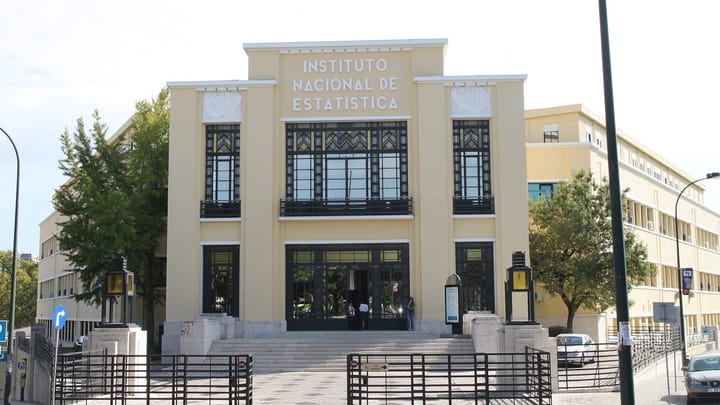
The Portuguese State is auctioning or has already sold eight vacant office buildings in Lisbon that could collectively have absorbed roughly 450 public-housing dwellings, according to Público's Sunday 24 May reporting. Two of the properties have already changed hands at public auction for more than €20 million combined. The single building on Avenida Visconde Valmor — one of the costliest parishes in the capital — closed at €15.7 million. Six additional buildings are scheduled to go under the hammer through the rest of 2026.
The Campus XXI Ripple
The wave of disposals follows the consolidation of Portuguese ministries and directorates into a single central-Lisbon hub — the so-called Campus XXI relocation. That shift left a long tail of state-owned offices vacant and the cabinet moved them onto the market. The stated logic is straightforward: liquidate dormant assets and recycle the proceeds into the affordable-housing pipeline that the government has framed as a 2026 centrepiece.
The Affordability Paradox
The wrinkle Público highlights is that the realised prices on the two completed auctions are running materially below open-market reference points for similar Lisbon assets. The same reporting notes that all eight buildings meet the technical criteria to be converted into public housing — a programme the State is otherwise pursuing in parallel by buying privately-owned units at higher per-square-metre prices. The arithmetic, as critics frame it, is that the State is selling below market in one column while paying above market in another.
What the 450 Number Implies
If the 450-dwelling estimate holds, the eight buildings would represent a sizeable injection into Lisbon's chronically thin public-housing stock. Lisbon — where transactional reference data has long shown the highest per-square-metre prices in the country — would absorb a meaningful share. Converting an existing office building into residential use is rarely cheap, but for assets the State already owns the marginal cost is dominated by refurbishment rather than acquisition, narrowing the unit-economics gap with new-build options.
The Political Sequel
The story lands at a politically delicate moment. The PS opposition filed legislative attempts in April 2026 to halt state-property sales where the asset has residential potential. The Conselho das Finanças Públicas warning that PRR execution was running at 45% by end-2025 added fresh urgency to the housing-affordability conversation, with one year left in the recovery-fund window. Whether the remaining six auctions will proceed under existing terms — or be paused for residential conversion — is the cleanest signal to watch in the second-half calendar.
What This Means for Expats
- Direct purchase optionality is limited. The auctions are commercial-scale lots, not retail housing units; individual buyers will not be bidding for an apartment here.
- Indirect supply effect. A larger public-housing stock would, in theory, ease pressure on the broader Lisbon rental market that has pulled recent asking rents higher.
- Watch the auction calendar. The six remaining building disposals scheduled through the rest of 2026 are the clearest read on whether the State will keep selling below market or repurpose the assets internally.
- Budget implications. Proceeds are earmarked for public-housing finance, but the discount to market value erodes the financing headroom that the policy is supposed to generate.
The Ministério das Finanças has not commented publicly on whether the auction floor prices for the remaining six lots will be re-set to reflect the residential-conversion alternative.