Sociedade Portuguesa de Diabetologia and the Ordem dos Médicos Demand Infarmed Revoke the 13 April Glucose-Sensor Circular — Generic Prescription Treats Two Medical Devices With Different Age Approvals and Different Apps as Interchangeable
SPD president Estevão Pape and Ordem dos Médicos bastonário Carlos Cortes call Infarmed's 13 April circular a 'clinical setback'. The shift from brand-specific to generic prescription treats two CGM sensors as interchangeable — but one is approved age 2+, the other age 18+, and the apps don't talk.
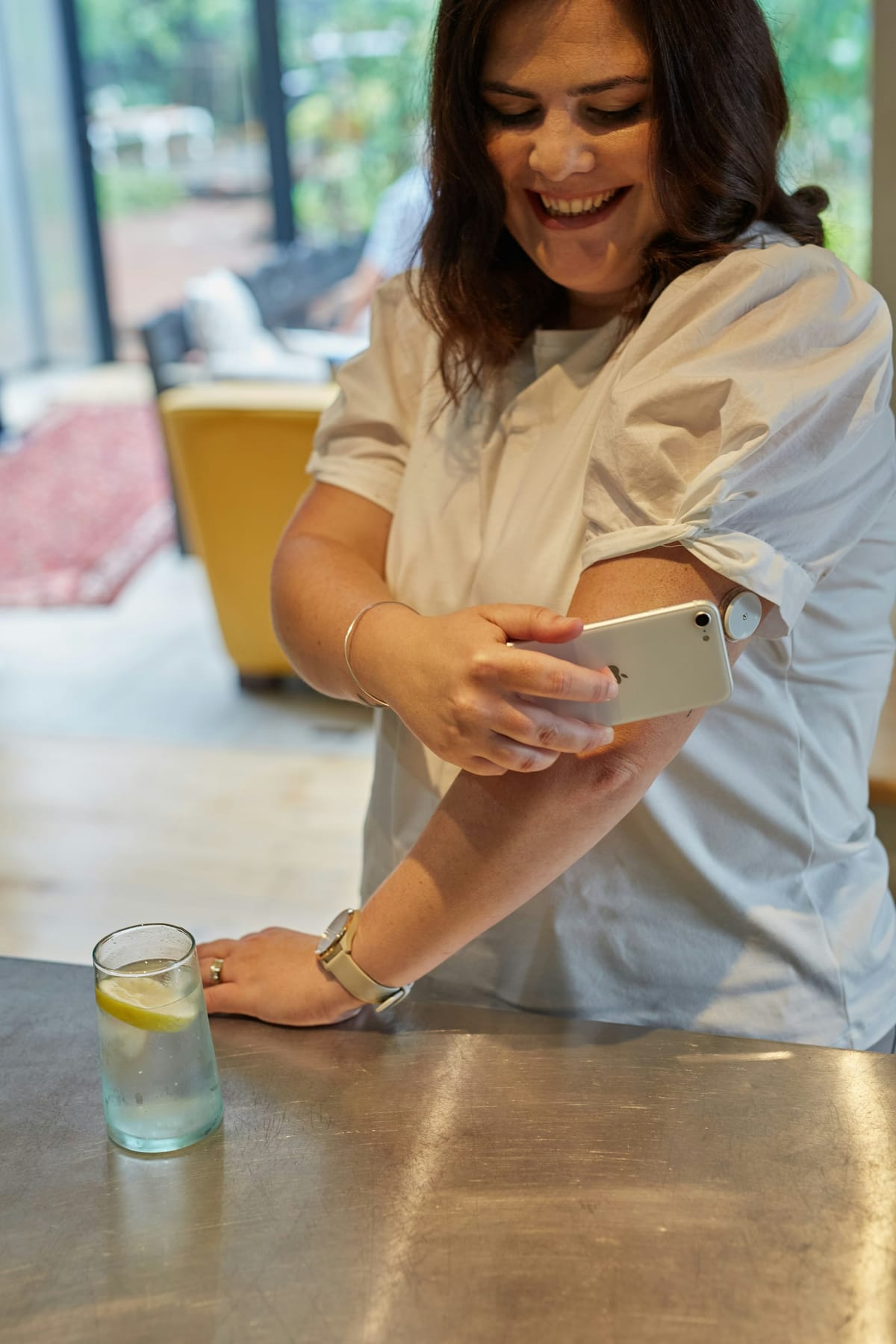
The Sociedade Portuguesa de Diabetologia (SPD) and the Ordem dos Médicos (OM) issued a joint position on Monday 4 May 2026 demanding the urgent revocation of an Infarmed circular that took effect on 13 April and changed the way continuous-glucose-monitoring (CGM) sensors are prescribed in Portugal. The circular shifts the prescription model from brand-specific to genérico — that is, doctors now prescribe a generic CGM sensor description rather than naming the specific Abbott or Dexcom device — on the grounds that a second brand has now entered the comparticipação framework and that aligning the regime with how medications are prescribed should drive market efficiency. The SPD and the Ordem reject that reading and ask Infarmed to reopen the file with the medical specialty associations, the patient associations and the prescribing physicians.
Why Two Sensors Are Not One Sensor
The technical objection at the heart of the joint position is straightforward. The two sensors now operating in the Portuguese comparticipação framework are not interchangeable as a pharmaceutical generic substitution would be. One is approved for use from two years of age and runs a 15-day wear cycle; the other is approved for use only from age 18 and runs a 14-day wear cycle. The age-of-approval differential is the safety-critical piece — pediatric Type 1 diabetics, including a meaningful share of the Portuguese pediatric T1D population, depend on the under-18 device.
The application-layer differential is the second-order issue but is the more visible one for adult patients. Each sensor brand reports to its own mobile app and its own cloud-data architecture; the apps do not interoperate, the historical glycaemic data does not transfer, and a patient who has been wearing one brand for two years cannot pick up a different brand at the pharmacy counter and have their continuity-of-care data follow them. The variabilidade glicémica trend lines that endocrinologists read at consultation depend on a multi-month uninterrupted dataset; switching brands resets the dataset.
The third-order issue is dosing-error risk. Insulin-pump users who couple their CGM to a closed-loop or hybrid-loop pump architecture (the Sistema Híbrido de Asa Fechada in Portuguese clinical literature) are using a sensor whose calibration profile is integrated to the pump algorithm. Substituting the sensor without changing the pump algorithm produces a measurable risk of hypo- or hyperglycaemic dosing error — the very risk the joint position calls a retrocesso clínico sem precedentes.
Three Voices, One Demand
Estevão Pape, the SPD president, framed the position in a sentence: "Estes dispositivos não são medicamentos" — these devices are not medications. The Infarmed circular's analogy to generic-substitution pharmacy practice does not survive contact with the regulatory reality: CGM sensors are dispositivos médicos, classed under the EU Medical Device Regulation 2017/745, not under the medicines framework. The conformity-assessment pathway, the post-market surveillance regime and the clinical-investigation requirements are different. Treating the two as interchangeable on the prescription side treats them as if the back-end regulatory regime were identical, which it is not. A related change reached the gazette this week: the new ordinance covering ichthyosis and epidermolysis bullosa patients.
Carlos Cortes, the Ordem dos Médicos bastonário, framed the procedural objection: "A eficiência não pode ser confundida com decisões cegas" — efficiency cannot be confused with blind decisions. The Ordem's position is that the cost-saving rationale Infarmed cited for the circular is legitimate as a goal, but that the circular was issued without consultation with the prescribing physicians, the diabetology subspecialty, the pharmacy counter or the patient associations. The Ordem asks for a structured dialogue process to be opened before the circular's prescription model becomes the de facto SNS standard.
Manuel Carlos Lemos, the Colégio de Endocrinologia spokesperson, framed the safety objection: "Risco real para a segurança do doente — trata sensores idênticos quando as diferenças práticas são reais" — real risk to patient safety, treating sensors as identical when the practical differences are real.
The SNS Spend Picture
The SNS dispensed 712,900 CGM units in the first eight months of 2025 against a comparticipação spend of €32.1 million for the same period — implying a per-unit average comparticipated price of €45 across the eight-month window. The market has roughly tripled in unit volume since the comparticipação framework was opened in 2022. The cost-trajectory pressure on Infarmed and on the SNS Direção-Geral de Saúde is real: at current growth, the line item closes 2026 above €60 million on annualised basis. The circular's prescription-model change is one of three Infarmed levers being used to manage that trajectory; the other two are tighter prescription-restriction-by-specialty (already in force since August 2025, restricted to four specialties) and renegotiation of the comparticipação tariff itself.
What Patients See at the Pharmacy Counter
Under the new circular, a patient turning up at the farmácia with a generic CGM prescription will be dispensed whichever sensor the pharmacy currently holds in stock that matches the generic description on the receita — not necessarily the brand they have been using. The pharmacist has a counselling obligation to flag the brand change to the patient, but the substitution itself is permissible without a new physician visit. For a patient on a hybrid-loop pump configured to a specific sensor brand, that produces an immediate operational problem. For a parent of a pediatric T1D patient, the substitution may be impossible at the counter level if the dispensed brand is age-restricted to 18+; that case requires a physician override on the prescription itself.
The Infarmed view is that the pharmacist counselling obligation handles the pediatric and the pump-integration cases by exception, and that the default generic-prescription pathway is appropriate for the majority of insulin-treated Type 1 and Type 2 diabetics for whom either sensor is clinically suitable. The SPD and the Ordem disagree: on their reading, the substitution-by-default architecture is the wrong default, and the regra geral should remain brand-specific prescription with generic substitution available only on the prescribing physician's explicit indication.
For Foreign-Resident Diabetics
Two reads for foreign-resident T1D and insulin-treated T2D patients on the SNS comparticipação framework.
First, the prescription-renewal cycle now needs a conversation with the prescribing endocrinologist, internist, family physician or pediatrician about whether the receita carries a brand-specific indication or defaults to the generic. For patients on a hybrid-loop pump or on a CGM-integrated insulin-pump architecture, the brand-specific indication needs to be on the prescription explicitly; for patients on standalone CGM with no pump integration, the choice is more open.
Second, the app-and-data continuity question is real. Patients who have been using one brand for several years and who change brands at the pharmacy counter under the new generic-prescription regime will lose access to their multi-year historical glycaemic dataset on the previous brand's app — the data does not migrate. For patients planning a return to an origin-country physician for any portion of their care, the switching cost is significant: the consulting endocrinologist will be looking at a partial dataset rather than a continuous one.
The Infarmed file remains open. The SPD and the Ordem have asked for the dialogue process to be opened within the month; Infarmed has not yet committed to a timeline. Until either a revocation or a clarifying despacho lands, the 13 April regime is the operational standard at the pharmacy counter. On the food-supplements, consumer-health regulation and DGAV-side of the file, our 7 June read on Saturday's Público multi-part investigation framing Portugal's suplementos alimentares pipeline as a 47% adult-use wave, a +80%-in-ten-years notification surge tracked in 'tens of thousands of avulso emails' in Outlook folders at DGAV, an IGAMAOT inspection report homologated by Minister José Manuel Fernandes on 20 October 2025, a €600 million market estimate and an end-of-2026 DGAV commitment to deliver a proper database sets the latest reference. On the Bial Phase 2 BIA 28-6156 discontinuation, Opicapone (Ongentys), Portuguese pharma R&D, SIFIDE II and CNS development pipeline side of the file, our 11 June read on Bial shelving the BIA 28-6156 Parkinson Phase 2 trial after the Trofa pharma read no efficacy signal at the primary endpoint, folding the five-year GBA1-targeted disease-modification programme while leaving the Opicapone (Ongentys) symptom-control franchise unaffected sets the latest reference. On the healthcare-decisions, patient-rights and end-of-life planning side of the file, our guide to the testamento vital and RENTEV advance-directive system rounds out the picture. On the branding, intellectual-property and business-setup side of the file, our guide to registering a trademark with the INPI sets the latest reference. On the SNS-access and medicines side of the file, the warning that outdated registry records can cut off medicine subsidies explains how a stale patient record can quietly break a co-payment. On the social-support side of the file, Portugal's new cap on free medicines for low-income pensioners explains how the CSI free-medicine benefit is being tied to generics and reference prices from October. On the money side of the same system, what medicines actually cost patients and the state this year sets out INFARMED's July figures: 571.6 million euros paid by patients at pharmacy counters between January and July, 1,179.3 million paid by the SNS, and one diabetes class carrying more than a third of the increase.