Six Team Chiefs Walk Out of Santa Maria's Central Emergency Room After Director's Abrupt Removal — Lisbon's Biggest ER Enters a Leadership Vacuum
Six of Santa Maria's 31 emergency team leaders stepped down after the hospital removed João Gouveia as director of the urgência central with eight months of his mandate still to run. The hospital says the move is 'routine'; the chiefs left their posts anyway.
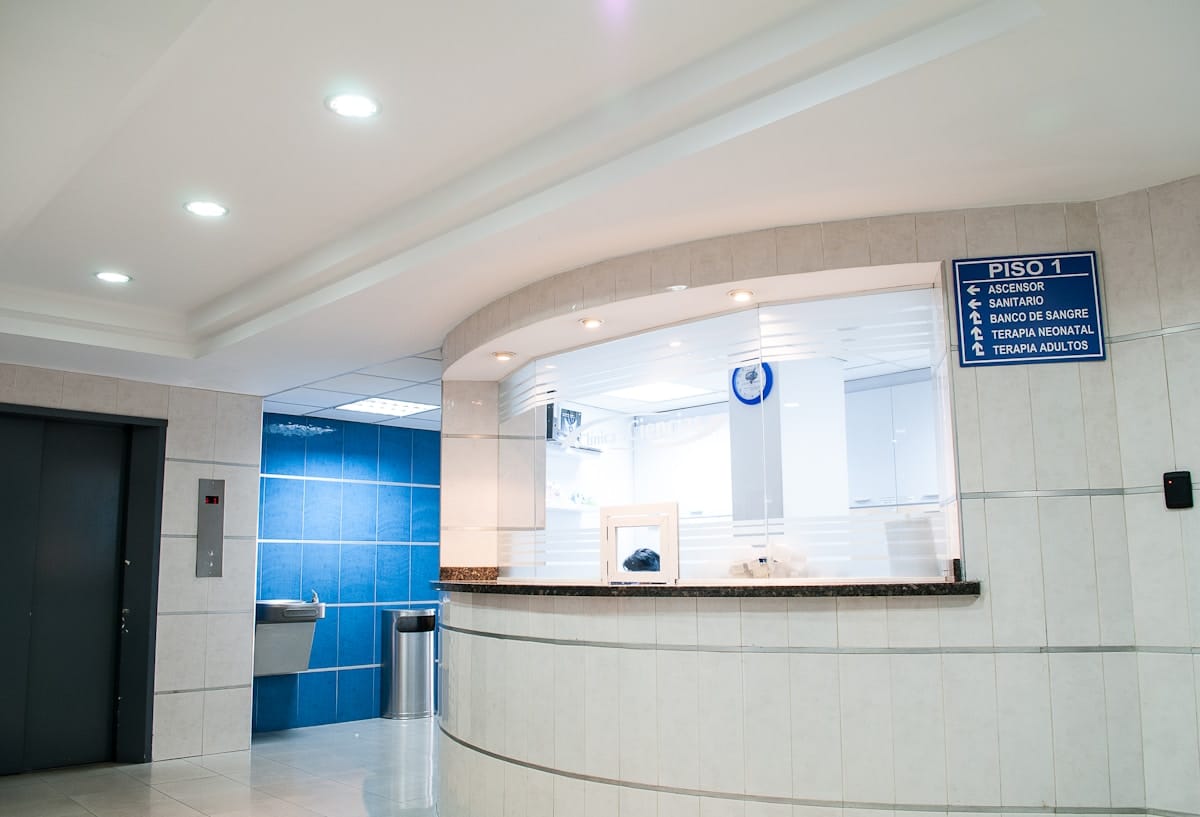
Six of the 31 team chiefs running the central emergency department at Hospital de Santa Maria have asked to step down from their leadership posts, in the biggest shake-up of Lisbon's largest ER in years. The resignations followed the removal of João Gouveia as director of the urgência central — a decision the hospital communicated in an internal notice without public explanation and with eight months of his mandate still to run.
Gouveia, an intensive-care physician, had led the service since 2022. His term was scheduled to end in the final quarter of 2026. Instead, the administration of ULS Santa Maria — the merged local health unit that absorbed the hospital into a single SNS entity last year — announced his early replacement by Nuno Gaibino, the national transplant coordinator and another intensive-care specialist, on an interim basis from 1 April.
What the hospital said — and what the chiefs did
The official rationale, communicated in an internal note, was that the board wanted to "establish fresh momentum within the strategic initiative for emergency service renewal." Hospital leadership characterised the decision as "routine management practice" and told staff that services would continue to operate normally.
Six of the department's team leaders disagreed enough to walk. They submitted written requests to be relieved of their coordination duties — not to leave the hospital, and not to abandon clinical work, but to hand back the managerial piece of their jobs. According to Público, which first reported the resignations on 7 April, several of those who resigned had served as Gouveia's direct deputies during his three years at the head of the service. They indicated they would continue covering their scheduled shifts through any transition period.
Why this matters
Santa Maria's central emergency room is not a neighbourhood ER. It is the busiest urgência polivalente in the country, anchoring the trauma and acute-stroke referral network for central Lisbon and serving as the end-of-the-line destination for cases escalated from district hospitals across the Tagus valley. Losing six of 31 team chiefs in one week strips out roughly one-fifth of the middle-management layer that keeps the rotas glued together — the people who negotiate the shift book, who decide how doctors are paired with nurses, and who escalate bottlenecks when volumes spike.
It also arrives at an awkward moment for the Ministry of Health. Parliament's Inquiry Commission into INEM — Portugal's pre-hospital emergency service — heard Health Minister Ana Paula Martins present a ten-point refoundation plan on 21 April, and takes testimony from bereaved families on 22 April. The INEM dossier sits upstream of the ER; the Santa Maria resignations land directly inside it. A ministry that is simultaneously restructuring the ambulance service and losing its biggest emergency room's middle bench has less margin to absorb surprises than any recent predecessor.
The ULS context
ULS Santa Maria was created in January 2024 when the government consolidated the Hospital de Santa Maria, the Hospital Pulido Valente, and the primary-care centres of the Lisbon Norte catchment into a single unified local health unit — one of 39 ULS across Portugal. The model is supposed to align hospital and primary-care incentives under one administration and one budget. In practice, it has also concentrated decision-making: appointments, schedules, and service directors that used to sit at hospital level are now decided at the ULS board.
That is the layer from which Gouveia's removal was issued. The internal note did not name a successor beyond Gaibino's interim appointment. No permanent call for candidates has been opened publicly. The six team leaders who resigned have not issued a joint statement; none of the named physicians had commented publicly at the time of Público's original reporting.
What happens next
Three things to watch over the coming weeks. First, whether the six vacancies are filled quickly, and from inside or outside the service — the pool of emergency-medicine physicians with managerial experience at Santa Maria's volume is small. Second, whether the Ordem dos Médicos or the Federação Nacional dos Médicos (FNAM) weigh in; the doctors' union has used the Santa Maria file as a pressure point on the government before. Third, whether Gaibino's interim mandate is extended or converted, which will indicate whether the board's goal was genuinely a "fresh momentum" or the removal of a specific individual.
The hospital stated that operations are continuing normally. For the hundreds of patients who pass through the central emergency room each day, that remains the only metric that matters — and the one on which the next few weeks will be judged.
Sources: Público (7 April 2026), Observador (7 April 2026), RTP and Diário de Notícias coverage of the Santa Maria emergency-chiefs resignations; Parliament INEM Inquiry Commission schedule, 21–22 April 2026. On the public-health surveillance and vaccination rail, our 18 May ULSBA Beja read — three epidemiologically-linked measles cases since early April across the 30-to-55 age band, nearly 500 risk contacts mapped, 120+ post-exposure VASPR doses delivered through the USF / UCSP / Hospital José Joaquim Fernandes chain and Bruno Pinto Rebelo's surto classification sets the latest reference. On who pays when a non-resident walks into a Portuguese emergency department, what the health inspectorate wants to change about paying for emergency care sets out the IGAS recommendations on charging at the door, the 2024 survey that found 92,189 non-residents treated in nine months with 49.3 percent carrying no cover, and the 115, 88 and 52 euro tariffs fixed by Portaria n.º 274/2026/1.