SATA Stacks Extraordinary Sunday-to-Monday Rotations as Recurrent Atlantic Fog Pins Both Inter-Island and Continental Routes From Friday 22 May
SATA is running extraordinary Sunday-to-Monday rotations to clear a backlog built since Friday 22 May, when recurrent Atlantic fog began grounding flights at Ponta Delgada and several inter-island runways. Slot availability at Lisbon and Porto sets the pace.
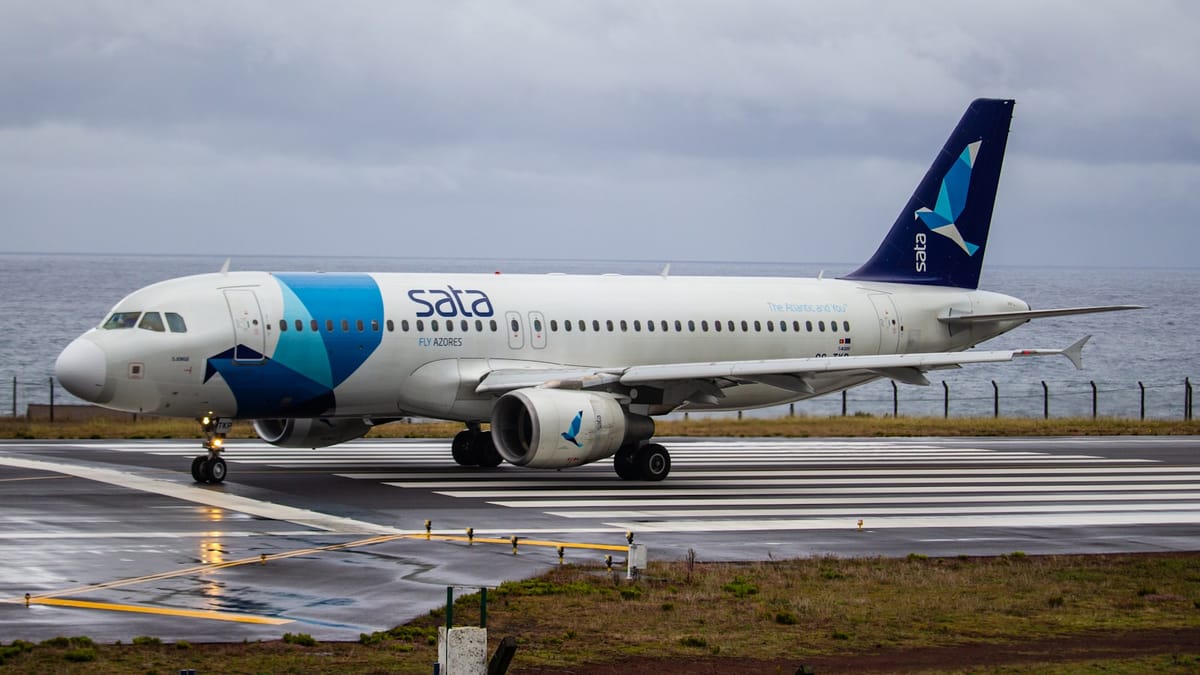
The SATA group is running an unscheduled batch of extraordinary flights across Sunday 24 May and Monday 25 May 2026 to claw back an operation that has been seizing up since Friday 22 May, when recurrent Atlantic fog began compressing visibility at the João Paulo II airport in Ponta Delgada and at several inter-island runways across the archipelago. Both SATA Air Açores, which handles the inter-island connections, and Azores Airlines, the long-haul brand that links São Miguel to the continent and to North America, have been hit, and the group says re-accommodation and full operational normalisation are expected to wrap up over Sunday and Monday — slot availability permitting.
What is grounding the network
The disruptive ingredient is not a storm front but the much more familiar Azores enemy: low-cloud, low-visibility nevoeiro that sits stubbornly on top of runways and pushes minima below the thresholds the airline can legally fly into. SATA, in its public note, blamed the persistence of "adverse meteorological conditions, namely the occurrence of recurrent fog," and said it was working to "reinforce operational capacity" with the extraordinary rotations to "mitigate the impact caused to passengers."
The inter-island leg is the one that hurts first: SATA Air Açores is the only scheduled link between most of the nine islands, and a single misty morning at Horta, Pico or Flores can cascade across the day's schedule. The continent and international leg, run by Azores Airlines, has a different problem layered on top — once flights slip out of their original time slots, they have to wait for replacement slots at Lisbon, Porto and the European destinations, slots that are now booked solid for the late-May shoulder-season ramp. SATA explicitly flagged this in the Sunday note: Azores Airlines remains "constrained by the time slots available at national and international airports," which will dictate the pace at which traffic normalises rather than any aircraft or crew shortage.
The operational backdrop
- SATA Air Açores cancelled more than 1,300 flights in the most recent 12-month reporting window, a baseline that already puts the group well above European peers on weather-driven attrition.
- From 1 November 2025 the group added 16 extra weekly rotations between the continent and the Azores under its winter schedule — explicit redundancy meant to absorb exactly this kind of cluster of cancellations.
- For the 2026 summer, SATA Air Açores has already added 198 inter-island flights to its programme at "strategic moments," again carrying spare capacity into the peak.
- The group is being recapitalised on the back of the Azores government's privatisation of Azores Airlines, an operation that opened earlier this year with a 75% minimum-stake floor and a 30-month no-layoff cover — a deal whose investor pitch leans heavily on a more reliable schedule.
How this lands on travellers right now
For passengers booked across the Friday-to-Monday window, the standard EU Regulation 261/2004 rights apply, but with one important caveat: under article 5(3) of that regulation, fog of this kind generally counts as an "extraordinary circumstance" that exempts the carrier from cash compensation. What it does not exempt the carrier from is the obligation to re-route passengers "under comparable transport conditions, at the earliest opportunity," or to provide meals, refreshments and hotel accommodation while passengers wait. SATA's extraordinary Sunday-Monday rotations are the visible side of that obligation. Anyone who has been re-routed onto a flight more than two hours later than the original slot — which, given the slot-constraint problem at Lisbon and Porto, is many — is entitled to those care-and-assistance benefits even though no compensation cheque will be issued.
What this means for expats
- If you have an Azores trip booked this week: Check SATA's status page before you head to the airport and do not assume your ticket has rolled to a new slot. The group is re-accommodating manually through Sunday and Monday; some passengers will only see a confirmed new flight once a downstream slot opens at Lisbon, Porto or Boston.
- If you live on São Miguel and rely on inter-island connections for work: Expect knock-on cancellations into Tuesday for the smaller hubs, even if Ponta Delgada itself clears. The bottleneck shifts to the spoke airports once the hub catches up.
- If you are flying Azores Airlines from the continent: The slot constraint is the real story. A confirmed boarding pass for a Lisbon–Ponta Delgada flight that has not been actively re-issued by SATA in the past 24 hours is not a guarantee of departure; the airline is still negotiating slot returns with ANA and ANAC behind the scenes.
- If you are entitled to care-and-assistance: Keep every receipt — meals, taxis if applicable, hotel — and file the reimbursement request through SATA's customer portal. The airline will not pay compensation under article 7 of Regulation 261 for this fog event, but it owes the assistance.
- If you were planning to book Azores summer travel: The disruption is a useful pre-summer stress test of the recently expanded schedule. The 16 extra weekly winter rotations are precisely what is now soaking up the displaced traffic; the 198 extra inter-island slots for the summer programme should give a deeper buffer against the next nevoeiro cluster, which historically peaks between June and early August.
What to watch this week
Three things matter beyond the immediate re-accommodation. First, whether the IPMA fog forecast lifts in time for Tuesday morning — a third compressed operating day would push the disruption out into the broader summer-season inbound traffic and start affecting cruise-ship connections at Ponta Delgada. Second, whether SATA's investor narrative — "we restructured, we added winter slots, we are reliable" — holds up under the stress test, given that the Azores government has been leaning on improved SATA performance as part of its case for the recent DBRS BBB upgrade. And third, whether the slot-availability fight at Lisbon and Porto pushes Azores Airlines, ANA and ANAC into a fresh conversation about reserved fog-recovery slots at peninsular hubs — a long-standing ask from the regional carrier that has never quite found its political moment, but that the next fog cluster will revive. On the PDL26 Capital Portuguesa da Cultura, Ponta Delgada cultural-budget and Açores cultural-finance side of the file, our 12 June read on Ponta Delgada Capital Portuguesa da Cultura losing half its €5.3 million envelope after Turismo de Portugal walked, the Açores 2030 EU funds and private sponsorships receded, and Chega plus Movimento Ponta Delgada Para Todos blocked the €2 million Câmara Municipal top-up sets the latest reference. On the Subsídio Social de Mobilidade, Mecanismo de Continuidade Territorial, Açores / Madeira air-travel and residency-tier subsidy side of the file, our 14 June architectural read on Lei 23/2026 rebuilding the Subsídio Social de Mobilidade around a residency-tier matrix, a pre-authorisation cap routed through the new DSCT and a €185M-2026 envelope — how the Mecanismo de Continuidade Territorial reroutes Açores and Madeira air travel sets the latest reference. On the SRIJ, online-gaming regulation, jogos de fortuna ou azar, apostas desportivas, autoexcluídos register, IEJO tax and Decreto-Lei 66/2015 side of the file, our 18 June read on SRIJ charting Q1 2026 online-gaming gross revenue at €323.7 million — the casino vertical vaults 20.3% year-on-year as the autoexcluídos roster swells 23.1% to 380,500 registered players sets the latest reference. On the size and shape of the public administration, our report on the record number of managers across the Portuguese State sets the latest reference. On the dairy, farm-income and food-price side of the file, the cut to Portugal's farm-gate milk price sets the latest reference. On the Azorean connectivity side of the file, Terceira's first nonstop to the New York area sets out United's 9 June 2027 start date, the three weekly frequencies and where the island sits in the archipelago's air links to North America.