Quercus, Gardunha Sul and Five Other Movements Stage a 13:00 Protest at APA's Castelo Branco HQ Over the Beira and Sophia Mega-Photovoltaics — 525 Hectares Already Carry a Negative DIA, Sophia's 425,600 Modules Still Under Analysis
Seven civil-society movements gathered at the APA delegation in Castelo Branco at 13:00 on 6 May to demand transparency on two contested mega-solar projects — the Beira plant (525 ha, already with a negative DIA) and Sophia (390 ha, 425,600 modules) — both straddling four Beira Baixa municipalities.
Seven civil-society movements gathered outside the Agência Portuguesa do Ambiente delegation in Castelo Branco at 13:00 on Tuesday to push two demands at once: the publication of the public-consultation reports for the Beira and Sophia mega-photovoltaic projects, and a decision on the Sophia project that takes the cumulative-impact reading the Quercus side has been pressing for months.
The two projects, side by side
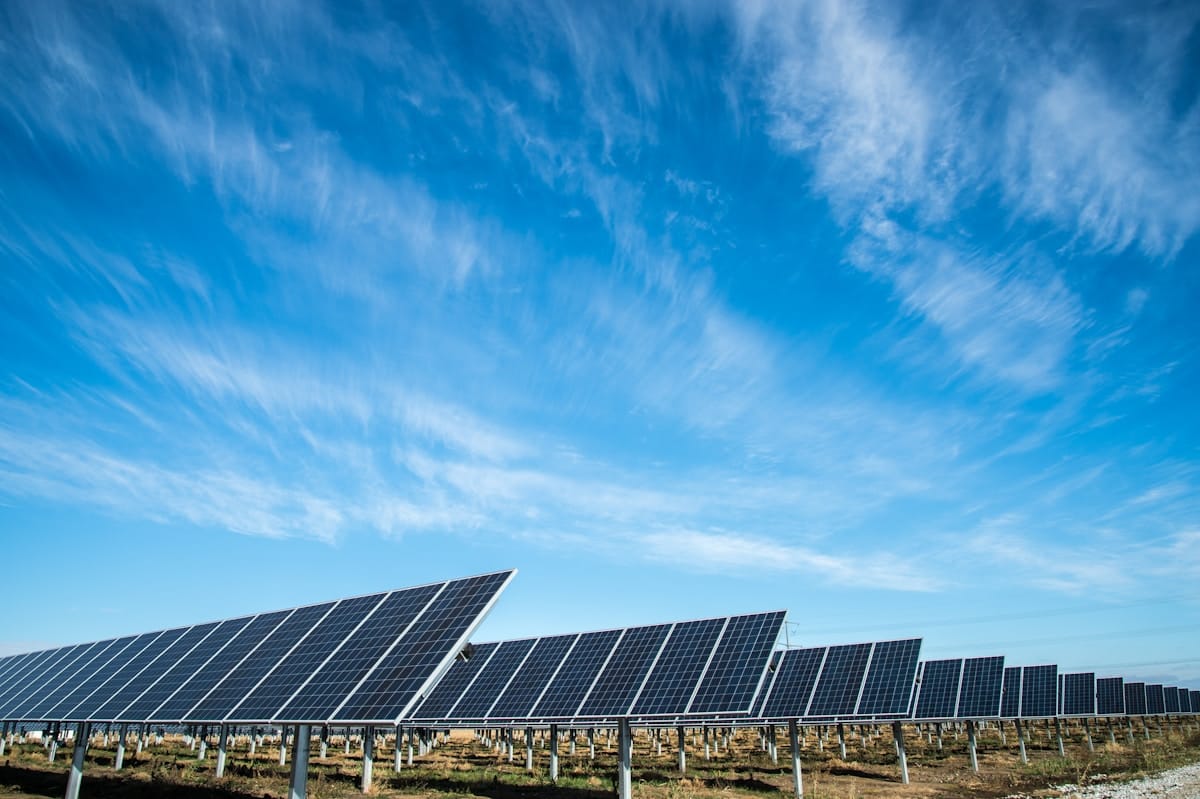
The Beira plant covers an estimated 525 hectares of installation area across Penamacor, Fundão, Idanha-a-Nova and Castelo Branco. The Avaliação de Impacte Ambiental commission for the project issued a parecer desfavorável on 29 December 2025; the public consultation closed on 14 January 2026. The Sophia plant sits at 390 hectares with 425,600 photovoltaic modules planned, partially inside the Naturtejo geopark's classified zones. Sophia's contribution period closed on 20 November 2025; the file is still under APA analysis.
What the movements are pointing at is the gap. Months after both consultation windows closed, the consolidated reports synthesising the public participation — thousands of contributions according to organisers — are not yet up on the APA portal. That is the transparency complaint, and it is the procedural complaint, and it is the one that ties Tuesday's protest to a wider thread the platform has been pulling since the January parliamentary petition.
The cumulative-impact argument
The Beira/Sophia file matters because of how the geography stacks. Both projects sit inside the same four-municipality cluster in the Beira Baixa interior. Both pull from the same hydrology and land-cover base. Both feed the same evacuation grid. The Quercus framing is that single-project DIAs do not capture how a 525-ha Beira plant and a 390-ha Sophia plant interact when read together — and that the green-hydrogen and data-centre infrastructure announced alongside them changes the cumulative footprint again.
That argument has more procedural traction than it had a year ago. The negative parecer on Beira was the first regulatory acknowledgement that the cumulative side of the file is not trivial. The Sophia DIA is being read by APA against the same backdrop. And the Tribunal of Justice of the EU referral on RED III implementation lodged by Brussels last week sits in the background as a procedural ceiling on how aggressively the renewables fast-track can be applied.
Where it intersects the energy-policy stack
The protest lands inside a tight policy window. Maria da Graça Carvalho announced on Monday a plan to "substantially reduce" Portugal's fossil-fuel dependence over an 8-10 year horizon, with the 80.7% renewables-in-electricity figure as the headline anchor. The plan reads as a political signal, not a programme — but it commits the ministry to a renewables-acceleration narrative that will need projects on the ground. Beira and Sophia are two of those projects.
The platform's counter-frame is that an acceleration narrative is not the same as a transparency-light approval cycle. They are pushing what they call a "decentralised and integrated" model: smaller plants distributed across the landscape, paired with rooftop deployment, and assessed against the geopark and Tejo Internacional ecological constraints up front rather than retroactively.
What APA decides next
The Sophia decision is the one to watch. With Beira already carrying a negative DIA, an APA approval on Sophia would split the file and force the platform to push the cumulative-impact argument through the courts rather than the regulator. A negative DIA on Sophia would compress the policy stack: it leaves the Government's renewables-acceleration target depending on projects elsewhere — and pushes the green-hydrogen build into a new geography. Neither outcome closes the transparency complaint. That one runs on its own clock.