President Seguro Hands the Health Pact to Adalberto Campos Fernandes — A Costa-Era Minister Returns to Negotiate the SNS Out of Permanent Crisis
President Seguro on 24 April designated Adalberto Campos Fernandes — Health Minister 2015-2018 under Costa — to coordinate the Pacto Estratégico para a Saúde. Seguro calls the SNS situation 'unacceptable'. Pact needs PSD, PS, Chega, IL and BE at one table.
President António José Seguro made the appointment a week before his first month in office closes. On Friday 24 April, Belém announced that Adalberto Campos Fernandes — physician, public-health professor, and Minister of Health between November 2015 and October 2018 in António Costa's first cabinet — will coordinate the Pacto Estratégico para a Saúde the President had promised would define his opening year of work.
The choice answers two questions at once. First, what kind of figure Seguro wants steering the file: a technocrat with operational scars from running the Serviço Nacional de Saúde, not a political figure parachuted in to broker partisan trade-offs. Second, where the President wants the pact to land politically: Campos Fernandes is a Socialist by background, but his three years in São Pedro de Alcântara coincided with the post-troika reconstruction of public-sector hiring, the rollout of the medical-residency reform, and the installation of the current oncology and waiting-list dashboards — work that PSD ministers have continued largely intact.
The political brief
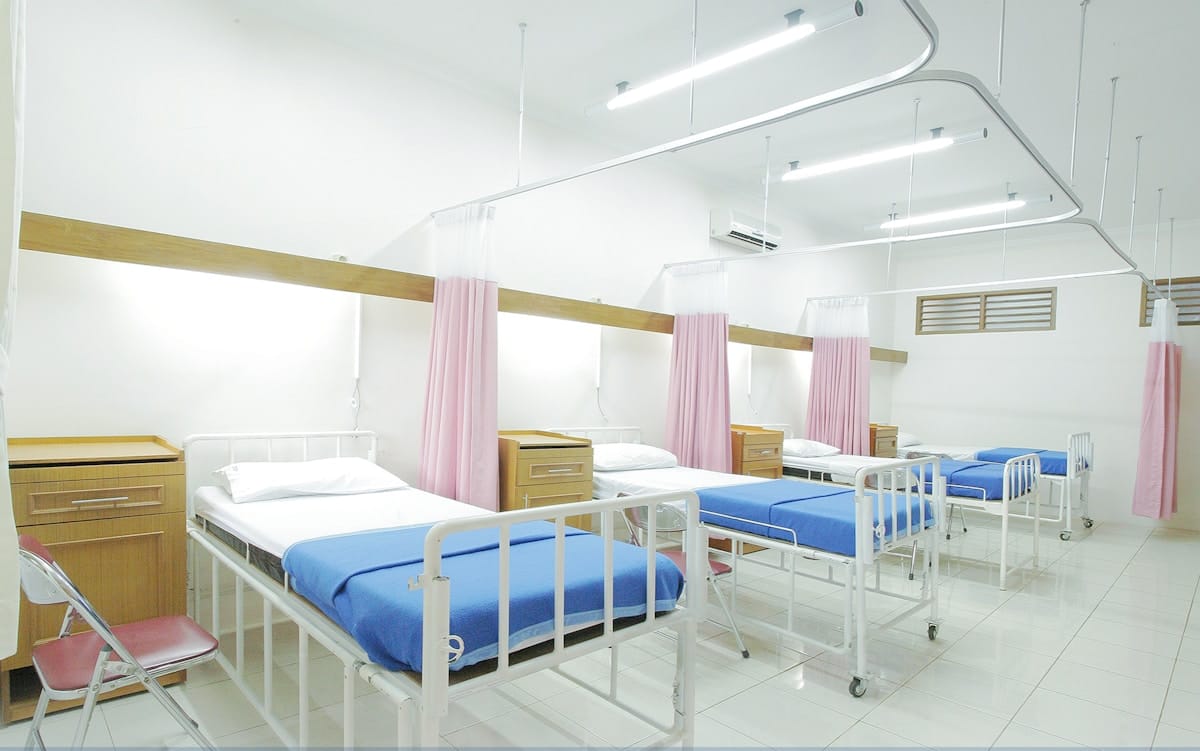
Seguro spent the presidential campaign defining health as the central axis of his first year, and described the current state of the SNS — long emergency-room queues, pediatric urgency closures, the chronic specialist shortages that this week put 2,807 patients in beds without medical justification (APAH, 23 April) — as 'unacceptable'. The Pacto Estratégico is intended to do what Portuguese health policy has not managed in two decades: extract durable, multi-cycle commitments from PSD, PS, Chega, Iniciativa Liberal and Bloco de Esquerda on a shortlist of structural questions that survive each government change.
The shortlist will not be Seguro's to draft alone. Campos Fernandes inherits the job of writing it, and his negotiating constraints are explicit: any pact that does not bring at least the two main parties — PSD and PS — to a public signature will be treated by both opposition benches as a Belém solo, and any pact that excludes Chega will be read by 1.6 million voters as a deliberate political snub. The pact has to be wide enough to mean something and narrow enough to actually close.
Who Adalberto Campos Fernandes is
The 65-year-old internist trained at the Faculdade de Medicina de Lisboa, ran the Hospital Pulido Valente, and now teaches at the Escola Nacional de Saúde Pública at Universidade Nova de Lisboa, where he has supervised the doctorates that produced much of the academic critique of the SNS's hospital-management framework. As minister he took the political hit for the 2017 Setúbal hospital strikes and for the failed first-attempt purchase of new hospital information systems, but he also closed Portugal's first multi-year SNS resourcing agreement with the unions and committed the State to a reopening of the Lisbon central-hospital reform.
He is, in other words, neither a stranger to the file nor a partisan operator. Health policy circles in Lisbon have spent the past 48 hours describing the choice as 'consensus-credible' — a phrase that means roughly that PSD will not have a clean public reason to refuse to sit at the table he chairs.
What 'pact' might actually mean
Three structural files are likeliest to be on the table. The medical-workforce pipeline: how many residency slots Portugal funds, how it pays specialists who currently leak to the private sector, and whether the dual-employment model survives. The hospital-management framework: whether the EPE statute that converted hospitals into public companies in 2002 is renewed, reformed, or replaced. And the SNS funding floor: whether the State commits multi-cycle funding tied to GDP or population indicators rather than the year-by-year envelope that has produced two decades of mid-budget supplementaries.
None of these are quick wins. All of them require parliamentary majorities Seguro himself does not control.
What to watch in the next 90 days
Three signals. First, when Campos Fernandes publishes his methodology — whether he convenes a single technical group or organises around themed working groups will tell observers how compressed he expects the timeline to be. Second, whether Chega is invited as a full participant or as a consulted party; that decision will be made before the first formal meeting. Third, whether Health Minister Ana Paula Martins attends in person or sends a Secretary of State. The Government's level of representation will be the cleanest early read on whether São Bento sees the pact as a partner or a parallel track.