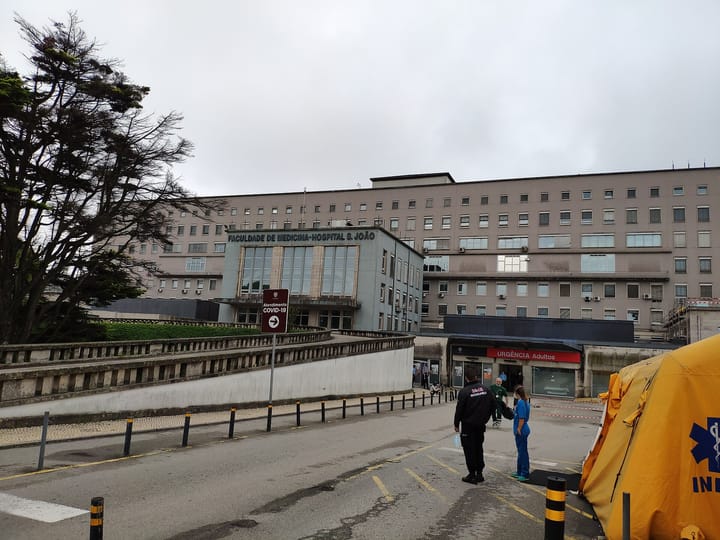
President Seguro Hands Adalberto Campos Fernandes the Strategic Pact for Health — Coordination Team Begins Work Monday With a One-Year Mandate to Build Cross-Party Consensus on SNS Reform
President António José Seguro has placed healthcare 'a tempo e horas' at the top of his mandate. The Strategic Pact for Health, coordinated by former Health Minister Adalberto Campos Fernandes, begins work on Monday 5 May with a one-year horizon to build cross-party consensus on SNS reform.
The healthcare promise that António José Seguro placed at the centre of his presidential inauguration speech — to deliver SNS care 'a tempo e horas' (on time, on schedule) — moved this week from rhetoric to structure. The Presidential Palace confirmed to Público that Adalberto Campos Fernandes, the PS-aligned former health minister and ISCSP-Lisboa professor, will coordinate the Pacto Estratégico para a Saúde, the cross-party reform process the President has framed as the central project of his five-year mandate.
The pact's coordination team begins formal work on Monday, 5 May 2026. The mandate runs twelve months — a deliberately tight horizon that the Belém staff describes as 'enough to build consensus, short enough to force a result.'
What Seguro Is Trying to Do
The constitutional reading of the President's role gives Belém limited direct authority over the Ministry of Health. What the office can deliver is what the Portuguese political vocabulary calls magistratura de influência — the soft power to convene, the institutional standing to bridge between the AD government, PS opposition, the medical orders, the trade unions and the regional administrations. Seguro has decided to use that power on healthcare specifically because:
- The SNS waiting-time deterioration has become the most-cited concern in barómetros de opinião for the past six quarters;
- The medical-graduate emigration rate has accelerated again in 2025-2026;
- The Ministry of Health and the Ministry of Finance are openly disagreeing on the 2026-2028 SNS funding envelope; and
- No previous reform attempt — Hospital de Lisboa Oriental, the new Hospital Central do Algarve, the SNS managerial autonomy law — has produced cross-party commitment durable enough to outlast a single election cycle.
Why Campos Fernandes
Adalberto Campos Fernandes served as Minister of Health between 2015 and 2018 in the first António Costa government. He is a public-health academic with a research focus on health-system financing and is widely regarded inside the medical orders as politically neutral by training and practice. The choice has been read in Lisbon's political class as a deliberate signal: the President wants a coordinator the AD-led government cannot easily reject as partisan and the PS opposition cannot disown as too close to the government.
What 'A Tempo e Horas' Actually Means
The Lei de Bases da Saúde and the SNS access regulation set Tempos Máximos de Resposta Garantidos (TMRG) — the maximum periods, by speciality and acuity, within which the SNS is legally bound to provide care. For non-urgent specialty consultations, the standard is up to 150 days. The published tempos.min-saude.pt dashboard shows actual median waits running multiple times that benchmark across most regions for orthopaedics, ophthalmology and gynaecology.
What Comes Next
The coordination team will publish a public-consultation framework in the second half of May, with sectoral hearings (medical orders, nursing union, hospital administrators, patient associations) running through June and July. A first interim report is expected before the parliamentary recess. The hard test arrives in October, when the team will need to land actionable proposals in time for the 2027 State Budget cycle.
For SNS users, the practical change will not arrive in 2026. The benefit, if there is one, will land from 2027 onward — and only if the political consensus the pact is designed to build actually holds together that long.